
The highest payout online casino Australia has, and the reality behind the search
A page that ranks “the best licensed online casinos in Australia” is describing something that does not exist, and writing one produces a factual lie on every screen. Online casino is prohibited under the Interactive Gambling Act 2001 — no AU licence exists federally or in any state or territory — so every online casino an Australian can reach is offshore, unlicensed, and outside the protections the law offers. The honest answer to “highest payout online casino Australia” is not a winner; it is a checklist of what to verify before depositing.

Current as of 12 November 2026, cross-checked against the ACMA enforcement register and the Australian Communications and Media Authority’s published blocking record.
Table of Contents
- Why chasing the highest payout in Australia starts with a reality check
- Where the highest payouts actually live in 2026 — 10 offshore casinos compared
- The pokies where your money lasts longest — highest-RTP titles ranked for 2026
- The legal reality every Australian player needs to face before depositing
- Staying in control while chasing a high payout
- How we chose and ranked the casinos on this page
- What to actually do about the highest-payout question in 2026
- Frequently Asked Questions
Why chasing the highest payout in Australia starts with a reality check
The phrase “highest payout” reads like a number. It is, in fact, three different numbers that get conflated: the casino’s stated portfolio RTP, the individual game’s published return, and whatever session you happen to draw from the machine on a given afternoon. None of them is what you leave the table with.

The Australian market sits in an unusual structural position. Online casino is prohibited under the IGA 2001, strengthened by the 2017 amendments — there is no licence to obtain and no regulator for an operator to apply to. Industry data on the AU-facing offshore market puts the typical pokie library at 95–96% RTP, with the highest published real-money figures for specific titles sitting at or just below 99%. Those are long-run averages. They assume millions of spins, a fixed bet pattern, and a game configuration that never changes mid-session.
What they do not assume is that the operator you picked has loaded the highest-paying version of that game. Book of Dead ships from Play’n GO at six different RTP tiers down to 84.2%; Sweet Bonanza ships in four configurations from 96.51% to 91.51%. The provider sets the menu; the operator picks the dish. The player at the screen has no way to tell which configuration is loaded without opening the in-game info screen — and many do not know it exists.
What “highest payout” actually measures — and what it leaves out
Payout percentage, in the technical sense, is a game-design return-to-player number. It is the share of every dollar wagered that the machine is programmed to return across its full statistical life. A 97% RTP pokie, played for millions of spins at every possible bet pattern, will hand back 97 cents on the dollar and keep 3. The other name for that 3 cents is the house edge — the figure the player is actually playing against, and the figure the marketing copy works hardest to keep out of view.
The catch is the word “aggregate”. An average across millions of spins has no opinion about any single session. A player who lands 50 spins in a row without a bonus trigger is not experiencing a 97% RTP; they are experiencing whatever short-run variance the game’s volatility produces. High-RTP games are not generous games — they are slow games, and slow only matters across a sample size most casual players never reach.
Casino-level RTP averages compound the same problem. An operator that publishes “97% average payout” is averaging every game in its library, including the slots that pay 91.51% alongside the ones at 99.32%. The figure says nothing about which game the player will load, what bet size they will use, or how many spins they will play. It is, in the literal sense, an average — and like most averages, it is not what the individual will encounter.
The long-run maths: how a 97% RTP actually plays out over thousands of spins
The house edge at 97% RTP is 3%. Over a session of A$1,000 wagered at exactly that return, the expected loss is A$30. Over A$10,000 wagered, it is A$300. The numbers feel small on a per-spin basis, and that is the engineering point — small per-spin losses compound into the operator’s revenue over millions of spins, and into the player’s slow decline over weeks and months.
Volatility is the multiplier on that experience. A low-volatility game at 98% RTP, like Blood Suckers, returns small wins frequently — the bankroll moves up and down gently, and the long-run edge grinds slowly. A very high-volatility game at 96.7% RTP, like Razor Shark, holds the bankroll flat for hundreds of spins and then pays out in concentrated bursts. The RTP figure on Razor Shark is technically lower than Blood Suckers, but a session on Razor Shark can return many multiples of the bet in a single bonus round — and a session on Blood Suckers almost certainly will not. The 1.3 percentage-point RTP gap is a smaller story than the volatility gap, and most players will feel the volatility first.
Mega Joker illustrates the trap at the top of the rankings. The title is published at 99% RTP — the highest figure any major real-money pokie reaches. That number is only true in Supermeter mode at maximum bet. Base play returns between 76.9% and 85.1%. A player who picks up Mega Joker expecting 99% and plays it casually will experience the lower figure. The 99% headline is correct; it just describes a different game than the one most players actually play.
Real-money play vs demo mode — why the return rate only counts when you stake cash
Demo mode runs the same reel set and the same bonus features as the real-money version — usually. What it does not necessarily run is the same RTP configuration, and it never runs the bonus wagering drag that reshapes the real-money return.
Most major pokies ship with multiple RTP versions from the provider. The demo at any given operator may be running the highest of those versions while the real-money lobby is running a lower one. There is no requirement that the two match, and there is no label saying they differ. A player who enjoys a demo session at what looks like a generous return may be in for a quieter experience when they switch to cash.
Wagering requirements compound the gap. A 40x bonus multiplier means A$40,000 of wagered volume for every A$1,000 of bonus received. The RTP figure on the game the bonus is played on is the long-run return on that volume — and the long-run return is the only thing that determines the actual cost. Demo wins are not subject to wagering; real-money bonus wins are. Treating a demo session as a payout preview is treating one game’s feature set as if it applied to a different game’s math.
The AU market in 2026: every online casino an Australian visits is offshore
The Interactive Gambling Act 2001 prohibits the supply of online casino games to a person in Australia. The 2017 amendments added in-play online sports betting and strengthened enforcement. There is no federal licence type for online casino, and no state or territory issues one either. The product is banned; the licence does not exist.
The ACMA enforces the prohibition. As at March 2026, the regulator had directed Australian ISPs to block 1,564 illegal gambling and affiliate websites since the first blocking request in November 2019. More than 225 illegal services have withdrawn from the Australian market since 2017. Civil penalties for continuing to offer prohibited services reach A$2,475,000 per day for individuals and A$12,375,000 per day for corporations. The individual player is not prosecuted — the IGA targets the provider. But the provider is offshore, the regulator’s reach is at the network boundary, and the player’s recourse at a refused withdrawal is effectively zero.
What fills the gap is an offshore market that operates on Curaçao, Anjouan and other jurisdictions with varying degrees of consumer protection. None of those licences carries Australian recognition. None of those operators can be compelled by the ACMA. None of them is connected to BetStop, the National Self-Exclusion Register, or any Australian dispute-resolution process. The pages that follow describe what those operators offer, because they are the operators an Australian reader will find — not because any of them is safe to assume is safe.
The RTP version trap: why the same pokie pays differently depending on where you play
The provider ships a menu. The operator orders. Book of Dead from Play’n GO is available in versions paying 96.21%, 95%, 92%, 91.2%, 87.2% and 84.2% — six configurations, six different expected returns, one game logo. Sweet Bonanza from Pragmatic Play comes in four versions, 96.51% down to 91.51%. Big Bass Bonanza’s default is 96.71%, but some operators load a configuration running closer to 95.48%.
The operator chooses which configuration to load. Most do not disclose the choice. A casino publishing a “96.5% average payout” may be running the lowest-RTP version of its most popular game — and the average would still come out above 96% because the long tail of the library pulls it up. The player who opens Book of Dead sees the standard 96.21% symbol set, the same bonus features, the same music — and a return that may be 12 percentage points lower than what they expected.
The check is mechanical. Open the game, open the in-game information or help screen, and read the RTP figure printed in the paytable section. If it is not there, ask the support team. If the support team does not know, that is itself information. The RTP figure on the in-game info screen is the only one that counts — everything else is marketing.
Where the highest payouts actually live in 2026 — 10 offshore casinos compared
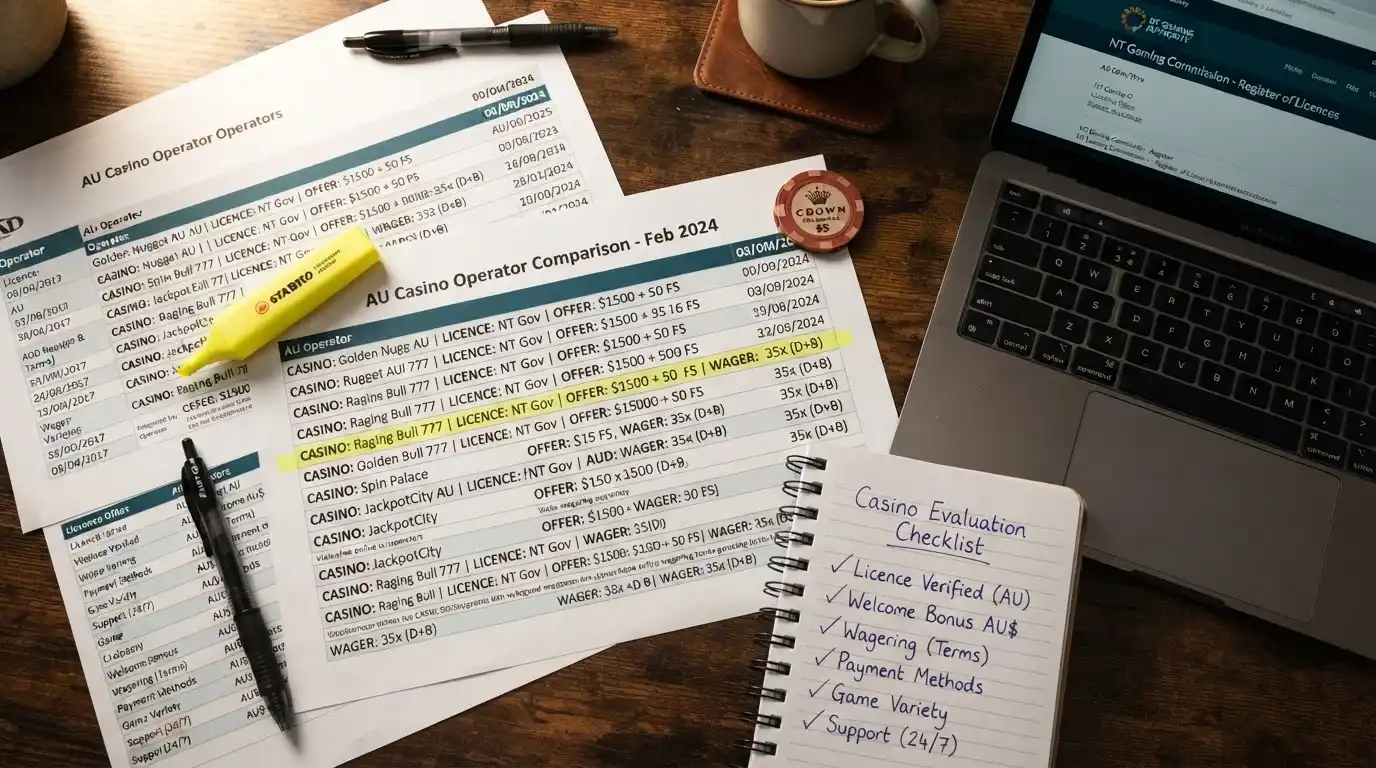
The table below compares the ten operators an Australian reader is most likely to encounter, on the dimensions research could verify: the licence each one holds (all offshore), the shape of the welcome offer, the wagering the offer carries, and the free-spin terms where research carries them. Every operator in this comparison is offshore. None holds an Australian casino licence because no such licence exists. Gaps where research carried no confirmed figure appear as em dashes.
| Operator | Licence (where held) | First-Deposit Welcome Offer | Wagering | Free Spins |
|---|---|---|---|---|
| Royal Reels | Curaçao 365/JAZ | 200% up to A$2,000 + 100 FS | 40x (deposit + bonus) | 100 on first deposit |
| RocketPlay | Curaçao Gaming Authority | 100% up to A$1,000 + 100 FS (Aztec Magic) | 40x bonus only | 100 on first deposit (A$300 win cap) |
| Wild Fortune | Offshore (not confirmed) | — | — | — |
| SkyCrown | Curaçao e-Gaming | 100% up to A$2,000 + 100 FS (Book of Dead) | 40x bonus; 30x FS | 100 (A$0.20/spin, 10x FS winnings cap) |
| Fair Go Casino | Curaçao 1668/JAZ | 100% up to A$200 ×5 (A$1,000 total) | 30x (deposit + bonus) | 50 on Cash Bandits 2 (affiliate exclusive) |
| Bizzo Casino | Curaçao 8048/JAZ2017-067 | Up to AU$2,500 + 125 spins | 40x bonus or spin wins | — |
| WinSpirit | Offshore (not confirmed) | 100% + 100 FS | 40x | 100 on first deposit |
| Scream Casino | Curaçao 8048/JAZ2020-13 | 100% up to $500 + 150 FS | 40x | 150 on first deposit |
| Rainbet | Anjouan ALSI-152406029-FI2 | 100% up to $700 + 20 FS | 40x or No Wager Lock | 20 per deposit |
| Stake | Offshore (not confirmed) | — | — | — |
The shape of the table tells the story. Every licence on the list is offshore. Every welcome offer carries a 30x or 40x wagering requirement on bonus, deposit, or both. Every free-spin bundle comes with a winnings cap or a multiplier on its own. No operator in this comparison is covered by Australian consumer law; no operator can be compelled by the ACMA; no operator is connected to BetStop. The differences between them are differences in size of bonus, cost of clearing it, and the thinness of the terms documentation. The fundamental risk is identical.
Royal Reels
Royal Reels is the operator in this set with the highest claimed portfolio RTP at approximately 97%, and the wagering carries a heavier weight than most: 40x on deposit plus bonus, which means a A$1,000 bonus requires A$80,000 of turnover before it converts to withdrawable cash. The Curaçao licence number 365/JAZ is held through a master licence structure that does not give the operator direct regulatory access to an Australian player — the licence exists, it is offshore, and it carries no AU consumer protection.
The welcome package runs across three deposits for a total of up to A$4,500 plus 250 free spins: 200% up to A$2,000 plus 100 spins on the first deposit, 150% up to A$1,500 plus 75 spins on the second, 100% up to A$1,000 plus 75 spins on the third. The minimum deposit sits at A$20, and each tier carries a 30-day validity window. The A$300 free-spin winnings cap and the bonus-wagering drag are the real cost on the headline; the headline is the A$4,500.
Royal Reels suits a player who wants a higher stated library return and is willing to clear a 40x multiplier on a multi-deposit package. It is not a fit for a player expecting fast bonus conversion or AU regulatory recourse on a withdrawal dispute — neither exists.
RocketPlay
RocketPlay is the most transparently documented operator in this set, with an independently confirmed average library RTP of approximately 96.3%. The first-deposit welcome is 100% up to A$1,000 plus 100 free spins on Aztec Magic by BGaming. The wagering runs 40x on the bonus only — lower than Royal Reels’ deposit-plus-bonus, higher than Fair Go’s 30x.
The free-spin mechanics carry the real friction. Spins are released 20 immediately, then 20 per day for four days, and winnings from those spins are capped at A$300. The bonus is valid for 5 days from activation — a tighter window than Royal Reels’ 30 days — and the maximum bet while wagering is capped at A$7.50. Withdrawals are capped at A$2,500 per day, A$7,500 per week, and A$15,000 per month. The 96.3% RTP figure is the most concrete data point RocketPlay carries; the rest is standard offshore terms.
The expected cost of clearing the RocketPlay bonus is the page’s worked calculation. Assuming only the bonus amount is wagered: a A$1,000 bonus at 40x produces A$40,000 of turnover, and at the library’s 96.3% RTP the expected loss is approximately A$1,480. The bonus costs more than it pays out, and the cost rises with the bonus size.
RocketPlay suits a player who values the independently verified RTP and can tolerate a 5-day bonus window. It is not a fit for a player who wants AU protection or fast high-volume withdrawals.
Wild Fortune
Wild Fortune carries NetEnt’s Mega Joker at the full 99% default RTP rather than the downgraded 95% variant some operators load — the single most concrete advantage in this set. Independent audit data places its provider mix across 15 of the top 20 highest-RTP titles available to AU players. The licence specifics, the bonus terms, and the deposit minimum were not independently verified for this review, so the RTP advantage sits against a thin documentation background.
What the player gets here is the Mega Joker configuration question answered: this operator ships the higher-paying version of the highest-RTP pokie available. What the player does not get is a complete bonus terms sheet. Players wanting to claim the welcome package should request the full wagering, validity and cashout terms from support before depositing.
Wild Fortune suits a player who is playing Mega Joker specifically and wants the 99% configuration. The wider bonus picture is incomplete.
SkyCrown
SkyCrown’s headline number is the largest welcome package in this set: up to A$8,000 plus 400 free spins across four deposits, with the first deposit alone offering 100% up to A$2,000 plus 100 spins on Book of Dead at A$0.20 per spin. The free spins arrive in daily batches of 20 over five days — the drip-feed, not the lump — and the wagering is split between 40x on the bonus and 30x on free-spin winnings, with a 14-day validity window and a A$5 max bet.
The Book of Dead free-spin assignment matters because of the RTP version trap: Play’n GO ships six versions, and the choice of which one SkyCrown loads determines whether those spins are playing at 96.21% or at one of the lower tiers. The standard configuration is 96.21%, and SkyCrown’s published terms reference the default. The free-spin winnings cap is 10x the total those spins produced — a soft ceiling on the headline rather than a hard one.
Crypto withdrawals average 0–4 hours, with card and bank withdrawals running 1–5 business days. The speed is real; the licence behind it is Curaçao offshore.
SkyCrown suits a player who wants the largest headline package and is comfortable clearing 40x bonus plus 30x FS in a 14-day window. The free-spin game choice is the single check worth making before staking.
Fair Go Casino
Fair Go Casino is the only RTG-exclusive operator in this set, and the wagering on its standard welcome offer is the lowest documented: 30x on deposit plus bonus, with no maximum cashout on deposit bonuses. The standard package offers 100% up to A$200 per deposit, redeemable five times for a total of A$1,000 — modest in headline size, lighter in clearing cost. The affiliate-exclusive alternative is 300% up to A$3,000 plus 50 spins on Cash Bandits 2, carrying the same 30x multiplier.
The minimum deposit is A$20, the maximum bet is A$10, and the bonus validity runs 150 days from redemption — a much longer window than the 5-day RocketPlay offer or the 14-day SkyCrown package. Withdrawals process within two business days with a A$7,500 weekly limit. The RTG-exclusive library is the trade-off: smaller game selection, fewer high-RTP NetEnt and Pragmatic Play titles, but a transparent bonus structure with no hidden cap on the cash side.
Fair Go suits a player who wants the lowest wagering multiplier in this comparison and is willing to play an RTG-only library. The Curaçao 1668/JAZ licence is offshore; the terms are the clearest part of the package.
Bizzo Casino
Bizzo’s roster is the widest in this comparison, with over 200 studios supplying a library that includes Pragmatic Play, BGaming, Yggdrasil, Playson and Evoplay. The welcome package is up to AU$2,500 plus 125 spins at 40x wagering on bonus or spin wins. The Curaçao licence 8048/JAZ2017-067 is held by TechSolutions Group N.V. through Antillephone N.V. — the same licence family used by several operators in this set.
The deposit-by-deposit split of the advertised AU$2,500 plus 125 spins was not confirmed for this review, and the specific free-spin game was not documented in the sources. The headline package and the 40x wagering are confirmed. The mechanics underneath them are not fully documented.
Bizzo suits a player who values provider variety and is comfortable with an incomplete terms sheet. The library is the strongest feature; the documentation is the gap.
WinSpirit
WinSpirit’s library is the deepest in this set at more than 2,200 slots across eight named studios — Pragmatic Play, Wazdan, BGaming, 3 Oaks, Booming Games, Quickspin, Thunderkick, Relax Gaming — plus Evolution for live dealer. The bonus structure is two deposits: 100% plus 100 free spins on the first, 200% on the second, each capped at roughly 215 USD equivalent (combined approximately 430 USD). The wagering is 40x, with a bonus-winnings withdrawal cap of roughly 2,150 USD.
The published withdrawal time is 60 minutes for verified accounts — the fastest documented in this set — and the maximum single-spin win is published at approximately 24,000 USD equivalent. The licence specifics were not confirmed for this review.
WinSpirit suits a player who values library size and fast withdrawals, and is comfortable with the bonus-winnings cap. The licence gap is the documentation weak point.
Scream Casino
Scream Casino offers the highest first-deposit free-spin count in this set at 150 spins, on top of a 100% match up to $500. The total welcome package spans three deposits: 100% up to $500 plus 150 spins on the first, 50% up to $500 plus 50 spins on the second, 75% up to $500 on the third, all at 40x wagering. The Curaçao licence 8048/JAZ2020-13 is held by company registration 152125 — the same licence family as Bizzo, both through Curaçao master-licence holders.
The bonus currency is unqualified USD rather than AUD, the free-spin game and spin value are not confirmed, and the bonus validity and maximum cashout were not documented. The terms carried are the headline match, the spin count, and the multiplier; the rest is gaps.
Scream suits a player attracted by the 150-spin first-deposit headline and is comfortable with USD-currency bonus terms. The documentation gaps are the wider than for most operators in this set.
Rainbet
Rainbet’s distinguishing feature is a No Wager Lock alternative to its 40x standard bonus — the only operator in this set offering both. The welcome package totals 250% up to $2,100 plus 60 free spins across three deposits, with each deposit capped at $700. The standard path runs 40x wagering; the alternative path is a No Wager Lock bonus with gradual release.
The licence is the weakest in this comparison: Anjouan, Union of Comoros, licence ALSI-152406029-FI2, held by RBGAMING N.V. (Company Reg. 16077). Anjouan offers no independent dispute resolution and is not comparable to MGA or UKGC frameworks. The T&C, per VIP-Grinders, reportedly restricts Australia — which may mean the operator is unavailable to AU players outright. Rainbet also restricts games above 97.4% RTP during bonus play, removing the highest-RTP titles from bonus use.
Rainbet suits a player who specifically wants a no-wagering bonus and can confirm AU availability before depositing. The licence is the most permissive, the geo-restriction is the immediate concern, and the RTP restriction during bonus play is the cost of clearing.
Stake
Stake is one of the most recognised offshore casino brands globally, but its bonus terms, licence specifics, game providers and AU-facing offer were not independently verified for this review. The operator appears in this ranking on brand recognition alone.
What a player can confirm is that Stake is offshore, holds no Australian licence, and operates outside the ACMA’s direct enforcement reach. What a player cannot confirm from this review is the current bonus structure, the wagering the bonus carries, the RTP profile of the library, and the game provider list. None of those figures is sourced from research.
Stake suits a player who already has direct experience with the brand and accepts that the terms for AU players are not documented in this comparison. The lack of confirmation is the honest finding.
The pokies where your money lasts longest — highest-RTP titles ranked for 2026
The single biggest factor in how long a bankroll survives is the published RTP of the game being played. A 99% pokie is not a winning game — it is a slow-losing game that runs roughly half as fast as a 96% pokie. The table below ranks the highest-RTP real-money pokies available to Australian players through offshore operators, with provider, volatility and maximum win where research carries them.
| Game | RTP | Provider | Volatility | Max Win |
|---|---|---|---|---|
| Goblin’s Cave | 99.32% | Playtech | — | — |
| Ugga Bugga | 99.07% | Playtech | — | — |
| Mega Joker (Supermeter) | 99.00% | NetEnt | — | — |
| Book of 99 | 99.00% | Relax Gaming | — | — |
| Jackpot 6000 (Supermeter) | 98.86% | NetEnt | Medium | 2,000x |
| 1429 Uncharted Seas | 98.60% | Thunderkick | Low | 670x |
| Blood Suckers | 98.00% | NetEnt | Low | 900x |
| White Rabbit Megaways | 97.72% | Big Time Gaming | High | 13,029x |
| Dead or Alive 2 | 96.82% | NetEnt | Very High | 111,111x |
| Big Bass Bonanza (default) | 96.71% | Pragmatic Play | — | — |
| Razor Shark | 96.70% | Push Gaming | Very High | 25,000x |
| Gates of Olympus | 96.50% | Pragmatic Play | — | 5,000x |
| Book of Dead (default) | 96.21% | Play’n GO | — | — |
The 99% club is small. Three titles reach or tie at 99%, and one of them — Mega Joker — only does so under a specific play condition. Below 99%, the workhorses cluster between 96% and 97.7%, and the trade between RTP and volatility is the real story: the highest-RTP titles are mostly low-volatility, small-max-win games, and the highest-max-win titles are mostly lower-RTP, very-high-volatility games. There is no free lunch in the math.
Mega Joker and the 99% club — the pokies with the highest published RTP
The 99% club has four members, and three of them carry conditions. NetEnt’s Mega Joker returns 99% only in Supermeter mode at maximum bet; base play runs between 76.9% and 85.1%. Relax Gaming’s Book of 99 ties the figure at 99.00% without the mode-switch condition, making it the simpler choice at the top of the rankings. Playtech’s Ugga Bugga (99.07%) and Goblin’s Cave (99.32%) sit above both, but availability at AU-facing operators varies by regional configuration — not every offshore casino loads them.

Jackpot 6000 from NetEnt returns 98.86% in Supermeter mode with medium volatility and a 2,000x maximum win. Like Mega Joker, the headline figure hides a play-mode requirement. The base game returns less; the 98.86% is what a player who plays Supermeter at max bet will see over millions of spins.
The practical question for a player who wants the 99% figure is whether they will actually play the condition. Mega Joker at 99% requires Supermeter mode at maximum bet; Book of 99 at 99% requires nothing beyond normal play. For a player who wants the highest published RTP without a play-mode tax, Book of 99 is the cleaner pick.
The mid-to-high 90s workhorses — strong RTP with bigger win potential
The pokies in the 96.5%–98.6% range combine a sustainable return with volatility profiles and max-win ceilings the 99% club cannot match. The trade-off is concrete: 1429 Uncharted Seas (98.60%, low volatility, 670x max win) returns small amounts frequently; White Rabbit Megaways (97.72%, high volatility, 13,029x max win) returns large amounts rarely. The 0.88 percentage-point RTP gap is smaller than the difference in how the two games feel across a session.
Blood Suckers at 98.00% with low volatility and a 900x max win is the closest to a “grinding” game in the high-RTP set — a long, flat session with frequent small wins. Dead or Alive 2 at 96.82% with very high volatility and a 111,111x max win sits at the other extreme: a game where the bankroll can sit flat for hundreds of spins and then pay out in concentrated bursts.
Razor Shark at 96.70% with very high volatility and a 25,000x max win is the high-RTP Push Gaming title in this set. Gates of Olympus at 96.50% with cluster-pay mechanics and Zeus multipliers up to 500x is the Pragmatic Play workhorse. Big Bass Bonanza at 96.71% is the third Pragmatic Play title in the list, and the one most likely to be loaded at the lowest configuration by operators looking to economise on RTP.
The RTP version trap — why the same title pays a different rate at different casinos
Book of Dead ships from Play’n GO at six different RTP configurations: 96.21%, 95%, 92%, 91.2%, 87.2% and 84.2%. The 96.21% version is the provider default and the one most operators load. The lower versions exist and are loaded by some operators without disclosure. Sweet Bonanza from Pragmatic Play comes in four versions: 96.51%, 95.45%, 94.51% and 91.51%. Big Bass Bonanza’s default sits at 96.71% with a lower configuration around 95.48%. Gates of Olympus sits at 96.5% default.
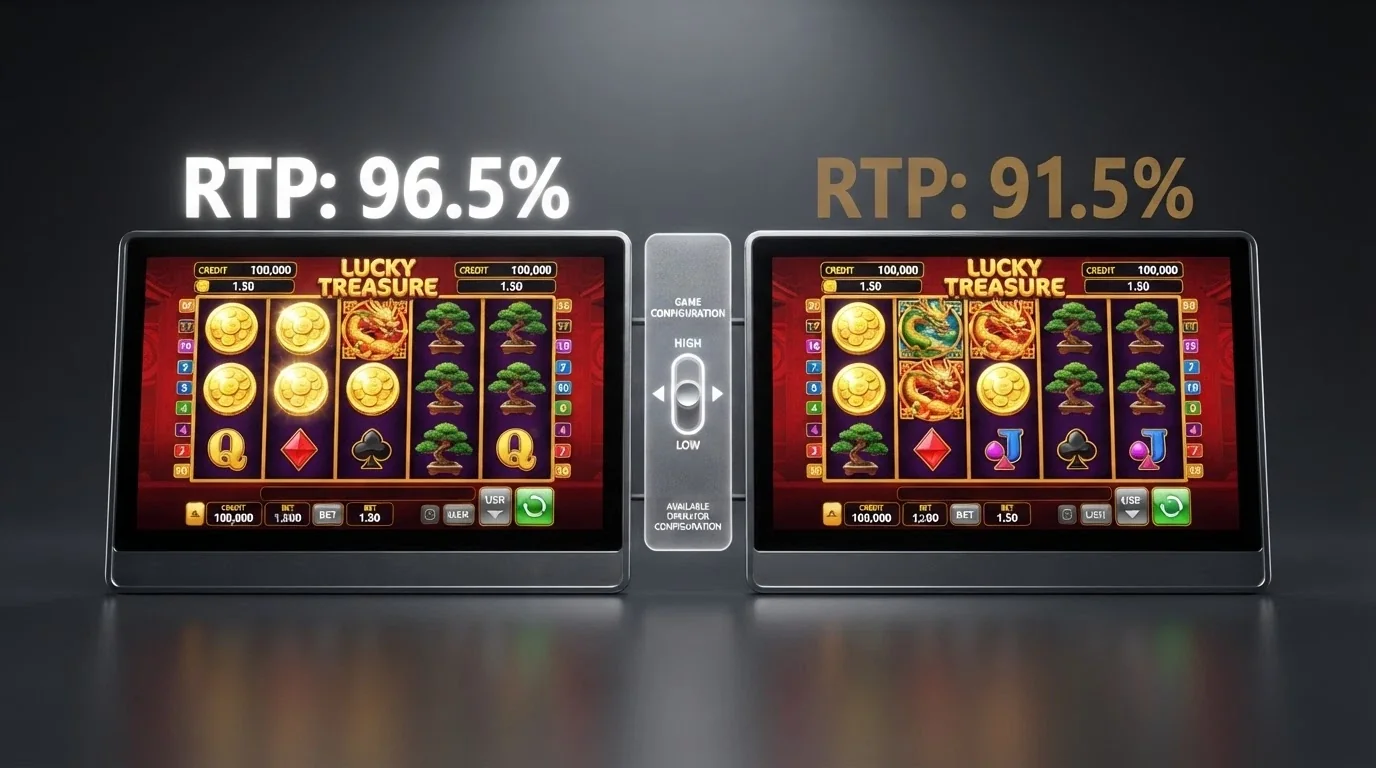
The mechanism is uniform across providers. The game studio develops the slot, certifies multiple RTP configurations, and licenses the game to operators. The operator selects which configuration to load on its platform. The player sees the same game logo, the same reel set, the same bonus features, the same music — and a return-to-player figure that may be 5 to 12 percentage points below the headline number.
The check is the in-game information screen. Every regulated pokie carries an RTP figure in its paytable or help section. That figure is the one the operator loaded for that game on that platform. If it is 91.51% on Sweet Bonanza, the player is playing a 91.51% game; the 96.51% headline is the provider’s ceiling, not the operator’s choice.
Table games vs pokies — which category actually returns more
Table games return more than pokies, in the structural sense. Blackjack played with perfect basic strategy returns above 99.5%; baccarat returns around 98.9% on the banker bet; video poker variants like Jacks or Better can exceed 99.5% at full pay. Pokies, by contrast, cluster between 95% and 97% at the high end. The gap is real and not close.
The catch is the bonus. Most offshore welcome offers restrict table games in the wagering: blackjack may contribute 5–10% per A$1 wagered rather than 100%, or be excluded entirely. A player clearing a 40x bonus by playing blackjack at 10% contribution has to generate A$400,000 of blackjack turnover to clear a A$1,000 bonus at 100% rate — an order-of-magnitude difference. The highest-payout game a bonus player can actually clear is a high-RTP pokie, because that is the game the bonus terms let them count fully.
A player not chasing bonus clearing can pick the higher-return game freely. A player chasing bonus clearing is reading the contribution table before they play.
The legal reality every Australian player needs to face before depositing
The Interactive Gambling Act 2001 prohibits the supply of online casino games, online pokies, and in-play sports betting to a person in Australia. There is no federal licence for online casino, no state licence, no territory licence. The product is banned; the licence does not exist. The 2017 amendments strengthened enforcement, and the 2026 reform package, passed on 19 August 2026, extends the regime further with measures commencing 1 January 2027.
The ACMA is the regulator. It investigates complaints, issues civil penalty proceedings, and directs ISPs to block illegal sites. As at March 2026, 1,564 illegal gambling and affiliate sites have been blocked since November 2019, and more than 225 illegal services have withdrawn from the Australian market since 2017. Civil penalties reach A$2,475,000 per day for individuals and A$12,375,000 per day for corporations. Section 15 carries a criminal penalty of 5,000 penalty units.
The individual player is not prosecuted. The IGA targets the provider. But the player at an offshore site has no Australian consumer protection, no ACMA complaints recourse, no BetStop coverage, and no legal path if the operator refuses a withdrawal. The site can be blocked at any time, with a balance on it, and the player’s only recourse is the offshore operator’s own dispute process — if one exists.
The Interactive Gambling Act 2001 — what it actually prohibits
The IGA 2001 makes it an offence to provide online casino games, online pokies, and in-play online sports betting to a person in Australia. The prohibition targets the operator, not the player; the criminal and civil penalty regimes run against the provider. The offence applies to any person or company offering the prohibited services to customers physically present in Australia, regardless of where the operator is incorporated.
What is licensed in Australia is narrower. Pre-event wagering on races and sport is licensed through state and territory operators. Lotteries and keno are licensed per jurisdiction. The Northern Territory Racing and Wagering Commission, administered through Licensing NT, is the de facto national licensor for online bookmakers — Sportsbet, bet365, Ladbrokes, and similar brands hold NT wagering licences with terms up to 20 years. The licensed product is wagering, not casino; the AU-facing casino market is structurally the French case, where the product the search describes cannot be legally offered.
ACMA enforcement — 1,564 sites blocked and the numbers behind the crackdown
The ACMA’s blocking power sits in the Telecommunications Act 1997. The regulator can direct Australian ISPs to block illegal gambling and affiliate sites at the network level; the directive is a formal request, and ISPs comply as a condition of their carrier licence. The first blocking request went out in November 2019; the count as at March 2026 is 1,564 blocked domains. More than 225 illegal services have withdrawn from the Australian market since the 2017 amendments, choosing to stop serving AU customers rather than face blocking and civil penalty proceedings.
The 2026 reform adds a new tool from 1 January 2027: explicit authority for banks and payment providers to block transactions to illegal gambling operators. The current regime relies on site blocking; the new regime adds payment blocking at the banking layer. For a player at an offshore casino, the practical risk under the new regime is that a deposit can be declined at the bank before it ever reaches the operator, and a withdrawal can be blocked on the way back.
What an Australian player gives up at an offshore casino
Playing at an offshore casino means stepping outside every protection the Australian regulatory framework provides. The list is concrete.
- No BetStop coverage. Self-exclusion at home means nothing offshore; the operator has no signal that the player is registered.
- No ACMA complaints recourse. The regulator cannot compel an offshore operator to pay a disputed withdrawal.
- No Australian consumer-law protection. The Australian Consumer Law does not apply to a service offered from outside Australia.
- No recourse on refused withdrawals or voided wins. The operator’s terms apply; the player’s only path is the operator’s own dispute process.
- Site-blocking risk. The operator’s domain can be added to the ACMA’s blocklist at any time, with the player’s balance stranded on the platform.
- Payment-method tell. If the operator accepts credit cards or crypto, it is operating outside the AU framework — credit cards and crypto have been banned as payment for online wagering in Australia since 11 June 2024.
The give-up is the entire regulatory framework. None of the protections an AU-licensed wagering service is required to provide reaches the offshore casino. The player carries all the risk; the operator carries none of it under Australian law.
The 2026 reform — what changes on 1 January 2027
The Interactive Gambling Amendment (Gambling Reform) Bill 2026 passed Parliament on 19 August 2026, with the substantive measures commencing 1 January 2027. The package covers advertising, inducement marketing, and bank payment-blocking authority.
The advertising restrictions are the most visible change. From 1 January 2027, no more than three wagering advertisements per hour between 6:00 am and 8:30 pm; a live-sport blackout from 15 minutes before kick-off to 5 minutes after; radio ads barred during school times; broadcasting odds banned outright; online ads only to verified 18+ users with an opt-out register; no ads in licensed venues or on uniforms; athletes, celebrities, and influencers barred from promoting wagering products. The penalty regime under the new Part 7C carries maximum penalties of A$364,000 for individuals and A$1,820,000 for corporations.
The inducement restrictions are the quieter change. Direct marketing of inducements is prohibited for 14 days after a customer signs up, for three months after a person deregisters from BetStop, and indefinitely for customers identified as at risk of gambling-related harm. The bank payment-blocking authority runs alongside: from 1 January 2027, banks and payment providers can block transactions to illegal gambling operators as a matter of explicit statutory authority, rather than the existing grey-zone position. The Interactive Gambling Amendment (Stop the Gambling Ads) Bill 2026, passed in the same package, introduces a phased prohibition on wagering advertising over three years.
The reform does not legalise online casino. The product remains prohibited under the IGA 2001. The reform tightens what is already prohibited and adds the tools to enforce it more directly.
Staying in control while chasing a high payout
The “highest payout” search sits in tension with safer-play messaging. Chasing maximum return means chasing the games with the lowest house edge, which means playing longer, which means a longer exposure to variance. RTP is a long-run average; session-level experience is shaped by volatility. A 99% pokie in base mode is a worse return than a 96% pokie with a low-volatility, frequent-win profile, and the gap compounds over weeks and months.
The offshore environment strips away every Australian harm-minimisation tool. BetStop does not cover offshore casinos. State-mandated deposit limits do not reach them. ACMA complaints resolution does not apply. The self-imposed tools — deposit caps, session timers, take-a-break — are only as strong as the operator’s willingness to honour them, and no AU regulator can compel an offshore operator to honour them.
BetStop and the self-exclusion gap — why it cannot protect you at an offshore casino
BetStop — the National Self-Exclusion Register — went live in August 2023 and had recorded 67,480 registrations as at 31 July 2026, with 41,290 exclusions still active. Seventy-eight percent of registrants were under 40, and 38% chose lifetime exclusion. One registration excludes a person from every Australian-licensed wagering service: Sportsbet, bet365, Ladbrokes, the TABs, the lotteries.

BetStop binds Australian-licensed wagering services only. An offshore casino is not licensed in Australia, is not connected to the register, and will continue accepting a self-excluded person’s money without flag or block. The register exists; the offshore operator is not on it. Self-exclusion at home means nothing at an offshore pokie site.
For a person who has registered with BetStop, the offshore gap is the single largest practical risk. The protection they signed up for does not extend to the operators they can reach from the same device.
The help that exists and the help that does not
Australia has a strong gambling-help infrastructure for harm minimisation and treatment.
- National Gambling Helpline: 1800 858 858 — free, confidential, staffed 24/7.
- Gambling Help Online: gamblinghelponline.org.au — online chat and counselling.
- BetStop: National Self-Exclusion Register — one registration, all AU-licensed wagering services.
The infrastructure does not reach into an offshore casino. Self-imposed tools (deposit limits, session timers, take-a-break) are available at AU-licensed operators under state and territory conditions; offshore operators may or may not offer them, and no AU regulator can compel them to. The National Gambling Helpline and Gambling Help Online are available regardless of where a player plays, because they are counselling services, not operator-side tools.
The single most useful protective step a player can take before depositing at an offshore casino is to confirm the self-imposed tools the operator actually offers, and to verify the BetStop registration is in place. Neither step protects the bankroll — both reduce the harm a session can do.
The numbers behind the search — problem gambling in Australia
About 2.1% of Australian adults — roughly 430,000 people — experience problem gambling. The Australian Institute of Health and Welfare put high-risk gambling at 1.8% in 2022. The “highest payout” search is about maximising return, but for a share of the people running it, the real question is how to stop.
A high-RTP pokie is not a safe pokie. The figure on the in-game info screen is a long-run mathematical average; the player’s session is short-run variance. The tools that exist — BetStop, the helpline, Gambling Help Online — are independent of where a player plays, and they are available without registration, without cost, and without judgement. The cost of asking is a phone call.
How we chose and ranked the casinos on this page
The ranking was built by cross-referencing independent audit data from PayoutVerdict and CasinoAudit against the ACMA’s public enforcement record and each operator’s own published terms. Every operator was checked for its real licence status; no operator was ranked on a claim it could not back with a verifiable RTP figure or transparent bonus term.
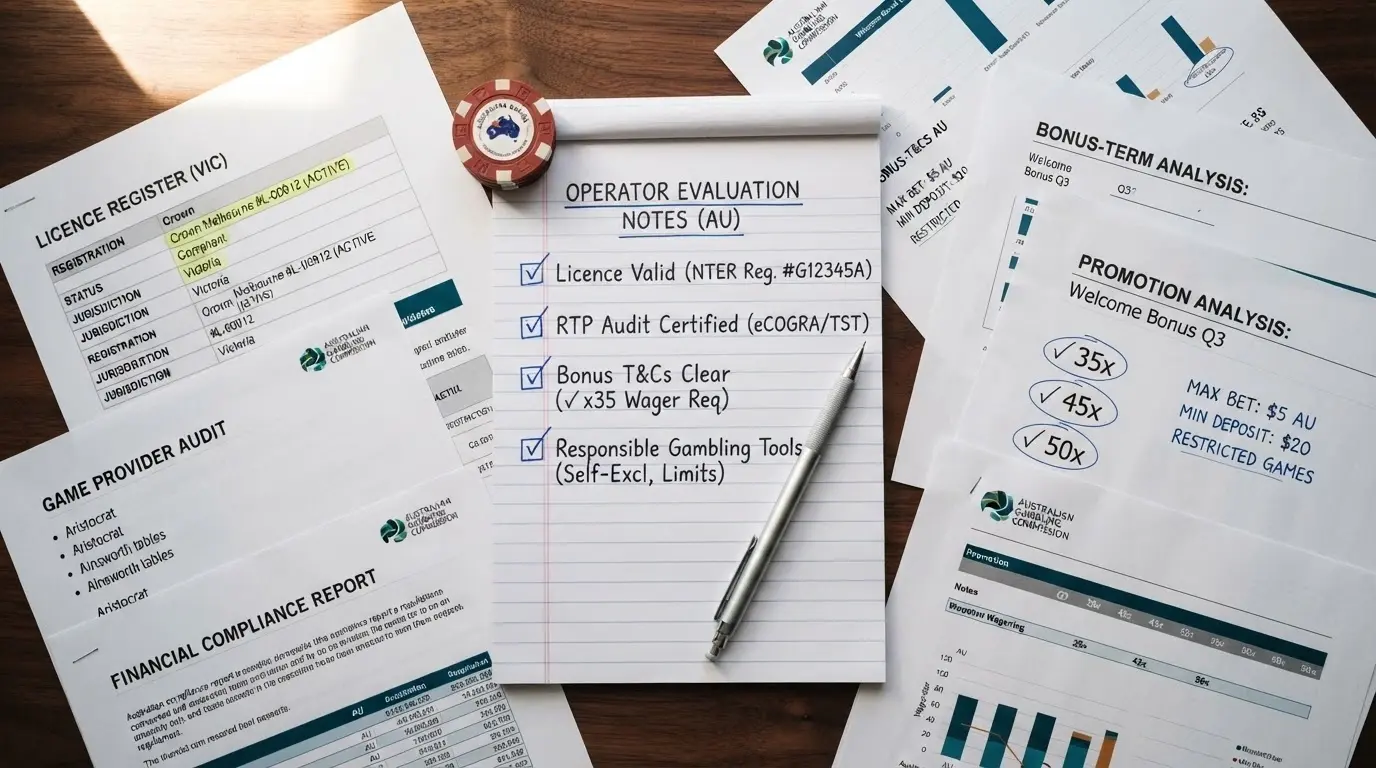
The criteria were four. First, stated portfolio RTP backed by independent testing rather than operator self-report. Second, bonus terms fully documented with wagering, validity, and caps — not just a headline match percentage. Third, a licence traceable to a register entry rather than a brand-level “licensed and regulated” claim. Fourth, a provider mix and game count where research confirmed them.
Operators with unconfirmed data appear in the ranking with those gaps disclosed. Stake, Wild Fortune, and WinSpirit each carry at least one dimension research could not verify; they are included because their names will surface in the AU-facing search, and the honest finding is that the data is thin — not that the operator is excluded. No operator was credited with a value it could not source; no operator was excluded for having thin data.
The honest gaps are the point. A ranking that fills every cell with a plausible number manufactures certainty that does not exist. The cells with em dashes tell the reader what could not be verified; the cells with figures tell the reader what could. The ACMA enforcement record is the verification benchmark: any operator currently blocked or under active investigation would be a structural concern the table should not normalise.
What to actually do about the highest-payout question in 2026
The actionable answer to “highest payout online casino Australia” is not a casino name. It is a checklist of what to verify before depositing a dollar.

First, the in-game RTP. Open the game, open the information or help screen, and read the RTP figure printed in the paytable section. If the figure is 91.51% on Sweet Bonanza, the player is playing a 91.51% game; the 96.51% headline is the provider’s ceiling, not the operator’s choice. If the operator cannot or will not tell the player which version is loaded, that is itself information.
Second, the bonus terms. The headline match percentage is the smallest number on the page. The wagering multiplier, the validity window, the free-spin winnings cap, the maximum bet while wagering, and the bonus-winnings withdrawal cap together determine the actual cost of the offer. A 200% match with a 40x deposit-plus-bonus multiplier and a 30-day validity costs more than a 100% match with a 30x bonus-only multiplier and a 150-day validity, even though the headline is smaller.
Third, the withdrawal history. Independent player reports, regulator enforcement records, and the operator’s own published payment-time figures together give a sense of whether the operator pays out. The ACMA’s 1,564 blocked sites list and the 225+ withdrawn services count are the wider benchmark: any operator currently blocked or recently withdrawn is a structural risk to a balance.
The highest published RTP in the AU-facing offshore market is 99.00% on Mega Joker in Supermeter mode and on Book of 99 in normal play. Ugga Bugga at 99.07% and Goblin’s Cave at 99.32% sit above, though availability at AU-facing operators varies. Below the 99% ceiling, the workhorses cluster at 96.5%–98.6%, and the choice between them is a choice between lower-RTP high-volatility games with large max-win potential and higher-RTP low-volatility games with smaller max-win potential.
The highest-payout path is a high-RTP pokie at an offshore casino with documented bonus terms, confirmed RTP configuration, and a clean withdrawal history — not the casino with the biggest headline number. The honest answer to “highest payout online casino Australia” in 2026 is that the product the question describes is prohibited in the country it asks about, the operators an Australian can reach are all offshore and unlicensed in AU, and the difference between a generous pokie and a costly one is the in-game RTP figure, the bonus terms, and the operator’s track record — not the brand on the lobby.
Frequently Asked Questions
Do offshore casinos actually pay out to Australian players?
Some do, some do not. The operators in this comparison carry withdrawal caps ranging from A$2,500 per day to A$15,000 per month, and processing times from under an hour to five business days. The honest answer is that payout reliability varies by operator, and no AU regulator can compel an offshore operator to pay. Independent player reports and the ACMA enforcement record are the verification tools.
Are online casino winnings taxable in Australia?
No. Betting and gambling winnings are not assessable income under section 6-5 of the ITAA 1997, and gambling losses are not deductible under section 8-1, unless the person is carrying on a business of betting or gambling. The tax treatment does not depend on whether the operator is licensed in AU or offshore.
How do I check if an online casino’s RTP claims are genuine?
Open the game, open the in-game information or help screen, and read the RTP figure printed in the paytable section. That figure is the one the operator loaded. If it is below the headline figure on the provider’s website, the operator is running a lower-RTP configuration. If the operator cannot or will not tell you which version is loaded, that is itself information.
Can Australian banks block payments to online casinos?
From 1 January 2027, yes — the 2026 reform grants banks and payment providers express authority to block transactions to illegal gambling operators. The current position is that credit cards and crypto are already banned for AU wagering (since 11 June 2024), and licensed operators offer debit, bank transfer, PayID/Osko, and BPAY. An operator asking for credit card or crypto is operating outside the AU framework.
What does RTP mean and how does it affect my winnings at online pokies?
RTP is return-to-player — the share of every dollar wagered that the pokie is programmed to return across millions of spins. A 97% RTP pokie returns 97 cents per dollar in the long run; the 3 cents is the house edge. RTP is a long-run average, not a session guarantee: short-run variance is shaped by volatility, and the player at the screen can experience any outcome from a long losing streak to a large single-spin win within the same game.
Free-play RTP vs real-money RTP — does the demo pay the same?
The demo mode is a feature test, not a payout preview. Providers are not required to match the demo configuration to the real-money configuration, and most do not disclose whether the two are running the same RTP version. A demo session on Sweet Bonanza may be running the 96.51% configuration while the real-money version of the same game on the same platform is running 91.51%. The player cannot tell from the lobby.
Wagering requirements deepen the gap. Real-money play under a bonus carries the multiplier’s drag: a 40x bonus on A$1,000 means A$40,000 of effective wagering, and the RTP figure is the long-run return on that volume. The demo’s zero-wagering environment cannot reproduce the drag. A demo session cannot preview the real-money experience under bonus terms, because the math that determines the real-money return is not running.
Treat demo mode as a way to learn the game’s features, mechanics, and bonus triggers. Treat the in-game RTP info screen as the only honest payout preview.