
Best Instant Withdrawal Casinos Australia
Every casino on this page promises fast payouts. None of them is licensed in Australia to do what they are doing. That is not editorial framing — it is the law. Under the Interactive Gambling Act 2001, providing an online casino game or online pokie to a person in Australia is a criminal offence, and no operator listed below holds an Australian licence, because none exists to hold. That is the page’s organising fact, and it shapes everything that follows.

Data current as of 12 November 2026. Licence and prohibition claims verified against the Interactive Gambling Act 2001 and ACMA enforcement records.
Table of Contents
- Why “Instant Withdrawal” Rarely Means What You Think
- The Fastest-Paying Casinos Australians Can Access in 2026
- Rocket Play
- Skycrown
- Royal Reels
- WinSpirit
- Stake
- Rainbet
- Scream Casino
- FairGO
- Bizzo Casino
- Rocket Casino
- Why Every Instant Withdrawal Casino Serving Australia Is Operating Outside the Law
- Why Your Instant Withdrawal Bonus Is Smaller Than It Looks
- Payment Methods That Actually Deliver Instant Withdrawals
- Crypto Casinos: Faster Withdrawals, Bigger Legal Risk
- The Pokies That Pay Out Fastest (and the Catch)
- How We Evaluated Every Casino on This List
- What You Should Actually Do About Instant Withdrawal Casinos in Australia
- Frequently Asked Questions
Why “Instant Withdrawal” Rarely Means What You Think
“Instant” is the most-used adjective in the offshore casino market. It is also the least-defined one. A casino writing “instant withdrawals” on its landing page is rarely describing a technical guarantee — it is describing a best-case scenario the operator hopes a player will mistake for a normal outcome. The gap between the two is where this page spends most of its time.
What “Instant Withdrawal” Actually Means
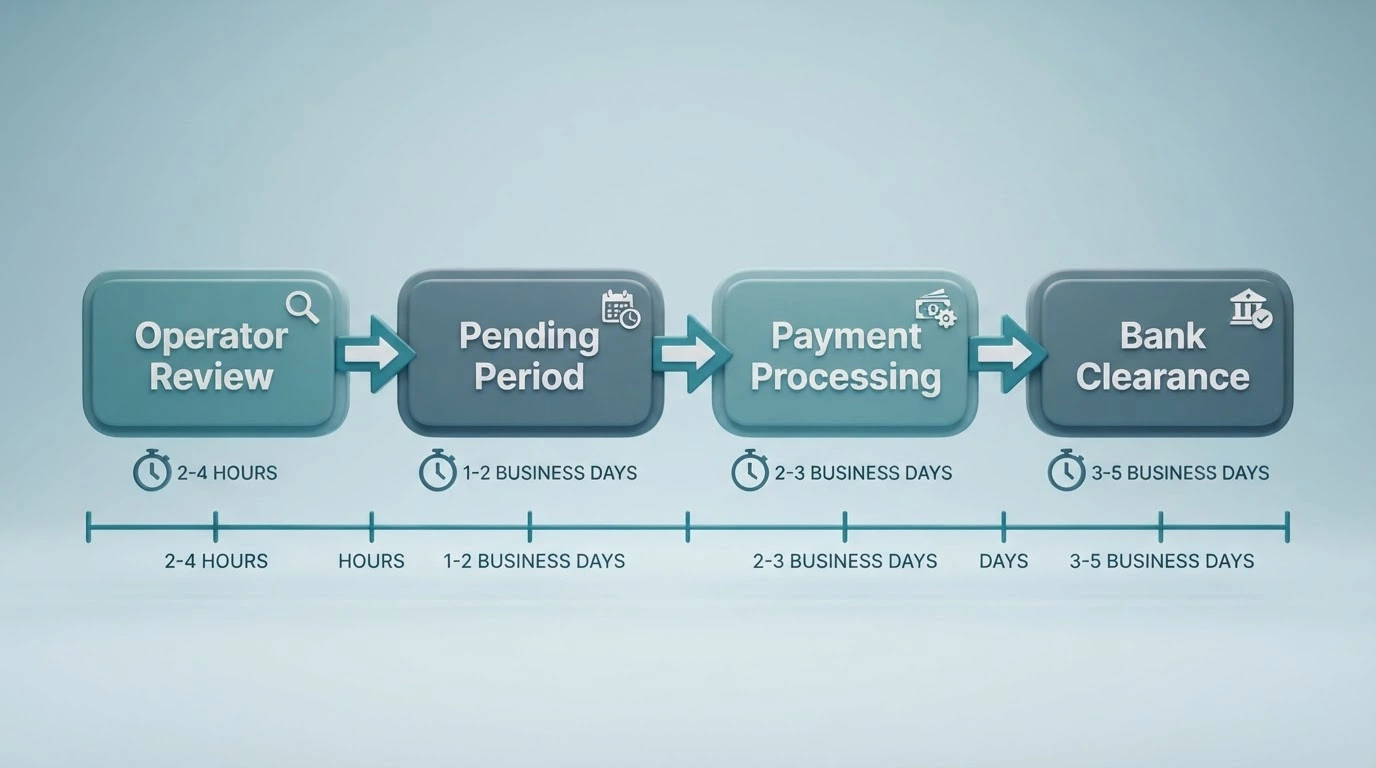
A withdrawal at an online casino moves through two stages that the marketing copy collapses into one. The first is the operator’s processing desk: the internal review, pending period, KYC check and release decision. The second is the payment rail: the time it takes funds to travel from the casino’s account to the player’s wallet or bank once the operator has let go of them.
Casino marketing almost always describes only the second stage. PayID, crypto, e-wallets and similar rails are genuinely fast at moving money — PayID settles in seconds, crypto in minutes — but none of those speeds matter until the casino has finished reviewing the withdrawal request. That review can take twenty-four hours. It can take seventy-two. It can take longer if the account triggers an additional identity check, a bonus-wagering audit, or a source-of-funds review. The “instant” lives downstream of a gate the casino controls.
This is the structural reason “instant withdrawal casino” is a phrase that promises more than it specifies. A casino can advertise the speed of the rail it uses while operating a pending period that swallows most of that speed. The two are not contradictory, because the marketing never claimed otherwise — it just did not mention the part where the casino holds the money first.
For Australian players the gap is wider than for players in licensed markets, because offshore casinos have no regulator auditing their pending periods. A licensed Australian wagering operator publishes its processing times in its terms and is answerable for breaches. An offshore casino is answerable to its own terms page, and the practical enforcement runs through the casino’s customer support team. Nothing else.
Real-Money Instant Withdrawal Casinos
The withdrawal threshold is the first number a player meets after they win. Most offshore casinos set a minimum cashout — anywhere from A$10 to A$50 is common — and the operator releases funds only after that threshold is reached and any play-through obligation on the deposited funds has been satisfied.
For bonus play the rules tighten. Wagering requirements attach a multiplier to the bonus amount, and the bonus funds cannot be withdrawn until the player has wagered the required turnover. Some operators also require the original deposit to be wagered at least once before a withdrawal is permitted — a structural anti-money-laundering measure at licensed operators, and a discretionary policy at offshore ones. Either way, a “real money” withdrawal request is rarely a clean request for cash.
None of the operators reviewed here had their minimum-withdrawal thresholds or play-through obligations independently verified during this research. That is itself a signal — an offshore casino’s withdrawal policy is the kind of detail a player should read in full before depositing, because it is the detail most often cited by players who later say the payout was not as advertised.
Mobile Instant Withdrawal Experience
The withdrawal flow on a phone is structurally identical to the flow on a desktop, but the experience is not. Mobile users typically access the casino through either an app or a mobile browser, and the withdrawal page sits behind two or three taps from the home screen. A push notification may or may not arrive when the withdrawal is approved — this varies by operator and by app — and the player is often checking the casino’s transaction history rather than waiting for a notification.
What does not change between desktop and mobile is the operator’s processing time. The withdrawal request lands in the same queue. The KYC check runs the same way. The payment-rail speed is the same. If a casino holds funds for seventy-two hours on desktop, it holds them for seventy-two hours on mobile too. The mobile experience is faster to navigate, not faster to settle.
No operator in this review had mobile-specific withdrawal terms publicly confirmed. Where a casino offers both an app and a browser version, the player should check whether one carries different withdrawal limits — a handful of offshore brands do, typically with a tighter limit on the app than on the desktop site.
The Fastest-Paying Casinos Australians Can Access in 2026
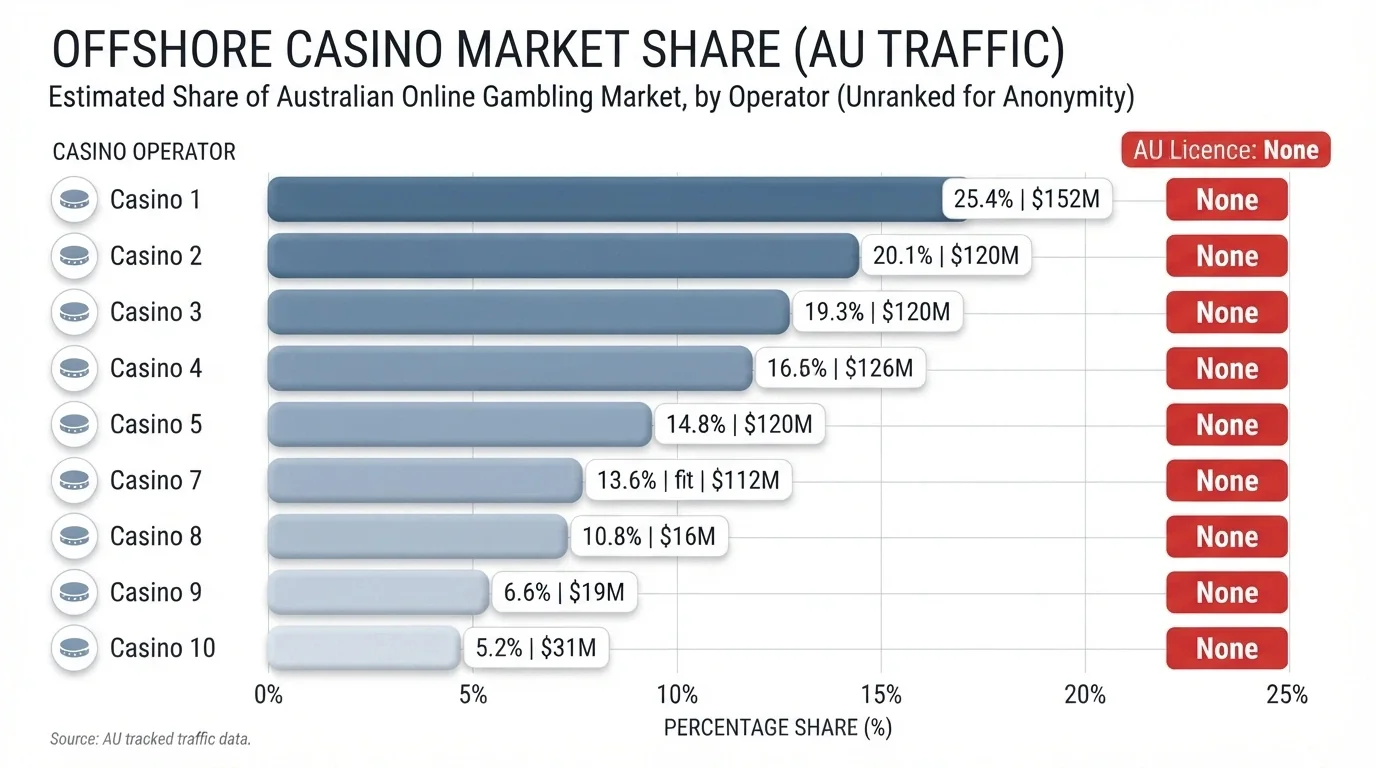
Every operator on this page sits outside Australian law. That is not a footnote — it is the premise of the table below. None of the ten brands holds an Australian licence, because the licence does not exist for the product they sell. What each entry carries instead is its measured market presence in Australia: the share of tracked AU traffic the operator captures, and the estimated revenue it draws from that traffic. AU-licensed operators do not appear in the ranking, because AU-licensed online casino operators do not exist.
| Casino | AU Market Share | Est. AU Revenue | AU Licence Status |
|---|---|---|---|
| Rocket Play | 9.4% | A$632.69M | Offshore — no AU licence |
| Skycrown | 8.55% | A$436.07M | Offshore — no AU licence |
| Royal Reels | 2.51% | A$243.99M | Offshore — no AU licence |
| WinSpirit | 1.55% | A$110.3M | Offshore — no AU licence |
| Stake | 1.28% | A$115.67M | Offshore — no AU licence |
| Rainbet | 1.28% | A$83.13M | Offshore — no AU licence |
| Scream Casino | 0.99% | A$94.87M | Offshore — no AU licence |
| FairGO | 0.8% | A$69.11M | Offshore — no AU licence |
| Bizzo Casino | 0.57% | A$51.38M | Offshore — no AU licence |
| Rocket Casino | 0.57% | A$43.22M | Offshore — no AU licence |
The column readers will scan first is the market-share column, which is also the column the page should warn against. Market share measures AU player traffic and revenue, not payout reliability, not bonus fairness, not consumer protection. An operator with a high share is an operator Australians are spending real money with. That is not the same as an operator Australians are being paid fairly by.
How We Ranked the Fastest-Paying Casinos
The ranking above is built on AU market-share data — the only quantitative backbone that could be assembled for this comparison. Every brand on the list is one Australian players actually use, ranked by the size of that use. Withdrawal-speed claims could not be independently verified for any of the ten, because none of the operators publish audited payout times and none of them are subject to a regulator that would.
This is the part of the page that owes the reader the most candour. The phrase “fastest-paying casinos” in the headline carries a promise the data cannot keep. What the ranking actually shows is the order in which Australian players reach each offshore brand, sorted by market presence. The withdrawal positioning for each brand is its own claim, and the reader is the one who has to verify it.
What the reader should check, before treating any of the ten as “fast”: the operator’s stated pending period in its terms, its published processing-time windows for at least three different payment methods, and whether the bonus terms impose any withdrawal cap. None of these are visible in the table above, because none of them are independently verifiable. All of them are visible on each operator’s own site — the site the table does not link to, for the reason the licence-status column spells out.
Best by Payment Method
The payment-method dimension is the one where the AU legal status does some of the page’s work for it. A casino asking an Australian player for a credit card or a crypto deposit is, by that single signal, operating outside the Australian rules — the Interactive Gambling Amendment (Credit and Other Measures) Act 2023 banned both for online wagering from 11 June 2024. An operator ignoring that ban is not an operator holding an Australian licence, because an Australian licence would have forced it to enforce it.
That makes the payment method a proxy for the licence status. Every brand on this list accepts payment methods that an Australian-licensed operator could not lawfully take. PayID, debit cards and bank transfers remain legal rails for licensed wagering — the operators in this set that lean on those rails are at least processing payments through channels that exist within the Australian banking system. The operators that centre their pitch on crypto deposits are not.
Per-operator payment-method coverage was not independently verified for this review. What is verifiable is the legal position: a casino asking for crypto from an Australian player is breaking the prohibition itself. That is a stronger signal than any processing-time claim the casino could make.
Rocket Play
Rocket Play is the largest AU-tracked offshore casino on the list — 9.4% of the tracked market, with an estimated A$632.69M drawn from Australian players. That is the kind of market share that puts an operator ahead of most of its peers on visibility, on the affiliate sites that route traffic to it, and on the brand recognition a returning player brings back. It also makes Rocket Play the operator Australian regulators see most clearly on their radar: an operator pulling hundreds of millions of dollars from this market is an operator the ACMA knows by name.
Rocket Play is not licensed in Australia. No operator on this page is. The product it sells — online casino games and pokies to persons in Australia — is prohibited under the Interactive Gambling Act 2001. The ACMA’s enforcement record reads 1,564 illegal gambling and affiliate websites blocked since November 2019, and more than 225 illegal services withdrawn from the Australian market since 2017. Rocket Play’s status under that framework is no different from any of its peers on this list: offshore, unlicensed for the Australian market, and one blocking request away from the ISP block page.
Rocket Play’s withdrawal positioning in its own marketing is the same “instant withdrawal” language the rest of the market uses. The reader should treat that as marketing language until the operator’s own terms page says otherwise, and the reader should treat any pending-period claim as the number that actually governs the timeline. An offshore operator with no AU regulator has no one enforcing its payout time other than its own customer support team.
For an Australian player who has decided to use Rocket Play anyway, the verification is on them: confirm the operator’s actual pending period from the terms page, confirm the payment methods actually supported for AU players (versus the global list on the homepage), and confirm the bonus terms do not impose a withdrawal cap that swallows the headline. None of those checks are visible from the market-share data above, because the market-share data has nothing to say about them.
For an Australian player who has not yet decided, the question is whether a 9.4% AU market share is a reason to choose an operator or a reason to look at it more carefully. It is both. Rocket Play’s reach in this market is a fact about scale, not about safety, and scale on the wrong side of the law is still on the wrong side of the law.
Skycrown
Skycrown sits at the second-largest AU-tracked offshore position, with 8.55% of the tracked market and an estimated A$436.07M in AU revenue. Its marketing centres on instant-withdrawal claims and a fast-payout positioning that places it in the same league as Rocket Play for the Australian player. Like every operator on this list, Skycrown holds no Australian licence.
The instant-withdrawal language is the part to read closely. Offshore casinos using the phrase tend to mean “we process withdrawals quickly once we have decided to release the funds” — which leaves the decision to release entirely in the casino’s hands. Skycrown’s published terms are the place to find what “quickly” actually means in hours, and the reader who skips that step is reading the marketing rather than the contract.
What an Australian player should check on Skycrown before depositing: the pending period stated in the withdrawal terms (typically quoted in hours), the minimum withdrawal threshold, the bonus-wagering requirements that gate bonus-derived winnings, and whether any payment method carries a withdrawal cap. None of these were independently verified for this review, and Skycrown’s offshore status means no Australian regulator has done that work either.
For a player who chooses Skycrown, the brand’s AU footprint of A$436.07M is a measure of reach, not reliability. It tells the reader how many Australians are already using the site. It does not tell the reader how fast those Australians are being paid.
Royal Reels
Royal Reels occupies the third-largest AU-tracked position with 2.51% of the market and an estimated A$243.99M drawn from Australian players. The brand is AU-coded in its name and visual identity — “Royal Reels” sits comfortably in the register of Australian-facing gambling brands — but the offshore legal status is the same as every other brand on this list: no Australian licence, no Australian regulator, no Australian complaints body.
The branding is part of the page’s cautionary tale, not separate from it. An operator that adopts Australian-themed naming and imagery while holding a licence in an offshore jurisdiction is making a deliberate choice about which Australian associations to invoke and which Australian protections to honour. Royal Reels invokes the first and does not honour the second. The reader can draw the obvious conclusion without the page drawing it for them.
The withdrawal terms to verify independently are the same as for any offshore operator: the pending period, the minimum threshold, the bonus-wagering multipliers, the game-weighting rules that determine how much of a player’s bets count toward clearing those multipliers. None of these were confirmed for Royal Reels in this review, and the offshore status is the reason no Australian regulator has done the work for the reader.
A player who uses Royal Reels is using a brand that has put real effort into looking like an Australian operation without taking on the obligations of one. That is the brand’s commercial position. It is also the brand’s most useful single-sentence summary for any Australian player trying to decide whether the AU-themed exterior matches the offshore interior.
WinSpirit
WinSpirit holds 1.55% of the AU tracked market, with an estimated A$110.3M in AU revenue. It is a smaller operator than the top three but still draws eight-figure revenue from the Australian market, which makes it a noticeable presence on the affiliate sites and review pages that route Australian players offshore.
WinSpirit markets itself around fast payouts, and the same caveat applies as to every operator on this list: “fast” is a marketing word, not a contractual number, and the terms page is where the reader finds what the contract actually says. No published payout times for WinSpirit were independently verified during this review. The reader who treats the marketing claim as a fact is reading the wrong document.
For Australian players, WinSpirit’s offshore status brings the same package of risks as every other operator on the list: no BetStop coverage, no ACMA recourse on a refused withdrawal, no Australian complaints body to escalate to, and the standing possibility that the ACMA directs an Australian ISP to block the site at any time. WinSpirit can be blocked tomorrow with a player’s balance still on it, and the ACMA cannot recover that balance from the operator.
What this means in practice is that any AU player who chooses WinSpirit — or any of the ten operators on this list — is choosing to take the offshore route on its own terms. The reader’s job is to read those terms before depositing, not after.
Stake
Stake is the most prominent crypto-native casino on this list, with 1.28% of the AU tracked market and an estimated A$115.67M in AU revenue from Australian players. Its business model centres on crypto deposits and crypto withdrawals — which is itself the page’s biggest single warning about the brand for Australian players.
Since 11 June 2024, using digital currency as payment for online wagering has been banned under the Interactive Gambling Amendment (Credit and Other Measures) Act 2023. An operator accepting crypto from an Australian player is operating outside the Australian rules. The penalty for an operator that fails to enforce the ban is up to A$247,500. Stake’s pitch to Australian players is, by definition, a pitch to break Australian rules.
That is not editorial framing. It is the statutory characterisation of what the operator is doing. The ACMA’s position is unambiguous on this point: an Australian who is asked for a crypto deposit by a gambling site is being served by someone outside the Australian rules. The payment method is itself a tell.
Stake’s withdrawal speed, where crypto is involved, is genuinely fast at the rail level. Bitcoin and Ethereum confirmations run in minutes. The bottleneck is the same bottleneck every offshore casino shares — the operator’s own processing desk. For Stake, the marketing claim is “instant” and the offshore status is the part the marketing does not mention.
A player who uses Stake from Australia is using a brand whose business model runs on a payment method Australia has banned for online gambling. The reader can decide whether the rail speed is worth the legal position. The page does not decide for them.
Rainbet
Rainbet tracks at 1.28% of the AU market — the same share as Stake, with a smaller revenue figure of A$83.13M, suggesting a smaller average deposit or a younger player base. Rainbet is an emerging competitor in the AU offshore market rather than an established brand, and its withdrawal positioning follows the same fast-payout template as its peers.
The offshore status is the same. No Australian licence exists for Rainbet, and no Australian regulator enforces Rainbet’s payout terms. The reader is verifying the operator’s withdrawal claims independently — pending period, processing-time windows, minimum thresholds, bonus caps — because no one else will.
For an emerging brand, the verification load is slightly higher than for an established one. New operators change their terms more frequently, often as a function of growth or pressure from payment processors. A player who signed up six months ago may find that the bonus terms or the pending period has shifted. The reader who treats any operator’s terms as a static document is reading an old contract.
Rainbet is, in the AU market-share data, the kind of brand an Australian player finds through an affiliate link rather than through name recognition. That is the reader the page should address most directly: this is the casino the affiliate page sent you to. Here is what the affiliate page did not tell you about it.
Scream Casino
Scream Casino holds 0.99% of the AU market and an estimated A$94.87M in AU revenue. The brand plays on an entertainment-coded identity — the name is the marketing — and its withdrawal positioning follows the same instant-payout template as its peers on this list.
Entertainment branding is not the same as entertainment licensing. Scream Casino is offshore, unlicensed in Australia, and subject to the same ACMA enforcement framework as every other operator on the list. The reader who finds Scream Casino through its brand identity should find the offshore legal status before the deposit page.
The withdrawal terms to verify independently are the standard offshore-casino checklist: pending period, processing-time windows per payment method, bonus-wagering multipliers, maximum-cashout caps on bonus winnings, and any payment-method exclusion attached to bonus play. None of these were independently confirmed for Scream Casino in this review. The reader who treats the brand’s entertainment-coded marketing as a reason to skip those checks is reading a different product than the one they are depositing into.
FairGO
FairGO holds 0.8% of the AU market and an estimated A$69.11M in AU revenue. The name is the page’s most pointed single illustration of the gap between Australian-coded branding and offshore legal status. “FairGO” reads as a fairness claim. The brand holds no Australian licence and offers no Australian regulatory recourse. The reader can hold both facts at once.
The fairness claim a brand makes in its name is a marketing claim. The fairness claim a regulator enforces is a different product, and it requires the regulator. FairGO has a parent-company licence in its home jurisdiction and no licence in Australia. The reader who treats the name as evidence is reading the marketing rather than the regulation.
The withdrawal terms to check are the same as for any other operator on the list, with one specific point worth raising for FairGO: any operator using Australian-themed branding is also the operator Australian players are most likely to assume is Australian-licensed. The page has flagged this point already. It is worth flagging once more before the deposit.
For an Australian player who has read this far and is still considering FairGO, the practical advice is the same: read the terms page, confirm the pending period, confirm the payment methods actually supported for AU players, and confirm the bonus terms do not impose a withdrawal cap. None of those checks are made easier by the brand name, and all of them are made harder by the offshore status.
Bizzo Casino
Bizzo Casino holds 0.57% of the AU market and an estimated A$51.38M in AU revenue. It is a smaller, value-positioned operator with a long-running AU footprint — the kind of brand an Australian player is more likely to find through a long-running affiliate relationship than through a headline-grabbing welcome offer.
Value positioning at an offshore casino means lower headline bonuses or tighter bonus terms, not safer gambling. The reader should treat the value framing the same way they would treat any other offshore operator’s marketing: as a positioning claim, not a regulatory fact. Bizzo Casino is offshore, unlicensed in Australia, and outside the ACMA’s recovery framework for any player whose withdrawal is refused.
The withdrawal terms to verify are the same as for every other operator on this list. Bizzo Casino’s smaller AU footprint may mean a smaller player base to read reviews from, which makes the independent verification slightly harder. The page’s standing advice applies: pending period, processing-time windows, minimum thresholds, bonus caps, payment-method exclusions. The reader is the verification layer for all of it.
Rocket Casino
Rocket Casino holds 0.57% of the AU market — the same share as Bizzo Casino — with an estimated A$43.22M in AU revenue. It is the smaller of the two Rocket-branded operators on this list, and the two should not be confused: Rocket Play and Rocket Casino are separate brands, both offshore, both unlicensed in Australia.
The smaller AU footprint does not change the offshore status. Rocket Casino holds no Australian licence, no Australian regulator enforces its payout terms, and no Australian complaints body can recover funds from it. The reader who chooses Rocket Casino is taking the offshore route on the same terms as the rest of the list.
For a player who has decided to use Rocket Casino anyway, the verification checklist is unchanged. Pending period. Processing-time windows. Minimum thresholds. Bonus-wagering multipliers. Maximum-cashout caps. Payment-method exclusions. The reader is the verification layer, because no Australian regulator is. The smaller brand simply means fewer fellow players to compare notes with — not a different product, not a different risk profile.
Why Every Instant Withdrawal Casino Serving Australia Is Operating Outside the Law
The Interactive Gambling Act 2001 prohibits the provision of online casino games, online pokies and in-play sports betting to persons in Australia. That is the foundational legal fact of this page, and it is the reason every brand above is described the way it is described: offshore, unlicensed, operating outside Australian law.
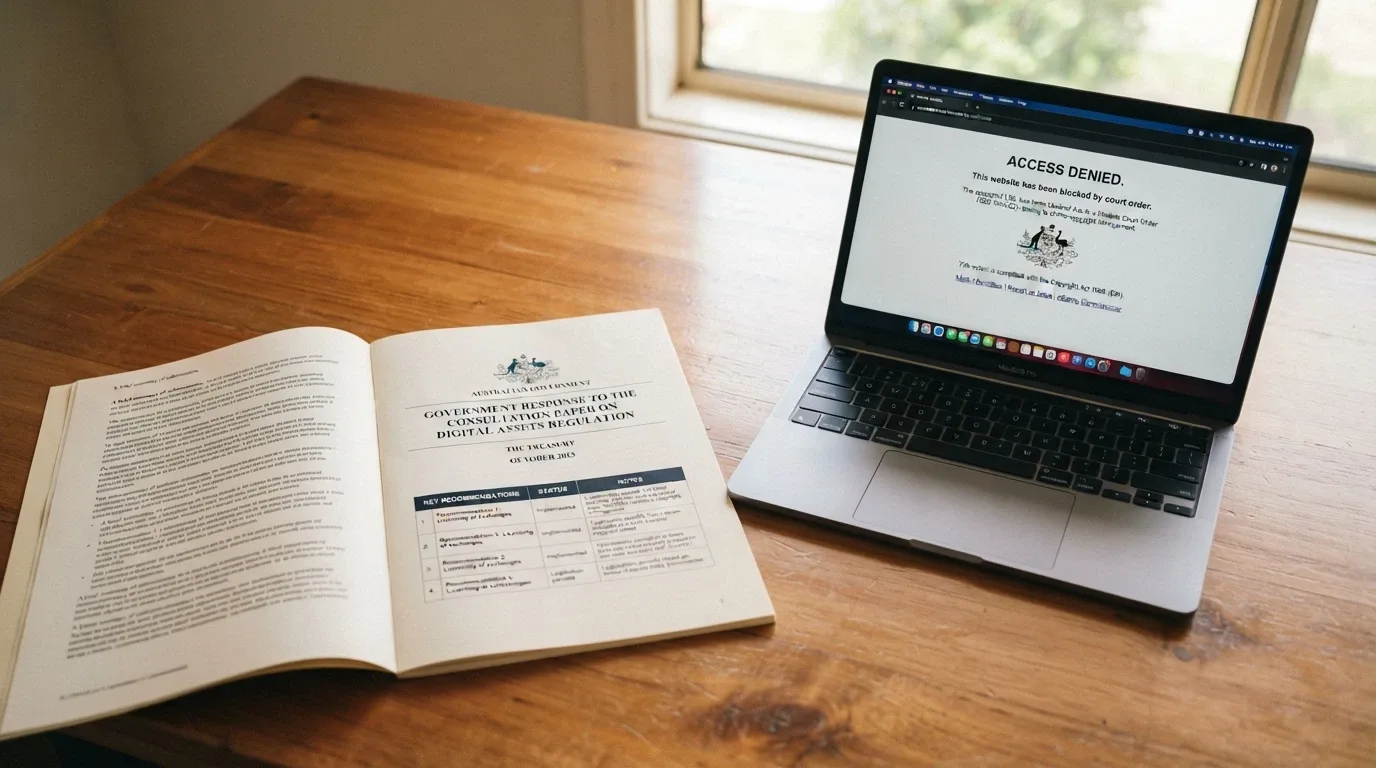
What the prohibition does not do is prosecute the individual player. The IGA targets the provider, not the customer, and the ACMA’s enforcement is directed at the offshore operator through civil penalty proceedings, formal warnings and ISP blocking. The player who uses an offshore casino is not breaking the law by using one. The player who uses an offshore casino is, however, gambling with a counterparty no Australian regulator oversees — and that fact has practical consequences the page will spell out.
The ACMA has directed Australian ISPs to block 1,564 illegal gambling and affiliate websites since November 2019, and more than 225 illegal services have withdrawn from the Australian market since the 2017 amendments strengthened enforcement. The block is DNS-level — the page does not discuss circumvention — but the effect for an Australian player is that an offshore casino can disappear from their browser at any time, including the moment their balance is sitting in the casino’s pending period. There is no notice. There is no recovery mechanism. ACMA cannot get the money back.
What is actually licensable in Australia is narrower than many players assume. Pre-event wagering on racing and sport is licensable, through state and territory regulators, with the Northern Territory Racing and Wagering Commission functioning as the de facto national licensor for online bookmakers. Lotteries and keno are licensable. Online casino games, online pokies and in-play betting are not. A casino offering any of those three is offering an illegal product in this market, regardless of where it holds its own licence.
No-KYC Promises and Why They Are a Red Flag
A casino promising “no verification” or “no KYC” withdrawals to an Australian player is offering two things at once. The first is the convenience of skipping identity verification. The second, by implication, is a casino that is operating outside every regulatory framework that would require it. The convenience is real, and the regulatory bypass is the price.
Identity verification at a licensed operator exists for two reasons. Anti-money-laundering obligations require operators to know who their customer is and to flag unusual transaction patterns. Responsible-gambling obligations require operators to verify that a customer is over 18, is not on a self-exclusion register, and is not showing signs of gambling harm. Both are regulatory norms. Both are absent at a no-KYC casino.
For an Australian player, a no-KYC operator compounds the offshore risk. A licensed Australian wagering operator keeps an identity trail that Australian authorities can pursue if something goes wrong. A no-KYC offshore casino does not. If funds vanish, there is no identity record to point an investigation at. If the casino voids a win, there is no identity trail showing who the player was at the time. The convenience of skipping KYC is the convenience of skipping the trail that would let you prove what happened.
The pattern matters more than any single offer. A casino that waives KYC for an Australian player is a casino that is comfortable ignoring every rule that would otherwise apply to it. The withdrawal speed it advertises is the same withdrawal speed it could walk back at any time. There is no regulator to stop it.
The Australian Regulatory Framework: IGA 2001 to the 2026 Reforms
The Australian online-gambling framework has tightened in stages since 2001. Each stage moved the line on what an offshore casino can do, what an Australian-licensed operator must do, and what an Australian player can rely on. The 2026 reforms add another stage, taking effect on 1 January 2027.
| Reform Measure | Effective Date | What It Changes for Australian Players |
|---|---|---|
| Interactive Gambling Act 2001 | 2001 | Prohibits online casino games, online pokies and in-play betting to people in Australia |
| Interactive Gambling Amendment Act 2017 | 2017 | Closes loopholes; ACMA gains enforcement powers and the ability to direct ISPs to block illegal sites |
| Credit and Other Measures Act 2023 | 11 June 2024 | Bans credit cards, credit-related products and digital currency (crypto) as payment for online wagering |
| Gambling Reform Bill 2026 | 1 January 2027 | Banks may block transactions to illegal gambling operators; wagering ad caps; inducement bans; influencer prohibition |
The credit and crypto ban took effect on 11 June 2024 and is the change Australian players encounter most directly. From that date, a casino asking for a credit card or a crypto deposit is, by definition, operating outside the Australian rules. The penalty for an operator that fails to enforce the ban is up to A$247,500 per breach.
The 2026 reforms were passed by Parliament on 19 August 2026 and commence on 1 January 2027. They are not yet in force as this page is published. The headline change for instant-withdrawal viability is the bank-blocking authority: from 1 January 2027, banks and payment providers gain express authority to block transactions to illegal gambling operators, which means an offshore casino’s withdrawal into an Australian bank account becomes a blockable transaction rather than a guaranteed one.
The advertising reforms in the same package are also worth noting, though they apply primarily to licensed wagering operators rather than to offshore casinos (which are already breaking the prohibition by existing). From 1 January 2027, no more than three wagering ads per hour are permitted between 6:00 am and 8:30 pm. A live-sport blackout prohibits wagering advertising from fifteen minutes before a live sporting event until five minutes after it ends. Direct marketing of inducements is prohibited for fourteen days after a customer signs up and for three months after a person deregisters from BetStop. Athletes, celebrities and influencers are barred from promoting wagering products, and broadcasting of sporting odds is banned outright. None of these advertising rules touch the offshore casinos on this page directly, but they tighten the environment in which those offshore casinos have been recruiting Australian players.
Licensed vs Offshore: What It Means for Your Withdrawal
The contrast between a licensed Australian wagering operator and an offshore casino is most concrete when a withdrawal goes wrong, because the moment a withdrawal goes wrong is the moment the difference becomes operational rather than theoretical.
A licensed AU wagering operator is subject to state and territory regulation — the Northern Territory Racing and Wagering Commission functions as the de facto national licensor, with licence terms of up to 20 years. The operator is required to publish its withdrawal terms, to keep customer funds segregated from operating funds in many cases, and to be answerable to a regulator that can investigate and penalise non-compliance. If a withdrawal is refused unfairly, the player has a regulator to complain to. If a complaint is not resolved, the player has a state-based disputes body to escalate to.
An offshore casino offers none of those protections. The ACMA enforces the IGA prohibition but cannot recover money from an offshore operator that refuses to pay a player. The player has no regulator to complain to, no disputes body to escalate to, and no Australian legal mechanism to compel a payout. The casino’s terms page is the contract, and the casino’s customer support team is the enforcement mechanism. If both of those fail, the player’s only recourse is the casino’s home-jurisdiction regulator — Curaçao, Malta, Anjouan, Kahnawake, or whichever licensing body the parent company has registered with. Those regulators do not routinely resolve individual player complaints against operators.
The site-blocking dimension is the most concrete operational difference. The ACMA has directed Australian ISPs to block 1,564 illegal gambling and affiliate websites since November 2019, and the count is current as at March 2026. Any of the offshore casinos on this page can be on the block list tomorrow, including at the moment a player’s balance is sitting in the operator’s pending period. There is no notice to the player. There is no recovery mechanism. There is no balance returned by the ACMA, because the ACMA has no authority over the funds.
The page’s position is that the difference between “licensed AU wagering” and “offshore casino” is not a difference of degree. It is a difference of what the player can do when the operator does not pay. The licensed operator gives the player a regulator, a complaints body and a contract enforced by an Australian authority. The offshore casino gives the player a customer support email and the operator’s home-jurisdiction regulator, which will not routinely help.
Why Your Instant Withdrawal Bonus Is Smaller Than It Looks
A welcome bonus is the most visible number on an offshore casino’s landing page. It is also the number most likely to mislead the player about the actual cost of claiming it. The mechanism that does the misleading is the wagering requirement, and offshore status makes the resulting gap wider rather than narrower.
A wagering requirement is a multiplier attached to the bonus amount. A A$500 bonus with a 40x wagering requirement obliges the player to wager A$20,000 before the bonus and any winnings from it become withdrawable. The casino’s headline number — A$500 — is the number the player keeps. The multiplier — 40x — is the number the player works through to keep it. The two are not the same number.
For an Australian player the offshore status is the part that sharpens this point. A licensed Australian wagering operator is subject to state-level regulation on bonus terms, including maximum wagering requirements, maximum bonus sizes and disclosure obligations on the terms of any promotion. An offshore casino is subject to no Australian regulation on bonus terms. The multiplier is whatever the operator says it is, the game weighting is whatever the operator says it is, and the validity window is whatever the operator says it is. There is no Australian regulator to appeal to if the terms are unfavourable.
The instant-withdrawal framing makes this tension sharper, not weaker. A casino pitching itself as “instant withdrawal” is pitching itself on payout speed, which sits in direct tension with a bonus structure that delays withdrawal by design. The two are not contradictory, because the casino is selling payout speed for cash play and a bonus structure for bonus play. The player who claims a bonus is opting into the slower lane, and the player who treats the headline payout speed as the bonus cashout speed is reading the wrong column.
No-Deposit Bonuses at Instant Withdrawal Casinos
A no-deposit bonus is a smaller version of the same mechanism, with a tighter set of restrictions. The casino offers a small amount of bonus funds — typically A$10 to A$50, or a handful of free spins — without requiring the player to deposit first. The wagering requirement is typically higher than on a deposit bonus, often 50x to 80x. The maximum cashout is typically capped, often at A$100 to A$200 regardless of how much the player wins during the wagering period.
No no-deposit bonus terms for any operator on this page were independently verified during this research. That is the relevant fact for the reader, because a no-deposit bonus at an offshore casino is an offer whose terms cannot be confirmed before the player claims it. The terms the casino publishes are the terms that govern, and the operator is not subject to any Australian regulator checking whether those terms are fair.
The payment-method restriction is the additional friction. A no-deposit bonus at an offshore casino is often restricted to play on specific games, and any winnings are typically withdrawable only through the same payment method that would be used for a deposit — which is often blocked from being used for the no-deposit cashout specifically. The reader who claims a no-deposit bonus without reading the eligible-games list and the payment-method terms is reading an offer rather than a contract.
For the Australian player, the standing advice is to treat any no-deposit bonus at an offshore casino as a small amount of bonus money with tight restrictions and a low maximum cashout, rather than as a free trial of the operator. That is the offer’s actual shape, regardless of how the marketing frames it.
Bonus Terms That Slow Your Cashout
The fine print on an offshore-casino bonus is where the payout timeline is actually set. A handful of clauses do most of the work, and each one extends the gap between “instant withdrawal” on the landing page and “instant withdrawal” on the player’s bank statement.
Wagering multiplier is the headline clause. A 40x or 50x multiplier on a A$500 bonus obliges the player to wager A$20,000 to A$25,000 before withdrawal. At a pokie with a A$0.50 spin, that is forty thousand to fifty thousand spins. The player is not playing for fun during those spins — the player is working through a turnover requirement.
Game weighting is the clause most players miss. Pokies typically count 100% toward wagering, which is why bonus play is pokie-heavy at offshore casinos. Table games often count 10% to 20%, sometimes zero. The player who plays blackjack to clear a bonus is grinding through a requirement with effectively no progress, because the casino’s weighting rules do not credit the full stake toward the turnover target.
Maximum cashout cap is the clause that determines what happens at the end. A bonus with a A$200 maximum cashout means the player can win any amount during wagering, but only A$200 of it is withdrawable. The rest is forfeited on withdrawal. The bonus “win” is a smaller number than the player thinks, and the cap is the reason.
Validity window is the clause that determines whether the bonus can be cleared at all. Most offshore bonuses expire in seven to thirty days. A player who does not complete the wagering requirement inside the window forfeits the bonus and any winnings from it. The validity window is the casino’s protection against a player who claims a bonus and walks away.
Payment-method exclusion is the clause that catches players by surprise. Some offshore casinos void the bonus if the player uses a fast withdrawal rail to deposit. The reason is bonus-abuse prevention — a fast rail makes the player harder to identify across multiple accounts — but the consequence for the player is that the rail the casino advertises for instant withdrawal is the same rail that voids the bonus. The reader who checks only the deposit-and-play terms and not the bonus-conditions page is reading the wrong document.
None of these clauses are independently verifiable at any operator on this list, because none of them are subject to an Australian regulator. The reader is the verification layer. The page is the standing reminder that this is the case.
Payment Methods That Actually Deliver Instant Withdrawals
The payment-method question is the one where the marketing claim and the legal position most directly collide. A casino’s marketing names the payment methods it wants Australian players to see — typically PayID, e-wallets and crypto, in that order of speed — and the legal position in Australia since June 2024 has cut that list in two.

| Payment Method | Typical Processing Speed | AU Legal for Gambling Payments? (since June 2024) | Used by Offshore Casinos? |
|---|---|---|---|
| PayID (via Osko) | Seconds | Yes | Yes |
| Debit card (Visa / Mastercard) | 1–5 business days | Yes | Yes |
| E-wallets (Skrill, Neteller) | Hours to 1 business day | Yes | Yes |
| Bank transfer | 1–3 business days | Yes | Less common |
| Credit card | n/a | No — banned | Yes (offshore tell) |
| Cryptocurrency (Bitcoin, Ethereum, USDT) | Minutes after blockchain confirmation | No — banned | Yes (offshore tell) |
The “AU Legal” column is the page’s most useful single column. PayID, debit card, e-wallet and bank transfer remain legal rails for licensed wagering. Credit card and crypto are banned as payment for online wagering since 11 June 2024. An operator accepting credit cards or crypto from an Australian player is, by that single signal, operating outside the Australian rules.
The processing-speed column is the page’s least reliable column, because it describes what the rail does in isolation and says nothing about what the operator does with it. PayID settles in seconds at the rail level. The operator’s processing desk holds the funds for twenty-four to seventy-two hours before PayID becomes involved. The total time is the rail speed plus the operator’s release time, and the release time is the larger number.
PayID: Australia’s Fastest Payment Rail
PayID is the AU-specific name for the New Payments Platform’s instant-settlement rail, with Osko as the underlying messaging service. For a withdrawal, the casino sends funds to the player’s PayID — typically a mobile number or an email address linked to an Australian bank account — and the funds settle in the player’s account in seconds, with no batch processing and no overnight wait.
PayID is the fastest rail Australian players can use at an offshore casino, and it is the rail that the marketing pages lean on hardest. The rail is genuinely fast. The bottleneck is the casino’s own processing time, which sits between the player’s withdrawal request and the PayID transfer. A casino quoting “instant” on PayID is describing the rail, not the queue.
For an Australian player, PayID has two additional properties worth noting. The first is that PayID is available only to Australian bank-account holders, which makes it an Australian-rail fingerprint on the transaction. An operator using PayID to pay out an Australian player is processing the withdrawal through the Australian banking system, which is the same system that will be authorised to block transactions to illegal gambling operators from 1 January 2027. The second is that PayID is not blocked at the rail level under the current framework — it is a legal deposit route for licensed wagering — which is why an offshore casino accepting PayID is operating outside the Australian rules in product terms but processing through a legal Australian rail in payment terms.
Neither of those properties changes the offshore status of the casino using PayID. The product remains prohibited. The rail is fast. The two facts coexist.
E-Wallets: Skrill, Neteller and PayPal
Skrill and Neteller are the dominant e-wallets at offshore casinos serving Australian players. PayPal is much less common in the offshore casino space, in part because PayPal’s terms of service historically restrict gambling transactions in certain jurisdictions. An Australian player who finds PayPal as a withdrawal option at an offshore casino has found an exception rather than the rule.
E-wallet withdrawal speed is genuinely faster than bank transfer. The operator releases funds to the e-wallet account, typically within hours of completing the pending period, and the player can then either hold the balance in the e-wallet or transfer it to a bank account. The bottleneck, as with every payment method, is the operator’s processing desk — the e-wallet itself does not move any faster than the queue it sits behind.
The offshore status of the casino does not change the e-wallet’s regulatory position. E-wallets are not banned as a payment method for online wagering in Australia, because they are not specifically listed in the Credit and Other Measures Act 2023. The legal position is the same as for debit cards: legal as a payment rail, illegal as a destination for a casino product prohibited under IGA 2001. The reader who finds Skrill or Neteller as a withdrawal option at an offshore casino is finding a legal rail serving an illegal product.
Per-operator e-wallet coverage was not independently verified for any of the ten operators on this list. The reader should check each operator’s banking page before assuming a particular e-wallet is supported, because e-wallet availability differs across offshore brands.
Visa and Debit Card Withdrawals
The distinction between credit cards and debit cards is the most important distinction a player can make on the payment-method question, because the law has drawn that line specifically. Since 11 June 2024, credit cards and credit-related products have been banned as payment for online wagering. Debit cards have not.
A casino asking for a credit card from an Australian player is, by that single signal, operating outside the Australian rules. The penalty for the operator is up to A$247,500 per breach. The signal value for the player is that a casino ignoring the credit-card ban is the same casino ignoring every other rule an Australian regulator would enforce.
Debit-card withdrawals are slower than e-wallets or crypto, typically running one to five business days after the operator has released the funds. The slowness is the bank processing time, not the operator’s queue — and the queue still sits in front of it. A player choosing debit card is choosing a slower rail on a legal path. A player being asked for credit card is being asked to fund the casino through a banned payment method.
Chargeback rights are the other side of the debit-versus-credit distinction. A debit-card transaction through Visa or Mastercard is governed by the card scheme’s chargeback rules, which give the player a defined process to dispute a transaction. The process is not Australian consumer law specifically, but it is a contractual mechanism the player can invoke. A credit-card transaction through the same scheme has similar chargeback rights, but is also a transaction that should not be happening in the first place — and the operator that processed it is breaking the prohibition.
For the Australian player, the practical advice is straightforward. Use a debit card, not a credit card. Treat any request for a credit card as a signal of the casino’s regulatory position. Treat the slower debit-card withdrawal time as a feature of a legal rail, not as a defect.
Crypto Casinos: Faster Withdrawals, Bigger Legal Risk
Crypto withdrawals are genuinely faster at the rail level than any banking-based method. A Bitcoin or Ethereum withdrawal settles in minutes after blockchain confirmation, with no batching, no banking hours, and no third-party processor sitting between the operator and the player’s wallet. For an Australian player, this is the part of the pitch that is not marketing — it is engineering.

The Australian legal position is the part the pitch does not mention. Since 11 June 2024, digital currency has been banned as payment for online wagering under the Interactive Gambling Amendment (Credit and Other Measures) Act 2023. An operator accepting crypto from an Australian player is operating outside the Australian rules, by the same logic that applies to a credit-card acceptance. The penalty for the operator is up to A$247,500 per breach. The penalty for the player is none — the IGA targets the provider — but the legal characterisation of the transaction is unambiguous.
The argument for crypto from a casino’s perspective is that it removes the banking partner from the transaction. The argument against crypto from a regulator’s perspective is exactly the same: it removes the banking partner, which removes the point at which the Australian financial system could enforce the prohibition. The 2026 reform, taking effect on 1 January 2027, empowers financial institutions to halt payments to illegal gambling services, which is a partial response to that gap. Crypto transactions do not pass through Australian banks, so the bank-blocking authority does not directly reach them.
For the Australian player, the practical implications are heavier than for the credit-card case. A credit-card transaction through Visa or Mastercard is governed by the card scheme’s chargeback mechanism, which gives the player a defined dispute process. A crypto transaction is not. There is no chargeback on a confirmed Bitcoin transaction. There is no Visa disputes team to escalate to. There is no bank to recall the funds from. The casino’s terms page is the contract, and the only enforcement mechanism is the casino itself.
Bitcoin Instant Withdrawal Casinos
Bitcoin is the original crypto-casino rail, and the marketing positioning is the same as for any crypto-native operator: wallet-to-wallet transfer, blockchain confirmation in minutes, no banking intermediary. For an Australian player, the speed is real. The legal position is also real.
Using Bitcoin for online gambling in Australia is using a payment method that has been banned for that purpose since 11 June 2024. The ban applies to digital currency as a category, which means it applies to Bitcoin and to every other cryptocurrency equally. A Bitcoin withdrawal to an Australian player is not a borderline case — it is a transaction the Australian rules specifically prohibit the operator from accepting.
The wallet-to-wallet nature of Bitcoin is what makes the transaction irreversible and what makes the offshore position unusually dangerous for the player. A player who deposits Bitcoin to an offshore casino and then loses access to the casino — through blocking, through operator failure, through a withdrawal refusal — has no financial intermediary to appeal to. The Bitcoin is in the casino’s wallet. The casino controls the wallet. There is no third party the player can ask for help.
Crypto Casino Fast Payouts
Beyond Bitcoin, the offshore crypto-casino ecosystem runs on the same logic with different tokens. Ethereum, Litecoin, USDT and a rotating cast of altcoins all settle faster than banking rails and all leave the Australian regulatory framework with no point of contact. The legal position is identical for every one of them: banned as payment for online wagering since 11 June 2024, irrespective of which specific digital currency is used.
The “fewer intermediaries” argument is what crypto casinos use to justify their speed. It is also what makes them structurally dangerous for the player. A banking intermediary provides a chargeback mechanism, a dispute process and a regulator’s authority behind it. Removing the intermediary removes all three. The faster withdrawal is the cost of removing the protection — not a separate benefit on top of it.
For the Australian player, the choice is whether the rail speed is worth the loss of the protections the rail removed. The page does not decide that question for the reader. The page notes that the question exists, that the legal position bans the use of crypto for online wagering, and that the offshore casino accepting crypto is breaking the prohibition by accepting it. The reader decides what to do with that.
The Pokies That Pay Out Fastest (and the Catch)
“Pokies” is the Australian term for slot machines, and the AU-facing offshore casino market is pokie-heavy for reasons the terminology makes obvious. Pokies are the AU player’s first choice, pokies are what most of the offshore operators on this page lead with, and “instant withdrawal pokies” is the search term that drives a meaningful share of the affiliate traffic routing Australians offshore.

The legal position is the same as for any other online casino product. Online pokies are prohibited under the Interactive Gambling Act 2001, alongside online casino games and in-play sports betting. The land-based pokie — the Australian pub or club machine, state-regulated and legal for over-18 players — is a different product from the online pokie, and the legal status reflects the difference. The online pokie accessible from an offshore casino is illegal to provide to a person in Australia. The land-based pokie in a licensed venue is state-regulated and legal.
What “instant withdrawal pokies” actually describes is a casino pitching the speed of its withdrawal rail for winnings earned on pokie play. The pokie itself pays the win instantly to the casino balance — that part is mechanical and not subject to the casino’s discretion. The withdrawal is the separate step, and it runs through the same processing desk the page has already described. The “instant” in “instant withdrawal pokies” describes the rail, not the queue.
Pokies with Instant Withdrawal
A pokie win lands in the casino balance the moment the reels stop, regardless of how fast the casino pays out. That part is not subject to dispute. What is subject to the casino’s discretion is the next step: the withdrawal of the casino-balance funds to a payment method the player can actually use.
For an Australian player, the timeline runs in three stages. First, the pokie win credits the casino balance — instant, mechanical, not the bottleneck. Second, the casino’s processing desk reviews the withdrawal request — the bottleneck, governed by the operator’s pending period and KYC requirements. Third, the payment rail moves the funds from the casino to the player — the speed varies by method, from seconds (PayID) to days (debit card).
A casino conflating the first and third stages in its marketing is selling speed it does not control. A player treating the marketing at face value is buying speed the casino will not deliver. The gap between the two is the page’s standing concern with the “instant” framing.
No pokie-specific withdrawal terms for any operator on this list were independently verified. The reader should not assume a particular pokie’s payout speed carries over to the casino’s withdrawal speed, because the two are different products controlled at different stages.
Pokies and PayID Withdrawals
The AU-specific intersection of the country’s favourite gambling product and its fastest payment rail is the search term “PayID pokies” or “instant withdrawal PayID pokies.” It is the phrase that combines two AU-specific terms — the local name for slots and the local name for the fastest banking rail — and routes Australian players to the same offshore casino pages the rest of this page has been describing.
PayID withdrawal after a pokie win works the same way PayID withdrawal works after any other casino win. The casino releases the funds from its balance, PayID settles the transfer to the player’s bank account in seconds, and the total timeline is the operator’s release time plus the rail’s settlement time. The rail does not get faster because the winnings came from a pokie.
For an Australian player using PayID at an offshore casino, the offshore caveats the page has already laid out apply in full. No Australian regulator enforces the casino’s payout terms. No Australian complaints body recovers funds if the operator refuses. The casino can be blocked at any time, and the ACMA cannot get the player’s money back. PayID is fast, but PayID is a payment rail — it is not a regulatory shield, and it does not convert an illegal product into a legal one.
The casino product remains prohibited regardless of payment method. PayID, debit card, e-wallet and crypto are all payment rails, and none of them changes the legal status of the casino accepting them. A player depositing via PayID to an offshore casino is using a legal rail to fund an illegal product. The page does not dwell on the choice. It notes the legal position and moves on.
How We Evaluated Every Casino on This List
The evaluation framework behind this page is narrower than the headline suggests, and the page owes the reader a clear description of what was and was not verifiable.
The quantitative backbone is the AU market-share data, which ranks Australian players’ actual use of offshore casinos by traffic and revenue. Every brand on the list is one Australian players reach and spend real money with. The market-share figure is the only figure that could be assembled for all ten operators from a single source. The revenue figure is the estimated AU revenue derived from that share.
The licence-status check is the Interactive Gambling Act 2001 framework. Every operator was checked against the prohibition on providing online casino games to persons in Australia. Every operator failed that check — not because of an investigative finding, but because the licence they would need to pass it does not exist. There is no Australian online-casino licence for any operator on this list to hold.
What could not be verified is the part that matters for the reader’s actual decision. Operator-specific bonus terms — welcome bonus size, wagering multiplier, free-spin count, bonus validity, maximum cashout, game weighting — were not independently confirmed for any of the ten. Withdrawal processing times, pending periods and minimum thresholds were not independently confirmed. Game-provider lists were not independently confirmed. The reader who treats any of those specifics as verified is reading the operator’s own marketing rather than an independently checked figure.
No operator paid for placement in this ranking. The ranking order reflects market presence in the AU tracked data, which is also the order the page’s editorial logic reached. An operator with a higher market share is an operator more Australians are using, not an operator the page has endorsed.
The verification gap is the page’s standing instruction to the reader: the operator’s own terms page is the contract, and the reader is the verification layer for everything the page could not independently confirm.
What You Should Actually Do About Instant Withdrawal Casinos in Australia
The page has spent its length laying out what an instant withdrawal casino in Australia actually is. The verdict is short, because the material has already reached it.

Every online casino accessible from Australia is offshore and unlicensed. The product is prohibited under the Interactive Gambling Act 2001. The ACMA enforces the prohibition by directing ISPs to block illegal sites, with 1,564 blocks in force since November 2019. There is no Australian regulator an offshore casino is answerable to, no Australian complaints body the player can escalate to, and no Australian legal mechanism to compel a payout if the casino refuses one. The BetStop self-exclusion register binds Australian-licensed wagering services only — an offshore casino is not connected to it. From 1 January 2027, banks and payment providers gain express authority to block transactions to illegal gambling operators, which adds a banking-layer enforcement to the existing ISP-layer enforcement.
For an Australian player who chooses to use an offshore casino anyway, the practical steps are the ones the page has already described. Verify the operator’s actual pending period from its terms page. Verify the payment methods actually supported for AU players, and treat any request for a credit card or crypto as a signal of the operator’s regulatory position. Verify the bonus terms do not impose a withdrawal cap that swallows the headline. Never deposit more than the player can afford to lose to a site with no legal recourse, and treat any withdrawal as a payment that may not arrive.
The one legal path for online gambling in Australia is licensed wagering on sports and racing, placed before the event begins, through operators licensed by a state or territory regulator. The Northern Territory Racing and Wagering Commission functions as the de facto national licensor for online bookmakers. That product is not what this page is about. It is the product an Australian player has if they want the protections the offshore market does not offer.
For players who feel their gambling is causing harm — whether the harm is at the offshore casino or somewhere else — the National Gambling Helpline is 1800 858 858, free, confidential, available 24 hours a day, seven days a week. Gambling Help Online offers online chat and counselling at gamblinghelponline.org.au. BetStop, the National Self-Exclusion Register, has recorded 67,480 registrations since it went live in August 2023, with 41,290 exclusions still active; 78% of registrants were under 40, and 38% chose lifetime exclusion. The register covers Australian-licensed wagering services only — it does not cover the offshore casinos on this page — but it is the most effective single step a player can take to break the pattern. Problem gambling affects roughly 2.1% of Australian adults, around 430,000 people. High-risk gambling sits at 1.8% of adults per the Australian Institute of Health and Welfare’s 2022 figure. The reader is not the average of those numbers, and the helpline is for anyone who is not.
Frequently Asked Questions
What is the difference between instant withdrawals and same-day payouts?
“Instant” describes the rail-settlement speed — PayID settles in seconds, crypto in minutes — that applies only after the casino has finished reviewing the request. “Same-day” describes the casino’s commitment: it processes and releases the withdrawal on the same business day. Both are subject to the operator’s pending period and KYC checks; neither guarantees the funds land in the player’s account without a queue at the operator’s processing desk.
Do instant withdrawal casinos in Australia accept crypto and credit cards?
Some do, and that single fact identifies them as operating outside the Australian rules. Credit cards, credit-related products and digital currency have been banned as payment for online wagering since 11 June 2024. Any offshore casino asking for them is signalling its regulatory position by the request itself, because a licensed Australian operator cannot lawfully offer those methods.
How does BetStop self-exclusion work if I am playing at an offshore casino?
BetStop binds Australian-licensed wagering services only; an offshore casino is not connected to the register. A registered player can still reach the offshore casinos on this page, because those operators are not subject to the ACMA’s checks. BetStop is the most effective step against licensed wagering; the offshore market will not honour it.
What happens if an offshore casino refuses to process my withdrawal from Australia?
The ACMA enforces the prohibition but cannot recover money from an offshore casino that refuses a withdrawal. The player has no Australian regulator to complain to and no Australian legal mechanism to compel a payout. The casino’s home-jurisdiction regulator does not routinely resolve individual complaints, leaving the casino’s own support team as the practical recourse.
Will Australian banks block transactions to online casinos from 2027?
From 1 January 2027, banks gain express authority to block transactions to illegal gambling operators, under the Gambling Reform Bill 2026 passed on 19 August 2026. The authority applies to banking-system transactions (debit cards, bank transfers, PayID), not to crypto. A withdrawal from an offshore casino to an Australian bank account becomes a blockable transaction.