
A Real Look at No-Deposit Free Spins for Australian Players in 2026
Current as of 16 October 2026 · verified against ACMA Action on Interactive Gambling reports, the licensed interactive wagering register, and the operator terms pages reviewed for this comparison.

A “no-deposit free spins” offer sounds like a contradiction in terms. A casino pays you to play before you’ve paid it. The marketing leans on that contradiction — “free” sits in the headline and the conditions sit six paragraphs below. What arrives in a player’s account is a fixed number of spins on a single nominated pokie, governed by a wagering requirement, a maximum cashout cap, an expiry clock and a max-bet rule. The whole offer is small. The terms decide whether you keep any of it.
This page is the comparison the marketing won’t write for you. Ten offshore casinos currently extend no-deposit free-spins offers to Australian players; the table below ranks them on the terms that govern what you actually walk away with. It then walks through the wagering maths that turns a “free” bonus into a real cost, the Interactive Gambling Act that bans the product being offered, the offshore licence every one of these brands actually holds, the player-protection systems those offshore licences don’t connect to, and the responsible-gambling help that does. None of the operators reviewed here is licensed in Australia, because no licence for online casino exists in Australia to be held.
Table of Contents
- Free Spins Without a Deposit — What an Australian Player Actually Gets in 2026
- The 10 Offshore Casinos Offering No-Deposit Free Spins to Australians in 2026
- Why Your 2026 Free Spins Bonus Is Smaller Than It Looks
- Bitcoin Free Spins — Fewer KYC Checks, Same Offshore Risk
- The Law Australian Online Casinos Don’t Want You to Read
- What You Give Up When You Play Outside the Australian Rules
- How We Evaluated These No-Deposit Free Spins Offers
- Frequently Asked Questions
- Free Spins Without the Safety Net — What an Australian Player Should Actually Do in 2026
Free Spins Without a Deposit — What an Australian Player Actually Gets in 2026
The page covers four things in order. First, what the offer actually looks like when it lands in an account, and the terminology an Australian-facing offshore casino uses — pokies, free chips, bonus codes, NDB. Second, the comparison itself: ten operators, ranked on the terms that matter. Third, the mechanics underneath: how a 30×–60× wagering requirement shrinks a free-spins win, why a AU$100 cashout cap overrides whatever the bonus balance shows, and how the expiry clock ends the offer before the wagering does. Fourth, the Australian law that bans the product being offered — and the protections a player gives up by using an offshore casino to play it.

The research base is the ACMA’s enforcement data, the operator terms pages reviewed at the time of writing, the Australian Institute of Health and Welfare’s 2022 prevalence figures, and the Australian Gambling Research Centre’s BetStop awareness data. What it is not: an editorial endorsement. The page describes what an offer costs. It does not recommend that any reader claim one.
What a No-Deposit Free Spins Bonus Actually Looks Like
A no-deposit free spins bonus credits a fixed number of spins to a new account without the player funding it first. In practice on the Australian-facing offshore market in 2026, the structure has converged: a typical offer is between 20 and 100 spins on a single nominated pokie, valued at A$0.10 to A$0.20 per spin, with a wagering requirement of 30× to 60× applied to anything the spins win, a maximum cashout cap of around A$100, and an expiry clock that runs from 3 to 14 days — sometimes as short as 24 hours. The spin itself is locked to one game, and the operator decides which one.
The “no-deposit” label is literal in most cases: the spins credit on registration, sometimes after a bonus code is entered at the sign-up form, sometimes after a phone or SMS verification step. About 60% of no-deposit bonus codes require manual entry at registration; the remainder credit automatically. In every case, no debit to the player’s bank account happens before the spins land. What does happen, and what the small print confirms, is that anything the spins win is bonus money — not real cash — until the wagering requirement is cleared.
Why casinos offer them at all is the question most review pages skip. The honest answer is customer acquisition. A free-spin offer is the cheapest way to put a new account through the registration funnel, and the terms are calibrated so the average player loses more than they withdraw. The wagering requirement is what makes “free” pay. It is the lever the marketing leaves out.
How Offshore Casinos Target Australian Players With These Offers
The Australian-facing offshore market has its own dialect. Pokies, not slots. Punter, not bettor. Bookie, not sportsbook. A free chip instead of a free bet. PayID, Osko, BPAY for any licensed-wagering side-deposits an Australian might still make elsewhere. The vocabulary sits in the affiliate review pages and on the operator banners, and it is there because the operators know who they are talking to.
Distribution runs through affiliate sites — bonus aggregators, casino-review pages, “best free spins” lists — that link readers to the operator’s registration page with a tracked code. The affiliate gets paid for the player; the player gets the bonus. That is the channel the entire comparison table at the top of this page exists inside, and it shapes what the offers look like: headline numbers designed to convert, fine print designed to retain. In 2026, the marketing push is largely undiluted by Australian consumer protection, because the operators are not bound by Australian consumer protection.
The native terms sit alongside the offers. Rollover and playthrough are interchangeable with wagering requirement; turnover requirement is the third synonym. NDB is shorthand for no-deposit bonus. Free chip means a cash NDB rather than a spins NDB. A bonus code is a string a player types into the registration form; an automatic bonus is one that credits without one. The vocabulary is worth knowing because the fine print uses it.
The Headline vs the Fine Print — Why This Page Exists
Every no-deposit free spins offer carries two numbers. The headline number is the spin count — 100 free spins, 75 free spins, 50 free spins — and the headline number is what the marketing leads with. The real number is the wagering multiplier, because it dictates how much of those winnings the player can ever withdraw. A 40× wagering requirement on a A$20 win is A$800 of stakes that must run through the slots before a dollar can leave the account. Most players don’t reach that figure. The casino earns the difference. That is the “free” part.
This page exists because the gap between the two numbers is what every review site built around these offers leaves wide open. The competing pages — the affiliate aggregators and the bonus lists — publish the spin count and the headline cashout cap. They rarely publish the expected loss a player faces against the wagering requirement, because the expected loss makes the offer look less generous than the marketing wants it to. The legal context is rarer still: that the operators offering these bonuses to Australians are doing so in breach of the Interactive Gambling Act 2001, and that an Australian player using one gives up every protection the local licensing regime would otherwise provide.
The comparison table below is honest about both. The terms are filled in from the operator pages reviewed at the time of writing. The legal section that follows it is sourced from the ACMA and the statute. The responsible-gambling section names the helpline and the register, and says plainly that neither covers the offshore route.
The 10 Offshore Casinos Offering No-Deposit Free Spins to Australians in 2026
Ten offshore operators currently extend no-deposit free spins or a no-deposit cash chip to Australian players. Every one of them is incorporated offshore — Curaçao, in most cases — and none of them holds an Australian casino licence, because no Australian casino licence exists to be held. The Interactive Gambling Act 2001 makes providing online casino to a person in Australia an offence, and there is no licence anywhere in the country that would change that. The comparison below ranks the ten on the terms that govern what you keep; the legal section later in this page explains why no licence accompanies those terms.
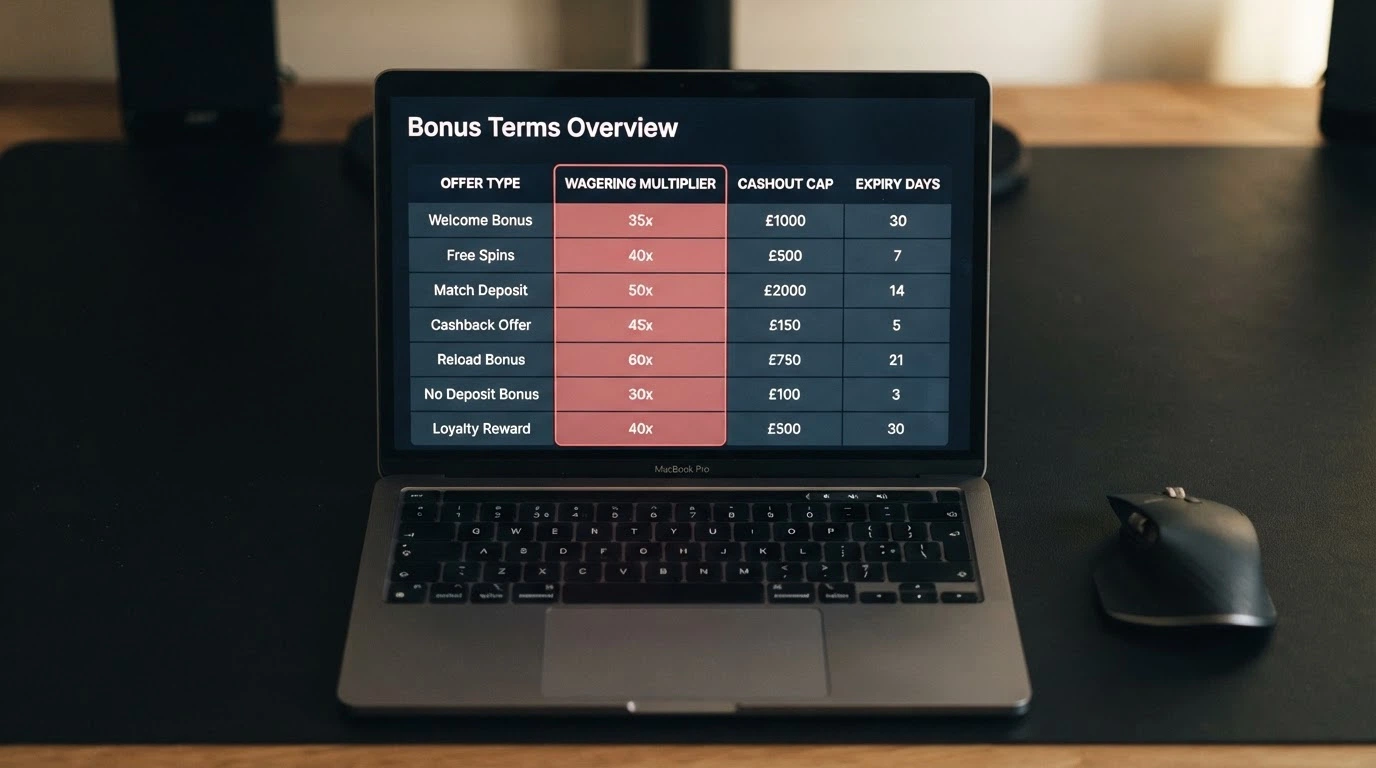
The table fills what research actually carries. Cells where terms were not confirmed at the time of review are marked with an em dash. A blank cell is not a guarantee of poor terms — it is a gap in the data this comparison was built on, and a player should treat it as a reason to read the cashier page before claiming.
| Casino | NDB Offer | Wagering | Max Cashout | Expiry | Game Providers |
|---|---|---|---|---|---|
| BitStarz | 100 FS or 50 FS no deposit | 40× | AU$100–AU$150 | 7 days | BGaming, Pragmatic Play, Evolution, 79+ total |
| SkyCrown | 20–100 FS (phone verify for 100) | 25×–45× | AU$80 | 7–10 days | BGaming, Pragmatic Play, 10,400+ total |
| KatsuBet | 30–50 FS on Wild Cash | 30×–45× | AU$80–AU$100 | 3–7 days | BGaming, Pragmatic Play |
| 7Bit Casino | 30–75 FS on Deep Sea / Scroll of Adventure | 45× | AU$50–AU$60 | 3–7 days | BGaming, 7,900+ total |
| Royal Reels | AU$10 cash NDB | 30×–40× | AU$200 | 7–14 days | RTG (provider mix not confirmed this run) |
| Fair Go Casino | 20–100 FS or A$10–A$15 free chip | 35×–60× | AU$100–AU$180 | 7 days | Realtime Gaming (RTG) |
| Mirax Casino | Free spins offer | 35× | AU$100 | 7 days | BGaming, Pragmatic Play |
| Rocket Play | NDB varies | 30×–40× | — | — | Pragmatic Play, BGaming, Evolution |
| WinSpirit | 10 FS on selected slots | 30× | — | — | — |
| Bizzo Casino | NDB varies | 30×–40× | — | — | Pragmatic Play, BGaming |
The cashout caps span AU$50 to AU$200. The wagering multipliers span 25× to 60×. The expiry windows run from 24 hours at the short end to 14 days at the long end. A bonus code at registration is the most common claim step, though two operators on this list — SkyCrown and Royal Reels — add a phone or SMS verification gate before the larger spin count unlocks. The eligible slot is named by the operator and is rarely the player’s choice; it appears in the bonus terms, and the RTP of that single title is what sets the expected return on the wagering run.
Three operators on this list — Rocket Play, WinSpirit and Bizzo — carry terms research could not pin down this round, and those gaps appear as em dashes in the table. What is known about each is set out qualitatively in the write-ups below. None of the gaps should be read as a free pass; they are reasons to read the operator’s own bonus page before claiming.
BitStarz — 100 Free Spins With a 40× Wagering Hurdle
BitStarz’s no-deposit offer is the most fully documented on this list. The headline is 100 free spins, with a 50-free-spin variant sometimes running in parallel, and the eligible slot is Aloha King Elvis from BGaming — a 96.18% RTP pokie that lets the wagering maths be worked through to the cent. Spin value sits at A$0.20 per spin, the wagering requirement is 40× on winnings, the max cashout cap is AU$100 to AU$150, and the expiry is 7 days from credit. BitStarz is also crypto-first in its deposit rails, with 79+ providers in its library and a Curaçao OGL licence underneath.
On the maths, a player faces roughly A$30 of expected loss against an A$100–A$150 cap, which is a fair exchange for a free ride — if you clear the 7-day clock and the A$5 max bet survives the run.
SkyCrown — Phone-Verified Spins With a Lower Cashout Ceiling
SkyCrown splits its offer across two tiers. Twenty free spins credit on registration; the larger 100-free-spin bundle unlocks only after a phone-verification step, which is the kind of friction most operators reserve for withdrawals rather than the no-deposit claim. The wagering requirement sits in the 25×–45× band, the cashout cap is AU$80 (around €50), and the expiry runs 7 to 10 days. The library is large at over 10,400 games and the eligible slot is Aztec Clusters from BGaming.
This is the brand for a player who doesn’t mind a quick phone call to unlock the bigger spin count, and who can live with a tighter ceiling.
KatsuBet — 30–50 Spins on Wild Cash With a 3-Day Clock
KatsuBet’s offer is more constrained than the headline suggests. Thirty to fifty free spins on Wild Cash (BGaming), with a 30×–45× wagering requirement, an AU$80 to AU$100 max cashout, and the tightest expiry on this list — 3 to 7 days at the low end. The operator runs on a Curaçao licence and the eligible slot is fixed; you do not get to choose the pokie.
Three days is a tight clock for a 30×–45× wagering climb — KatsuBet suits a player who plans to play that afternoon, not one who wants the offer to wait.
7Bit Casino — 75 Spins With the Highest Wagering Multiplier on This List
7Bit pairs one of the larger spin counts on this list with the steepest wagering requirement. Thirty to 75 free spins on Deep Sea or Scroll of Adventure, both BGaming titles, at 45× wagering, with an AU$50 to AU$60 max cashout — the lowest ceiling here. The spin value is A$0.15 and the expiry is 3 to 7 days. The library runs to around 7,900 games under a Curaçao licence. Aloha King Elvis also appears as an eligible slot in some terms, at the same 96.18% RTP as at BitStarz.
The Aloha King Elvis slot runs at the same 96.18% RTP as BitStarz’s, but the higher multiplier and the tighter cashout cap give the house a longer reach into a player who holds back.
Royal Reels — A Cash Bonus Instead of Spins, With the Highest Cashout Cap
Royal Reels is the only operator on this list that does not run a spins-based NDB at all. The offer is AU$10 in cash, credited on registration, with a 30×–40× wagering requirement on the bonus amount rather than on free-spins winnings. The cashout cap is the highest on this list at AU$200, and the expiry runs 7 to 14 days. An SMS verification step gates the credit. The platform is RTG-powered, which is the Realtime Gaming catalogue rather than BGaming or Pragmatic Play, and the licence is Curaçao.
At a 30×–40× turnover on A$10 of cash and a AU$200 ceiling, this is the most generous cap on the list — but the structure is different (cash, not spins) and the SMS verification adds a step.
Fair Go Casino — The Most Australian-Flavoured Offshore Operator
Fair Go is the brand that leans hardest into the Australian market. The site runs on Realtime Gaming (RTG) software — a US-facing provider that ships titles like Sparkling Fortunes and Kev’s Bush Bonanza — and the no-deposit offer runs either 20 to 100 free spins or a A$10 to A$15 free chip. The wagering requirement is 35× to 60× on winnings, the cashout cap is AU$100 to AU$180, and the expiry is 7 days. The licence is Curaçao, not Australian.
For an Australian player who wants a brand that markets itself to Australia — AUD-native, RTG catalogue, Australian-facing copy — Fair Go is the closest this list comes to that fit, with the trade-off being RTG slots that often pay around 95%, lower than the BGaming alternatives at the top of this ranking.
Mirax Casino — A Straightforward 35× Offer With Fewer Moving Parts
Mirax runs a 35× wagering requirement on its no-deposit free spins — sitting in the middle of the range, neither the steepest nor the gentlest on this list. The cashout cap is AU$100, the spin value is A$0.10 to A$0.20, and the expiry is 7 days. The library is BGaming and Pragmatic Play, with a Curaçao licence beneath. The eligible slot was not pinned down in this round of research.
Mirax’s 35× is mid-pack and the AU$100 cap is the market norm, but the eligible slot wasn’t pinned down this round, so a player needs to read the bonus page before assuming which pokie they’ll land on.
Rocket Play — A Variable NDB That Changes With the Season
Rocket Play’s no-deposit offer exists but is not a fixed promotion. The operator rotates what it runs, and the terms — spin count, max cashout, expiry, eligible slot — were not pinned down at the time of review. What is known is a 30×–40× wagering requirement band on winnings, a library that combines Pragmatic Play, BGaming and Evolution (the live-casino provider), and a Curaçao licence. A small no-deposit offer does surface periodically.
Rocket Play reads as an alternative to the data-rich top three rather than a substitute — its NDB exists, but the terms weren’t pinned down this round, so any claim has to be checked at the cashier.
WinSpirit — Just 10 Spins on a Short Clock
WinSpirit’s offer is the smallest on this list: 10 free spins on selected slots, with a 30× wagering requirement and a Curaçao licence. The cashout cap, expiry, eligible slot, spin value and provider mix were not confirmed at the time of review. The offer runs as a limited-time promotion rather than a standing sign-up bonus.
Ten spins is closer to a sample than a bonus, and with the cashout, expiry and eligible slot unconfirmed, it’s hard to argue this is anything more than a courtesy.
Bizzo Casino — A Rotating NDB With a Large Game Library Behind It
Bizzo runs a rotating no-deposit offer with a 30×–40× wagering band, a library that combines Pragmatic Play and BGaming, and a Curaçao licence. The specific spin count, cashout cap, expiry and eligible slot were not confirmed this round; the offer appears and disappears in cycles.
Bizzo’s rotating NDB means there’s always something, but never anything pinned — for a player who wants certainty, the table above has better-documented choices.
Why Your 2026 Free Spins Bonus Is Smaller Than It Looks
Four terms shrink a no-deposit free spins offer from its headline number to what the player actually keeps. Wagering multiplies the winnings into a turnover target the player has to hit before anything can be withdrawn. The max cashout cap sets a ceiling on the withdrawable amount regardless of what the bonus balance shows. Game eligibility locks the spins to a single nominated pokie. The expiry clock ends the offer if the wagering isn’t cleared in time. None of these terms is hidden, but the marketing treats them as if they were. The sections that follow take each one in turn.
No-Deposit Free Spins vs Sign-Up Free Spins — The Difference That Costs You
The difference between a no-deposit bonus and a sign-up bonus is whether you risk your own money before the offer unlocks. A true no-deposit offer credits spins on registration — sometimes after a phone or SMS verification, sometimes after a bonus code, but never after the player has funded an account. A sign-up or registration bonus sometimes uses the same language and is actually a token-deposit scheme, where the player must deposit a small amount (often A$10 to A$20) before the spins land. The two are not the same product, and the distinction matters because the deposit in the second variant is real money the player can lose while clearing the wagering.
About 60% of the offers on the table above require a manual bonus code at registration. SkyCrown and Royal Reels add a phone or SMS verification step before the larger spin count unlocks. Both patterns are common across the Australian-facing offshore market. The narrower question — does the player risk any of their own money to convert the bonus to withdrawable cash — is the one the marketing prefers not to be asked, because the answer is usually “not until wagering clears, and then any spin above the A$5 max-bet cap can void the win entirely.”
Which Pokies Your Free Spins Actually Work On
The eligible slot is named by the operator, and the player does not get to choose it. BitStarz names Aloha King Elvis (BGaming, 96.18% RTP). KatsuBet names Wild Cash (BGaming). 7Bit names Deep Sea or Scroll of Adventure. Fair Go names Sparkling Fortunes or Kev’s Bush Bonanza (RTG). SkyCrown names Aztec Clusters (BGaming). The pattern is consistent: one nominated pokie per offer, usually a single-provider release, and the wagering turnover runs through that one title.
The reason it matters is that the RTP of the chosen pokie — the percentage of stakes the slot returns to players across a long run — sets the expected return on the wagering requirement. A 96.18% pokie (Aloha King Elvis) and a typical RTG pokie sit further apart in RTP, and on a A$800 turnover run that gap implies a different expected loss for the same wagering multiplier. The player is not choosing between the two; the operator is choosing for them.
Game eligibility also matters when the wagering is in progress. Most no-deposit bonuses restrict the wagering turnover to slots, and exclude table games or live casino from the contribution. Some contributions are partial — a 10% contribution from a table game means only one tenth of each stake counts toward the wagering target. The specific contribution rates are operator-specific and the bonus terms spell them out; this page does not republish them because research did not confirm them per operator, and the consequence of getting it wrong is a player who thinks they have cleared the wagering and finds they have not.
Wagering Requirements — The Number That Decides Whether You Keep Anything
A wagering requirement is a turnover multiplier applied to the bonus winnings before the player can withdraw. A 40× requirement on A$20 of free-spins winnings means A$800 of stakes must run through the eligible slot before any of the A$20 can be withdrawn. The “free” part was the spins; the cost of converting those winnings to real money is the turnover.
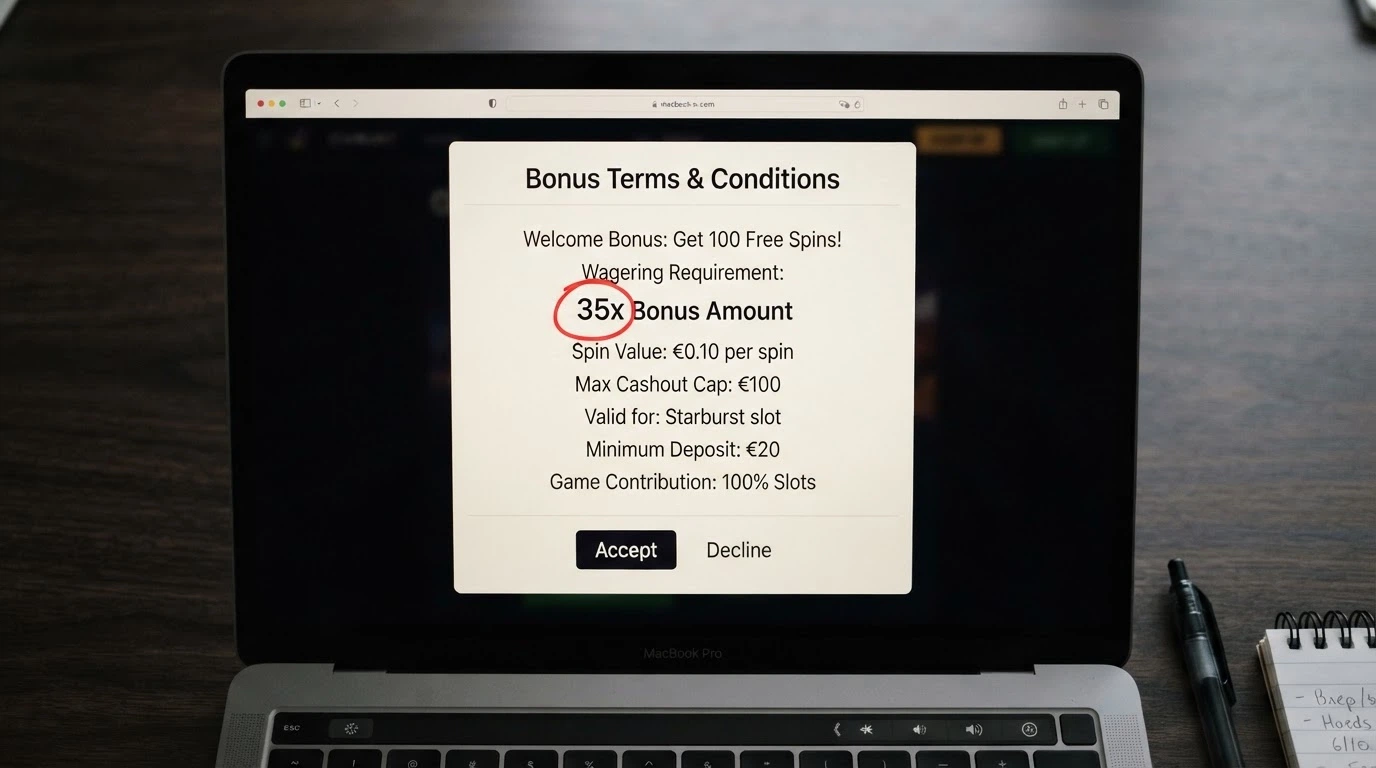
Across the ten operators on this list, wagering requirements span 25× to 60×. SkyCrown carries the gentlest end (25×); Fair Go carries the steepest (60×). The market norm sits in the 30× to 45× band. A 30× requirement on A$20 of winnings is A$600 of stakes; a 60× requirement on the same win is A$1,200. The difference is the entire reason two players on the same spin count can walk away with radically different amounts.
Worked through the BitStarz offer, the maths is the cleanest on the list. One hundred free spins at A$0.20 each gives a bonus balance of A$20. Wagered at 40×, the required turnover is A$800 — eight hundred dollars of stakes that must run through Aloha King Elvis before any of the bonus balance can be withdrawn. With the slot at 96.18% RTP, the expected loss on that turnover sits at roughly A$30.56. That figure is an estimate, not a guarantee — it averages across thousands of spins, and the player who hits a 50× win early will see something very different — but it is the honest cost the house takes from a bonus that took nothing in. Assuming only the bonus amount is wagered, that is the real price.
The max-bet rule sits underneath the wagering. While the bonus is active, no single spin may exceed A$5 at most AU-facing offshore casinos. Exceeding it can void all bonus winnings. The rule exists to stop a player from clearing a A$800 wagering requirement in two or three high-stakes spins, and it is enforced more often than the small print suggests. A player who treats the bonus as a high-roller ticket will discover the wagering progress reset to zero and the bonus balance with it.
Turning Free Spins Into Real Money — Why the Withdrawal Hits a Wall
The max cashout cap is the ceiling on what the player can withdraw from the bonus, and it overrides whatever the bonus balance shows. A player who has cleared a 40× wagering requirement on A$20 of winnings, ended up with A$180 in the bonus balance, and tried to withdraw A$180 would receive A$100 — the cap — and forfeit the rest. The cap is not a target; it is a wall.
The range across the ten operators is AU$50 to AU$200. 7Bit sits at the floor (AU$50–AU$60). Royal Reels sits at the ceiling (AU$200). Fair Go runs AU$100 to AU$180, with the spread reflecting the chip-versus-spins distinction. The AU$100 mark is the norm. A higher cap is generous only in the context of the wagering requirement that gets the player there: Royal Reels’s AU$200 cap looks generous until the 30×–40× requirement on the A$10 cash chip is worked through.
Expiry is the second wall. A bonus that has not been wagered through within the validity window expires, and the bonus balance — wagered or unwagered — is forfeit. The range here is 3 to 14 days at the operators reviewed, with some sources citing as little as 24 hours at the short end. The tight clocks (3 days on KatsuBet and the lower end of 7Bit’s range) favour the player who plans to play the same afternoon. The longer clocks (14 days on Royal Reels) are more forgiving but no more generous in absolute terms. A wagering requirement that takes 60 hours of continuous play to clear does not care whether the player has 3 days or 14 days to do it in.
How to Claim Free Spins Without Making a Deposit
The claim flow is consistent enough across operators to walk through in general terms. A player finds a current no-deposit offer on a comparison or affiliate site and clicks through to the operator’s registration page. The form asks for an email, a username, a password and the usual personal details; a bonus code field appears partway through, and about 60% of offers require it to be filled in manually. The remaining 40% credit the spins automatically on successful registration.
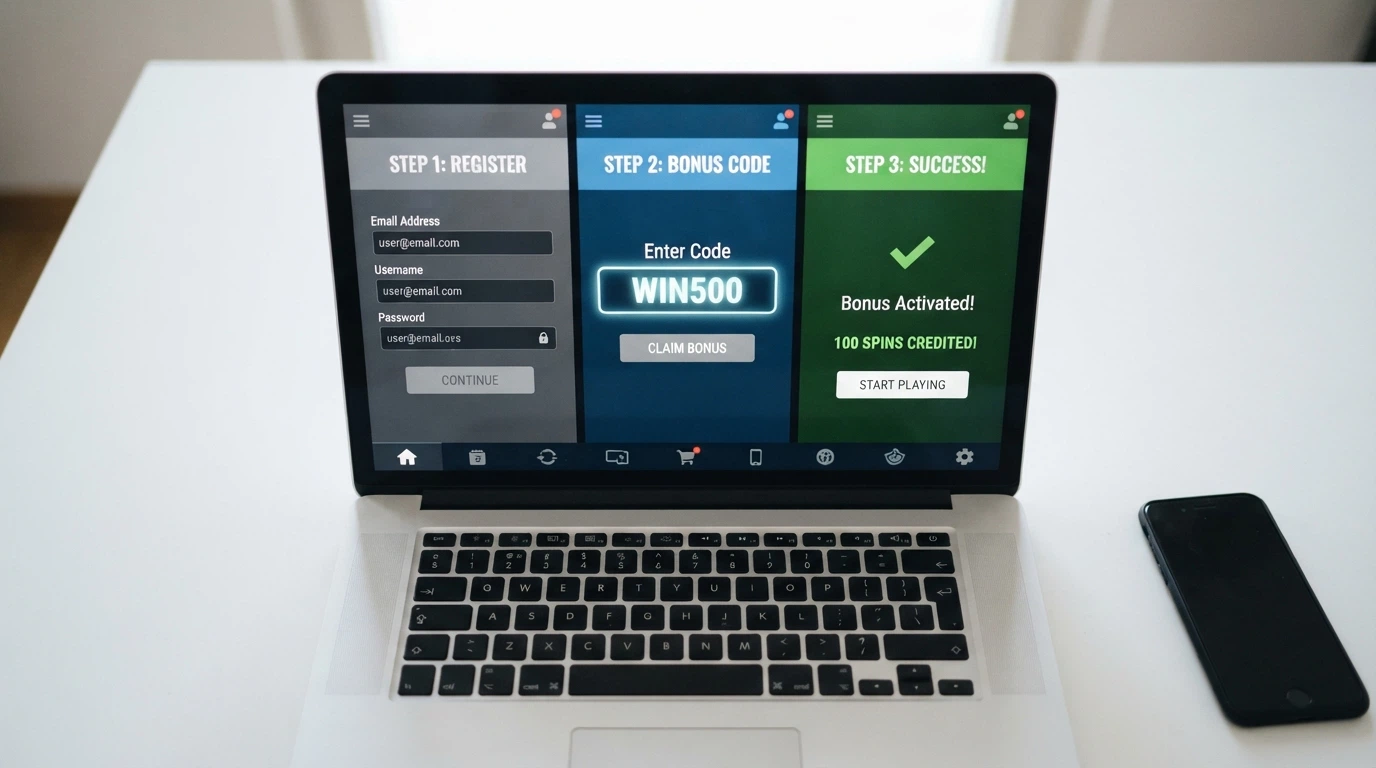
Two operators on this list — SkyCrown and Royal Reels — add a verification step before the larger spin count unlocks. SkyCrown uses phone verification; Royal Reels uses SMS. Both are quick, but they require a working phone number that the player is willing to confirm. Without that step, the smaller spin count (20 on SkyCrown, the AU$10 cash chip on Royal Reels) is what lands in the account.
Once credited, the spins must be played on the eligible slot named in the bonus terms. The wagering progress meter usually appears in the cashier or the bonus section of the account, and the max-bet cap of A$5 is enforced per spin. When the wagering requirement has been cleared, the remaining balance up to the max cashout cap becomes withdrawable. The withdrawal itself triggers the KYC step that the sign-up skipped — see the Bitcoin Free Spins section for what that gap looks like in practice.
Bitcoin Free Spins — Fewer KYC Checks, Same Offshore Risk
Bitcoin and other cryptocurrencies feature heavily in the deposit rails of the offshore casinos reviewed here, and the marketing sells them as a way to skip the identity checks that licensed Australian wagering operators run on every deposit. The pitch has half a point. Cryptocurrency deposits do skip the sign-up KYC the player would face at a Sportsbet or a Ladbrokes, and they avoid the bank statement that a debit card leaves behind. They do not skip the Interactive Gambling Act 2001, they do not give the operator an Australian licence, and they do not change the wagering requirement, the cashout cap, or the offshore licence the operator already holds. What crypto changes is the moment the verification gap becomes visible.
Crypto-Funded Free Spins — What Changes and What Doesn’t
BitStarz markets itself as crypto-first, with a welcome bonus denominated in bitcoin alongside the euro equivalent; 7Bit accepts bitcoin and other cryptocurrencies as a deposit method alongside fiat. Other operators on this list — SkyCrown, Mirax, Rocket Play, Bizzo — accept crypto at the cashier without making it the headline. What does not change anywhere is the bonus structure. The 100 free spins at BitStarz are still credited at A$0.20 per spin with a 40× wagering requirement and an AU$100–AU$150 max cashout, whether the player funds the post-bonus play with bitcoin, a debit card or a bank transfer. The wagering multiplier applies to the winnings, not the deposit currency.
What does change is the deposit rail. Credit cards and credit-related products have been banned as payment for online wagering in Australia since 11 June 2024, under the Interactive Gambling Amendment (Credit and Other Measures) Act 2023, and digital currency (crypto) was added to the ban in the same reform. An operator that fails to enforce the ban faces penalties of up to A$247,500. The legal deposit routes for a licensed Australian wagering operator are debit card, bank transfer, PayID/Osko and BPAY — and identity verification is mandatory at sign-up. An offshore casino accepting bitcoin to fund an Australian player’s account is, by definition, not enforcing the payment ban. That fact does not change the offer. It does change what the player is participating in.
No-KYC Casinos — The Verification Gap Australians Don’t See Until Withdrawal
The “no-KYC” label on an offshore casino means no identity verification at sign-up. It does not mean no identity verification, full stop. KYC — Know Your Customer — is the anti-money-laundering and counter-terrorism-financing obligation that licensed financial services and gambling operators run on every customer. Offshore casinos that skip it at registration run it at withdrawal. A player can register, claim the no-deposit free spins, clear the wagering requirement, and only discover the verification gap when the cashier asks for a passport, a driver’s licence, a utility bill and a bank statement before the AU$100 cashout cap is released.
The gap matters for two reasons. First, the documentation is not optional — an offshore operator that does not run KYC at withdrawal risks losing its Curaçao licence, and the operators on this list enforce it. Second, the ACMA can direct Australian ISPs to block an illegal gambling website at any time, and a balance that is still inside a partially-verified withdrawal is a balance that may never arrive. Since November 2019 the ACMA has directed ISPs to block 1,788 illegal gambling and affiliate websites. The number rises every quarter, and the operators who treat the blocking as a real risk to player balances are the ones that communicate honestly about it.
The 2026 reform tightens the gap. The Interactive Gambling Amendment (Gambling Reform) Bill 2026 passed Parliament on 19 August 2026, and from 1 January 2027 banks and payment providers will gain express authority to block transactions to illegal gambling operators. That power has not yet taken effect, but it is committed, and it changes what “offshore” will mean for an Australian player by the end of the calendar year.
The Law Australian Online Casinos Don’t Want You to Read
A page about “the best licensed online casinos in Australia” is describing something that does not exist, and writing one produces a factual lie on every screen. There is no licence for online casino in Australia — not federally, not in any state or territory. Every operator in the comparison above is incorporated offshore and offers an unlicensed product to Australian players. The reason the marketing language dances around this is that the prohibition is statutory, the enforcement is real, and the consequences fall on the operator, not the player. The sections that follow take the law, the enforcement, and the gap between “licensed” and “legal” in turn.
| Protection or Rule | Australian Law | Offshore Reality |
|---|---|---|
| Online casino licence | Prohibited under the IGA 2001; no licence exists | Operator holds Curaçao or equivalent offshore licence |
| Self-exclusion (BetStop) | One registration covers ~150 licensed wagering services | Offshore casino is not connected to BetStop |
| Payment methods | Credit cards and crypto banned since 11 June 2024 | Credit cards and crypto accepted (in breach of Australian law) |
| Player fund recovery | ACMA complaint and dispute resolution at the operator | ACMA cannot recover money from offshore operators |
| Advertising rules | Restricted; further capped from 1 January 2027 | Unrestricted offshore; inducements offered to Australians |
| KYC at sign-up | Mandatory at sign-up for licensed wagering | KYC triggered at withdrawal, not at sign-up |
| Site blocking | ACMA directs ISPs to block illegal sites | Site can be blocked with player balance still on it |
The Interactive Gambling Act — Why There Is No Such Thing as a Licensed Australian Online Casino
The Interactive Gambling Act 2001 makes it an offence to provide an online casino, online pokies or in-play sports betting to a person in Australia. The Act targets the provider, not the person using the service — an individual Australian player is not prosecuted for using an offshore casino — but the operator offering the service is. The prohibition is federal, and it is absolute.
No state or territory issues a licence for online casino, because the Act does not permit one to be issued. What IS licensable is wagering on races and sport placed before the event begins, lotteries, and keno — through operators licensed by a state or territory. Licensing is a state and territory responsibility; the Northern Territory Racing and Wagering Commission (NTRWC), operating through Licensing NT, is the de facto national licensor for online bookmakers (Sportsbet, bet365, Ladbrokes and roughly fifty others hold NT-issued wagering licences, with terms running up to 20 years). The NT regime was reformed in 2026.
The Interactive Gambling Amendment Act 2017 closed the loopholes offshore operators had used to argue their services were not “provided to” Australians, and gave the ACMA its enforcement and blocking powers. The 2017 amendment is the reason the ACMA can direct ISPs to block illegal sites today. Without it, the operator offshore could continue to advertise to Australians and serve them without consequence. With it, the consequence is administrative, formal and ongoing.
The distinction is worth holding in mind because the marketing routinely muddles it. An operator that holds a Curaçao OGL licence is licensed somewhere — Curaçao. It is not licensed in Australia, because no such Australian licence exists. The two facts are not contradictory. The marketing collapses them into “licensed and regulated”, which is true of Curaçao and silent on Australia. That silence is the gap the prohibition lives in.
ACMA Enforcement — 1,788 Sites Blocked and Counting
The Australian Communications and Media Authority enforces the online prohibition. It investigates complaints, issues formal warnings, runs civil penalty proceedings, refers operators to the police and the Australian Federal Police where appropriate, and directs Australian ISPs to block illegal gambling and affiliate websites. It cannot recover player money from offshore operators — that is not a power the Act gives it — and it does not pursue individual players.
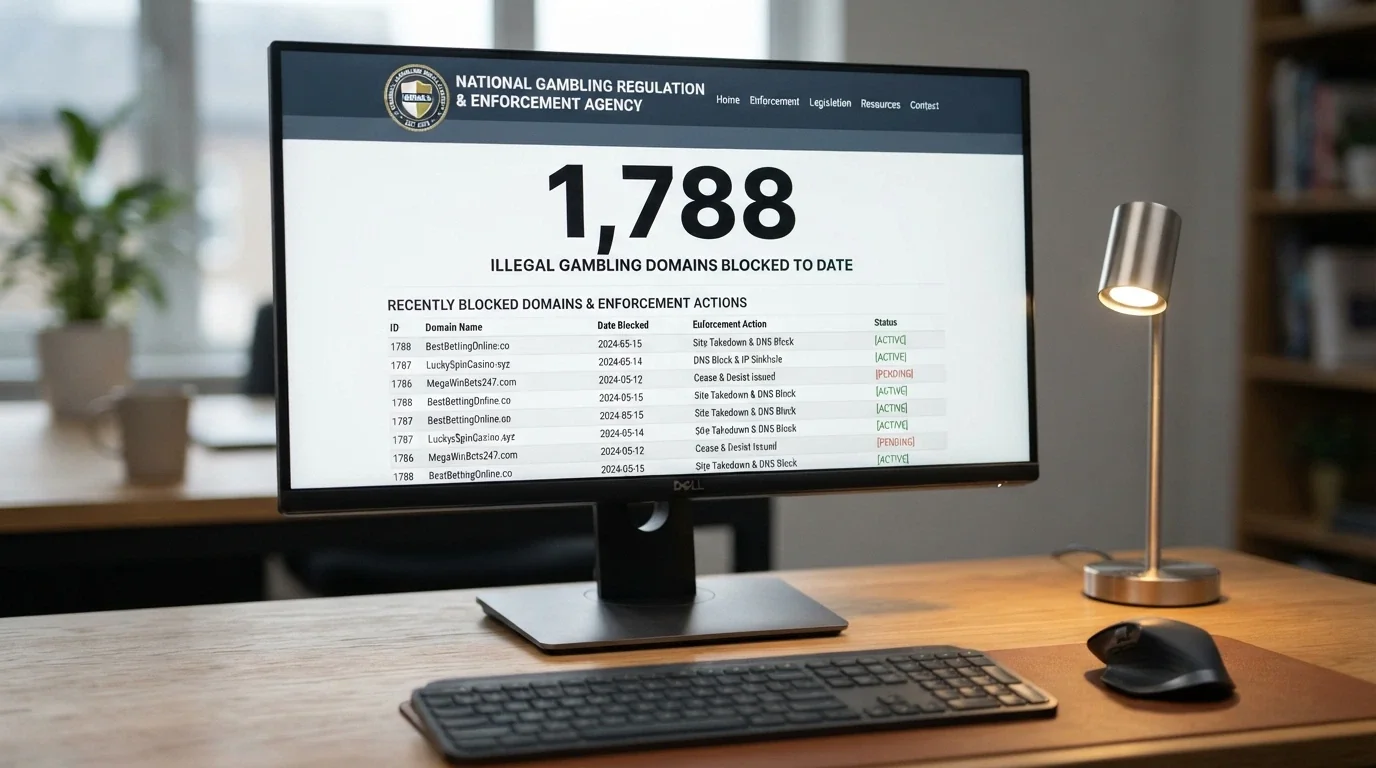
The headline number is the blocking count. Since the ACMA made its first blocking request in November 2019, 1,788 illegal gambling and affiliate websites have been blocked by Australian ISPs. The number rises every quarter; it is a running total rather than a static figure. Over 230 illegal services have pulled out of the Australian market voluntarily since the ACMA started enforcing the post-2017 rules in earnest. Some left because the blocking made acquisition expensive; others because formal warnings preceded civil penalty proceedings.
The Q4 2025 enforcement data shows the cadence. Between October and December 2025, the ACMA completed 23 investigations into 45 gambling sites and found 69 breaches of the Interactive Gambling Act. It issued 10 formal warnings and referred 133 websites for ISP blocking. The named operators who received formal warnings in that quarter included Dama N.V. (for Vegas Now, Rooster Bet and Rocketspin), BrightStar Digital Ltd (for Pokienations), Jade Reef Ventures Corp. (for Leon), Happy Interactive LLC (for Wombet) and NovaForge Ltd (for CrownPlay). None of these operators appears in the top-10 comparison above, but several of them run offers in adjacent markets and their names are worth recognising when an affiliate page surfaces them.
The ACMA’s limit is also worth naming. It can investigate, warn, fine and block. It cannot refund a player who has been refused a withdrawal by an offshore operator, and it cannot compel an offshore operator to pay a disputed balance. That gap is why the offshore route carries a real financial risk the licensed route does not.
What “Legal” and “Licensed” Really Mean When an Offshore Casino Uses Those Words
A Curaçao OGL licence is a real licence, issued by a real regulator, under a real statute. It authorises the holder to offer gambling services from Curaçao, to customers in jurisdictions where doing so is not separately prohibited. It does not authorise the holder to offer online casino to Australians — because the prohibition is on the Australian-facing provision, not on the licence held abroad. The distinction is the one the marketing flattens.
An offshore casino waving a Curaçao licence is legal where it is incorporated. Providing that service to an Australian is an offence under Australian law, and that is the part the marketing buries. The Australian-facing promotion is itself a breach: inducement offers (sign-up bonuses, referral bonuses) directed at Australians are restricted under state and territory advertising rules, and from 1 January 2027 they will be further restricted under the 2026 reform. The “best licensed casino” framing is the framing the law does not support.
The practical consequences for an Australian player are concrete. There is no Australian consumer protection covering the relationship. There is no Australian complaints body that can compel the operator to pay a disputed balance. There is no BetStop coverage — see the player-protection section that follows. The ACMA cannot recover money. The site can be blocked at any time with the player’s balance still on it. And the individual player, while not prosecuted, has no recourse if the operator refuses a withdrawal, closes the account, or disappears. The “grey area” framing that some affiliate pages use is not a defensible reading of the IGA. The Act is clear.
What You Give Up When You Play Outside the Australian Rules
Offshore casinos sit outside every Australian player-protection system. BetStop does not cover them. The Australian Consumer Law does not reach them. The Australian Financial Complaints Authority does not hear disputes about them. The Office of the Australian Information Commissioner does not enforce privacy obligations on them. The state and territory gambling regulators do not regulate them. What an Australian player keeps when they play offshore is the bonus; what they give up is the safety net.
BetStop — The Self-Exclusion Register That Offshore Casinos Ignore
BetStop is the National Self-Exclusion Register, launched on 21 August 2023. One registration excludes a person from every Australian-licensed online and phone wagering service — roughly 150 operators including the major bookmakers. The exclusion period runs from a minimum of 3 months to a lifetime, and once registered the operator is required by its licence conditions to refuse the person’s bets, close marketing contact, and hold any account balance for the period of the exclusion. It is the most concrete harm-reduction tool the Australian wagering regime has built, and it works for the operators it binds.
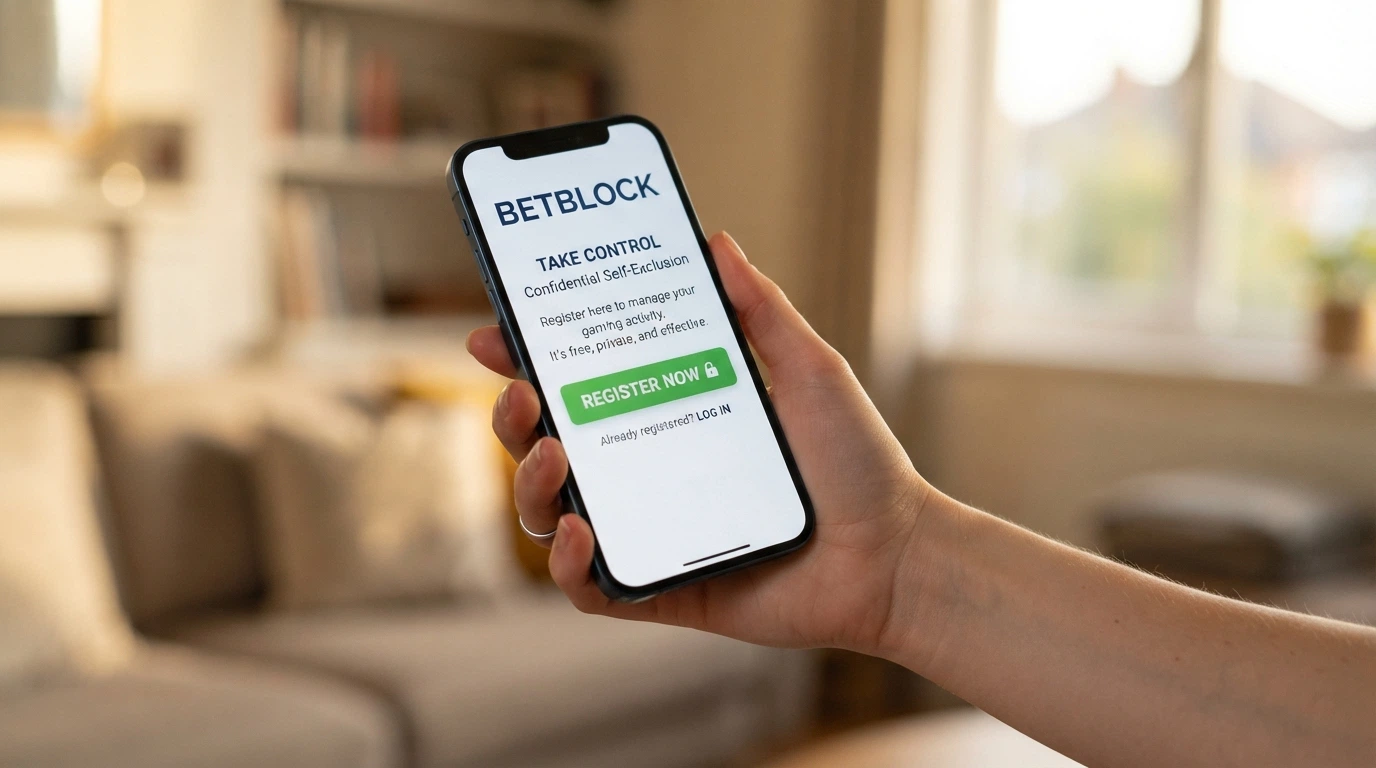
The numbers show how much it has been used. To the end of Q3 FY 2025–2026 (31 March 2026), 59,830 people had registered to self-exclude through BetStop. Of those, 37,247 had active exclusions at the same date. The age profile skews young: 78% of registrants were under 40, and 38% chose lifetime exclusion. The awareness gap is the harder number: only one in three wagerers (33.5%) knows BetStop exists, according to the Australian Gambling Research Centre at the Australian Institute of Family Studies. Among high-risk gamblers, only 7.5% have an active exclusion. Dr Sakata of the AGRC has put the gap plainly: despite an estimated five million wagerers nationwide, including 400,000 high-risk gamblers, just 30,000 individuals currently have active exclusions through BetStop.
The limit of BetStop is the offshore route. BetStop binds Australian-licensed wagering services only. An offshore casino is not licensed in Australia, is not connected to the register, and will keep accepting a self-excluded person’s money. The exclusion is a wall against licensed operators and an open door everywhere else. From 1 January 2027, the 2026 reform strengthens the register: direct marketing of inducements to a person will be prohibited for 14 days after sign-up, 3 months after BetStop deregistration, and indefinitely for at-risk customers. None of that changes the offshore gap.
The National Gambling Helpline and Where to Turn
The National Gambling Helpline is 1800 858 858. It is free, confidential, staffed 24 hours a day, 7 days a week, and connects to phone, online chat and counselling through Gambling Help Online (gamblinghelponline.org.au). It is the front door for anyone whose gambling is becoming a problem, and it is one of the few services that operates regardless of whether the gambling in question is on a licensed or an offshore platform. Financial counselling through the Department of Social Services is available for people who cannot pay bills because of gambling harm. Venue self-exclusion covers land-based casinos and betting shops separately. Gambler’s Help (gamblershelp.com.au) runs face-to-face, online and telephone counselling across the states and territories.
The helpline does not solve the offshore gap, but it does work for it. A player who has been using an offshore casino and wants to stop can ring the helpline, register for BetStop against the licensed operators, and access the financial counselling the DSS funds. The offshore balance will not be refunded, but the next bet will not be placed.
The Harm Numbers — 430,000 Australians and a A$25 Billion Annual Loss
The reason the Australian regime builds these protections is the prevalence of harm underneath them. The Australian Institute of Health and Welfare put problem gambling at around 2.1% of Australian adults in 2022 — roughly 430,000 people. High-risk gambling sits at 1.8%, and the AGRC estimates five million wagerers nationwide, of whom 400,000 are high-risk. Australia loses approximately A$25 billion annually to gambling, with A$7 billion in gambling-related harm costs to society.
The human cost is the figure that does not fit on a comparison table. One in 10 problem gamblers in Australia attempt suicide. The average debt per person with gambling disorder is approximately A$52,000. The protective systems — BetStop, the helpline, the payment ban, the advertising restrictions, the inducement prohibitions — are built because the harm is real, the population is large, and the prevention is cheaper than the treatment. The offshore route is the route that sits outside every one of those systems. An Australian player using an offshore casino is on their own.
How We Evaluated These No-Deposit Free Spins Offers
The comparison table at the top of this page was built from four sources. First, the operator terms pages themselves, reviewed at the time of writing, with the bonus terms copied directly into the cells. Second, the ACMA Action on Interactive Gambling reports, which establish that the operators reviewed are offering unlicensed products to Australians and which also surface the enforcement actions against named operators in adjacent markets. Third, the AIHW and AGRC research base for the prevalence and harm figures used in the player-protection sections. Fourth, the competing affiliate pages that establish the marketing norms the comparison is being written against.
Every operator in the comparison was checked against the ACMA’s interactive wagering register. None of them appears on it for a casino product, because no Australian casino licence exists and none of them holds one. Their offshore licences — Curaçao OGL in most cases — are the licences they hold. The legality section above explains what those licences do and do not cover.
The evaluation criteria applied are six: NDB availability to Australian players, the wagering requirement on winnings, the maximum cashout cap, the expiry window, the eligible game and the operator track record. The criteria are applied qualitatively rather than via a numeric weighting, because the relative importance of each criterion depends on what the reader is optimising for — a player who wants the gentlest wagering requirement will rank differently from a player who wants the largest spin count. The table does not pretend to choose for the reader.
The limits of this review are real and worth naming. No-deposit bonus terms change frequently. The spin count, wagering multiplier, cashout cap and eligible slot that were live at the time of review may not be live at the time of reading. Some operators rotate their NDBs by season (Rocket Play, Bizzo) and others run limited-time promotions alongside a standing offer (WinSpirit). Cells in the table that read “—” are cells where research did not confirm a current figure — they are gaps, not guarantees. The comparison is a snapshot of a moving market.
Frequently Asked Questions
Can I win real money from free spins with no deposit in Australia?
Yes, but the ceiling is set by the cashout cap, not by the spin count. Most no-deposit free spins offers in 2026 cap withdrawable winnings at around AU$100, with the range across the ten operators reviewed here running from AU$50 (7Bit) to AU$200 (Royal Reels). Anything above the cap is forfeited when the player withdraws, regardless of what the bonus balance shows.
What is the maximum cashout from a free spins no deposit bonus in Australia?
The market norm is AU$100. Across the ten operators in this comparison, the range is AU$50 to AU$200, with 7Bit at the floor, Royal Reels at the ceiling, Fair Go running AU$100 to AU$180 depending on the chip or spins variant, and the remainder clustered around the AU$80 to AU$100 norm. The cap overrides whatever balance the wagering clears to.
What is a wagering requirement and how does it work on free spins?
A wagering requirement is a turnover multiplier applied to bonus winnings before they can be withdrawn. A 40× requirement on A$20 of free-spins winnings means A$800 of stakes must run through the eligible slot before any of the A$20 is withdrawable. The range across the Australian-facing offshore market is 30× to 60×, with a max-bet cap of A$5 per spin enforced while the bonus is active.
Do I need to verify my identity to claim no-deposit free spins?
Identity verification is not usually required at the claim stage. The offer credits on registration (with a bonus code about 60% of the time, automatically the rest), and phone or SMS verification gates the larger spin count at SkyCrown and Royal Reels. KYC documentation is required at the withdrawal stage, not at sign-up — and that is when most players first encounter the verification gap.
What happens if I win more than the maximum cashout cap?
The excess is forfeited at withdrawal. The cashout cap is a ceiling on withdrawable winnings, not a target. A player who has cleared a 40× wagering requirement and ends up with A$180 in the bonus balance, against an AU$100 cap, receives AU$100 and loses the remaining A$80. The cap is the wall the wagering runs into, and the marketing rarely tells you it is there.
No-Wagering Free Spins — Do They Exist for Australian Players?
A no-wagering free spin is the only “free” offer the marketing language could honestly describe: whatever the spin wins is withdrawable immediately, with no turnover target and no max cashout cap attached. They exist in regulated markets — the United Kingdom publishes them regularly through licensed operators — but they do not appear on the Australian-facing offshore market in any meaningful volume. None of the ten operators in this comparison runs one.
The economic reason is straightforward. A no-wagering free spin pays out cash the moment it lands. A 40× wagering requirement lets the house retain, on average, around 3.8% of the turnover as expected profit — A$30.56 on A$800 of stakes, in the BitStarz example above. The house gives up that margin when it waives the wagering, and offshore operators in a competitive acquisition market rarely volunteer to. The smaller the operator, the more reason to attach a multiplier. The trade-off the marketing offers is real spins now versus real money later.
Free Spins Without the Safety Net — What an Australian Player Should Actually Do in 2026
The page has laid out two things. The first is what an offshore no-deposit free spins offer actually pays: a small number of spins on a single nominated pokie, governed by a 30×–60× wagering requirement, an AU$50–AU$200 cashout cap, and an expiry clock that runs 3 to 14 days. The expected cost of converting the BitStarz offer to withdrawable cash is roughly A$30 against a free entry, which is a fair exchange on the maths — but only if the player clears the wagering within the 7-day clock and never breaches the A$5 max-bet rule. Most players do not. The house earns the difference.
The second is what an Australian player gives up to take that exchange. The Interactive Gambling Act 2001 bans the product being offered. Every operator in the comparison is offshore, and none of them holds an Australian casino licence because no Australian casino licence exists. The ACMA has blocked 1,788 illegal gambling websites since November 2019 and directed ISPs to block more every quarter. BetStop does not cover the offshore route. The helpline (1800 858 858) and Gambling Help Online work regardless, and the AGRC’s prevalence figures — 430,000 Australian adults with a gambling problem, A$25 billion lost annually, one in 10 attempting suicide — are the reason those services exist.
The trade-off, in plain terms, is a capped free-spins win against the loss of every Australian player-protection system. For a player who weighs that trade-off and decides the bonus is worth the cost, the comparison table above is the honest starting point — the wagering requirements, cashout caps and expiry windows are filled in where research confirmed them, and the gaps are marked as gaps. For a player who decides the trade-off is one-sided, the responsible move is to register with BetStop against the licensed wagering operators, ring the helpline if the gambling is escalating, and decline the offer. The bonus is small. The protections given up are not.