
Casino VIP Programs in Australia: Who Actually Picks Up the Tab
A casino VIP program is a tiered loyalty scheme that rewards players for the volume they wager — moving them through bronze, silver, gold and diamond levels, paying comp points as they climb, and at the top tier handing over a dedicated account manager, faster withdrawals and the occasional luxury prize. The structure looks the same at Crown Melbourne’s private gaming rooms as it does at an offshore Curacao-licensed casino running a 30-tier program with a Porsche 911 at the summit. The legal situation could not be more different.

Online casino VIP programs targeting Australians operate entirely outside Australian law. No licence exists for online casino anywhere in the country — not federally, not in any state or territory. Every brand in the comparison below is offshore, every promise of a percentage or a tiered multiplier is made by an operator with no obligation to honour it under Australian consumer law, and the player-protection machinery Australians rely on, from BetStop to state complaints bodies, stops at the border. The VIP ecosystem is real, but it lives in a regulated gap that the Australian Communications and Media Authority has been narrowing since 2017.
Verified against ACMA and the Interactive Gambling Act 2001 as of 16 October 2026.
Table of Contents
- What a Casino VIP Program Actually Is — and What It Isn’t
- How Casino VIP Loyalty Programs Work
- Why Your 2026 VIP Bonus Is Smaller Than It Looks
- VIP Pokies, Slots and Live Tables — What Changes at the Top
- Crypto VIP Casino Programs — the Payment Method Australian Rules Don’t Allow
- The Legal Reality of VIP Casino Programs in Australia
- Responsible Gambling — What VIP Programs Don’t Tell You
- 10 Offshore VIP Casino Programs Compared
- Why SkyCrown’s 10-Level Program Leads the Featured Set
- RocketPlay’s Dual-Track System — Lifetime vs Seasonal Tiers
- Stake — Rakeback, Originals and a 4,500-Game Catalogue
- Bizzo Casino — 30 Tiers, 8,000+ Games and a Porsche 911
- Royal Reels — A Curacao Program with an A$10 No-Deposit Entry
- WinSpirit — Cashback from 5% to 20% with Dedicated VIP Support
- Fair Go — RTG Pokies, 300% Welcome and a 30x No-Max-Bet Rule
- Rainbet — Malta Licence Claim and a Modest 100% Welcome
- Neospin — Five Tiers, Clear Thresholds, Cashback Up to 15%
- Scream Casino — Offshore but Unconfirmed This Review
- How We Evaluated These VIP Casino Programs
- What Australian Players Should Actually Do About VIP Casino Programs
- Frequently Asked Questions
What a Casino VIP Program Actually Is — and What It Isn’t
The VIP casino promise is built around visibility. Tier names flash on dashboards, account managers send messages by name, withdrawal limits tick upward. The same furniture exists in the land-based version — Crown and The Star maintain private gaming salons and host teams for high-rollers — and the offshore sites have borrowed the visual grammar wholesale: the leather-and-brass aesthetic, the tiered loyalty card, the “Diamond” or “Elite” labels signalling the player has climbed.
What the offshore version lacks is the floor the real rooms sit on. A land-based VIP host in Australia operates under a state-issued casino licence, an enforceable responsible-gambling code, and a regulator that can fine or revoke the licence if the operation steps out of line. An offshore operator chasing Australian players runs under a Curacao or Malta licence that grants access to payment processing and a gaming catalogue, and nothing else. There is no Australian complaints body for a player to escalate to, no AU-compliant deposit limit to invoke, and no binding self-exclusion if the player decides to walk away.
The Australian context is the single most important thing to carry through this page. Most VIP-program review sites skip it entirely — they present offshore brands as “Australian VIP casinos” without acknowledging they target a market where the underlying product is prohibited. This page does the opposite. It walks through the mechanics, compares the operators, and then names what changes once a reader steps outside Australian rules.
The 10 operators ranked below were selected from the comparison set researched for 2026. They are ranked on program quality — tier transparency, cashback structure, wagering fairness, withdrawal terms — and the legal reality sits beside every comparison. No brand receives an Australian recommendation; the consumer-protection gap applies to all of them equally.
Why Australia’s VIP Casino Landscape Looks Different from Every Other Market
The Interactive Gambling Act 2001 makes it an offence to provide online casino games, online pokies or in-play sports betting to a person in Australia. There is no licence for online casino anywhere in the country. The market offshore operators target is illegal to serve, and yet the offshore marketing runs hot — VIP landing pages, welcome packs, tiered loyalty schemes — all aimed at Australian accounts.
The reason is enforcement asymmetry. The IGA targets the provider, not the individual player. Australians who sign up at an offshore casino are not prosecuted. The penalty structure — up to A$247,500 for non-compliance on payment-method bans, civil penalty proceedings on the operator side — is aimed further upstream, and the Australian Communications and Media Authority (ACMA) has spent the past several years tightening the upstream choke points. Since November 2019 the ACMA has had 1,564 illegal gambling and affiliate websites blocked at the ISP level, and more than 225 illegal services have withdrawn from the Australian market since 2017. The blocks keep the operator further from the player by choking payment routing, advertising channels and DNS-level access.
What “Australian VIP casino” actually means in practice is this: a casino licensed somewhere that accepts Australian registration, processes deposits and withdrawals in or out of AUD, and offers a VIP program with dollars and tiers visible to the holder of the account. The Australian passport only affects the marketing, not the legal position — under Australian law, the site is providing a prohibited service to a person in Australia whether the player is in Brisbane or Bali.
How Casino VIP Loyalty Programs Work
The mechanics every Australian reader should understand before registering fall into six buckets: tier structure, comp-point earning, cashback and rakeback, dedicated benefits, status transfer, and the fine print that decides what any of it is worth.
Most offshore VIP programs targeting Australia run five to ten tiers, with players moving up by accumulating deposits or wagering volume. Upgrades happen automatically — no application, no waiting period. The progression is typically cumulative and lifetime: once a player hits a threshold, the tier sticks. Some operators split the schedule into a lifetime track and a seasonal track. RocketPlay, for instance, runs a Lifetime track (Quark through Alloy) that never resets and a Seasonal track (Bronze through Diamond) that expires after three months and requires reconfirmation. The split means a steady player keeps their lifetime status untouched, while seasonal promotions reset the clock and re-qualify the player for additional rewards — at the cost of having to maintain a wagering volume every quarter.
The next four sections walk through the components one at a time.
Tier Structure — Bronze to Diamond and Beyond
Most offshore programs use between five and ten tiers, with names running in the standard register: Bronze, Silver, Gold, Platinum, Diamond and sometimes an Elite or Alloy at the top. The thresholds between tiers usually double or triple, which means the climb to Gold is reachable but the jump from Platinum to Diamond is designed to be the work of a serious commitment. Neospin publishes its five tiers openly: A$500 in monthly wagering to reach Bronze, climbing to A$50,000 monthly to reach Diamond. Bizzo runs thirty tiers — thirty — which keeps the chart visually busy and the climb looser, with the perk escalation concentrated at the top. Bizzo’s headline prize for reaching the summit is a Porsche 911.

The seasonal-versus-lifetime split is the wrinkle worth knowing about. Lifetime levels never expire once earned; a player who climbs to Gold keeps Gold until they stop playing. Seasonal levels reset every three months and require reconfirmation through continued play — useful for operators that want players betting at a target rate every quarter, less useful for a player who took time off and came back to find themselves back at Silver.
| Operator | Tier Count | Cashback Rate | Personal Manager Access |
|---|---|---|---|
| SkyCrown | 10 levels | 10% weekly cashback up to A$1,500 | At upper levels (not always published) |
| RocketPlay | Lifetime (Quark–Alloy) + Seasonal (Bronze–Diamond) | 7–10% | At top seasonal/tier levels |
| Stake | Bronze → Platinum+ | Rakeback from Bronze (per cent not specified) | Platinum and above |
| Bizzo Casino | 30 levels | Unconfirmed — escalating rewards structure | At upper tiers (Porsche 911 grand prize) |
| Royal Reels | Multi-tier (specifics not confirmed this run) | Unconfirmed this run | Unconfirmed this run |
| WinSpirit | Multi-tier (specifics not confirmed this run) | 5–20% top tier | Dedicated VIP support for upper members |
| Fair Go | Multiple tiers (comp points) | Unconfirmed this run | Unconfirmed this run |
| Rainbet | Unconfirmed this run | Unconfirmed this run | Unconfirmed this run |
| Neospin | 5 tiers: Bronze–Diamond | 5% (Bronze) to 15% (Diamond) | Platinum and Diamond |
| Scream Casino | Unconfirmed this run | Unconfirmed this run | Unconfirmed this run |
Upgrades happen automatically — no application, no host review. That part is consistent across the featured set. What differs sharply is whether the thresholds are published openly (Neospin publishes every tier requirement; Scream Casino publishes nothing this run could confirm) and whether the seasonal track exists at all (RocketPlay is the only featured operator with the dual-track structure).
Comp Points and Loyalty Earning — How You Actually Climb
Each dollar wagered earns a small number of comp points, and the comp points convert back into bonus money or cash at a published rate. The earn rate is the slowest part of the climb: offshore programs typically pay a few points per A$1 wagered, with the conversion running from 50 to 100 points per A$1 at the bottom tier and tightening to 50 to 75 points per A$1 at the upper tier. The industry convention is that the rate improves as the player moves up — a Bronze player might need 100 points to claim A$1, while a Diamond player claims A$1 for every 50 points.
SkyCrown is the clearest published example in the featured set. The SkyCrown VIP program runs ten levels, with players earning 1 comp point for every A$15 wagered on pokies or live dealer games. Comp points convert directly to bonus money at A$1 per CP with no wagering requirement attached. That last clause is significant: most other programs issue comp points as bonus money that itself carries a wagering multiplier, so the player effectively pays the playthrough twice — once on the deposit clearing the wagering, and again on the comp points. SkyCrown skips the second playthrough on its CP-to-bonus conversion.
Fair Go runs a comp-point loyalty program with multiple tiers on an RTG (RealTime Gaming) catalogue. The earn structure is published less openly than SkyCrown’s, but the program exists and credits comp points on play.
The game-type weighting is the third leg of the system. Pokies typically contribute 100% to comp-point earning — every A$15 wagered on a slot credits the full 1 CP under SkyCrown’s rule. Live dealer contributes under the same rule at SkyCrown, but most programs cut the rate on table games. Blackjack and roulette players tend to earn comp points at half the rate of a slots player, which is the operator’s quiet way of recognising the lower house-edge games are doing less revenue work. The rate that matters for a reader is the rate on the game they actually play.
Cashback, Rakeback and Loss Rebates — the Money You Get Back
Cashback is the single most valuable component of any VIP program, because it is paid in real numbers rather than tier names. The mechanism is straightforward: the operator refunds a percentage of net losses over a defined period (usually weekly or monthly), and the credit is either paid as withdrawable cash or as bonus money that carries its own wagering requirement.
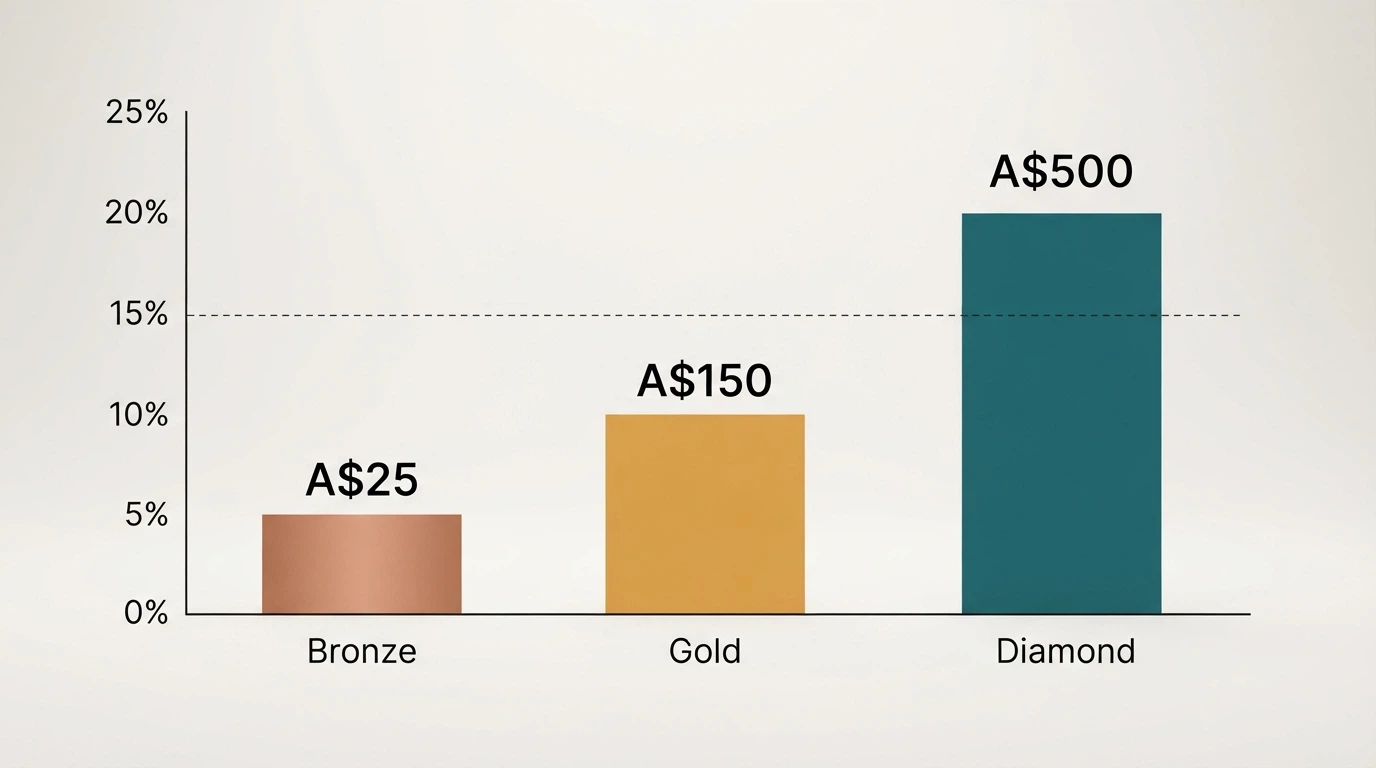
SkyCrown’s VIP Weekly Cashback offers 10% cashback up to A$1,500 on pokie losses, available to VIP players who deposit a cumulative A$150 or more per week, and carries only a 3x wagering requirement — which is light by online-casino standards. RocketPlay runs weekly cashback from 7% (Iron tier) to 10% (Diamond). Neospin publishes the full curve: 5% (Bronze) to 15% (Diamond). WinSpirit’s published top-tier cashback reaches 20% — the highest in the featured set, though the program’s other dimensions remain thin on confirmed details this run. Bizzo’s per-tier cashback percentages were not confirmed this review, though the 30-level structure escalates rewards throughout.
Rakeback is the cousin of cashback. It is more common at crypto-friendly sites and pays a percentage of the house edge rather than the player’s losses. Stake’s VIP program enables rakeback at the entry (Bronze) tier and scales it through Silver, Gold, Platinum and above. The advantage of rakeback over cashback is that it is paid on turnover, not on whether the session ended in net loss — a winning session still earns rakeback. The disadvantage is the percentage is typically much smaller than the headline cashback figures.
Loss rebates are the third leg. RocketPlay publishes a daily loss rebate of up to 25% on losses, with coverage thresholds from A$1,000 (Bronze) to A$2,000 (Diamond). The structure means a player who deposits A$1,500 and loses it all in one session is reimbursed 25% of the loss — A$375 — provided they hit the A$1,000 Bronze threshold in the daily cycle. The 25% headline is the highest loss-rebate rate in the featured set and is what the upper seasonal tiers actually deliver. No deposit guarantee or payout guarantee exists for these offshore products; the operator’s terms are the only recourse.
The wagering requirement on the refund is the clause that decides what the percentage is really worth. A 10% cashback at 3x wagering (SkyCrown’s structure) converts into roughly 3.3% of expected weekly pokie losses, given standard pokie RTPs. A 10% cashback at 40x wagering — closer to the market average — converts into considerably less because the player must cycle through the refunded amount four times more before the funds become withdrawable. The headline cashback percentage is honest; the headline wagering requirement is what determines the net return.
VIP Membership Benefits Beyond the Numbers
The non-percentage perks are what the marketing screenshots showcase — and the listed benefits across the featured set are largely consistent. A dedicated account manager available 24/7, priority withdrawal processing, higher withdrawal and bet ceilings, exclusive promotions and birthday bonuses. The Pokies Net Australia pitch puts the contrast plainly: VIP members at the top tier receive payouts in under 30 minutes versus 90 minutes for standard accounts, plus access to private VIP live-dealer tables with higher betting limits.
Stake is the clearest published example of the dedicated-host tier. Platinum and above receive a dedicated VIP host, tailored reload offers, and faster support response. Stake’s catalogue lists more than 4,500 games, which is the breadth a high-volume player usually wants.
Neospin’s Platinum and Diamond tiers include a personal manager; WinSpirit’s upper members receive dedicated VIP support. The pattern across the featured set is that personal-manager access starts at the second-from-top tier and is universal at the top.
The faster-withdrawal claim is the benefit that does the most to change day-to-day play. A 30-minute payout versus a 90-minute payout is not just convenience — it is the difference between a player who can move funds to a new opportunity and one who cannot. The claim is real at the operators that publish the figures; whether the figure holds under stress (peak hours, KYC re-verification requests, weekend queues) is what the small print hides. The Pokies Net Australia specifics — VIP under 30 minutes, standard under 90 minutes — are the only public numbers in the featured set.
Higher withdrawal and bet ceilings sit in the same category. The phenomenon is universal — every tier comes with a published or implied ceiling increase — but the absolute ceilings differ sharply across the set. RocketPlay’s published limits are A$9,000 per week and A$35,000 per month at the upper tier. Bizzo’s package tiers push the deposit ceiling higher through the welcome offers rather than the published withdrawal ceilings. A player whose plan involves moving funds out of the casino quickly should check the operator’s published limits before signing up.
Status Transfer and Fast-Track VIP Upgrades
Some operators let a player pay to skip the climb. Slotozen and Slots Gallery allow fast-track buy-in at a premium of A$300 to A$1,500 to immediately unlock basic VIP advantages: 24-hour VIP support, higher withdrawal ceilings and tournament entry. The mechanism is straightforward — a one-off payment above the standard welcome offer, in exchange for skipping the wagering volume that would normally unlock the basic tier.
Status-match programs are rarer and largely absent from the featured set. A status match would let a player carry their existing VIP status from a competing casino into a new one, the way airlines transfer frequent-flyer tiers between partners. No operator in the comparison group publishes a status-match scheme.
The math on fast-track buy-in is what most reviews skip. A A$1,500 premium for basic VIP advantages is a sunk cost before a single spin is played. If the VIP advantages save a player time (faster support) or unlock a net-positive reward (a tournament entry the player would otherwise pay separately to access), the buy-in can pay for itself. If the advantages are mostly cosmetic or simply replicate benefits the player would reach through normal play within a few weeks, the buy-in is a fee paid for impatience. The honest read is that fast-track works best for a player who knows exactly which VIP advantages they want and has priced them individually.
Why Your 2026 VIP Bonus Is Smaller Than It Looks
The headline figure on a high-roller welcome is the first thing the marketing shows, and it is the last thing the real cost looks like. A 200% match up to A$3,000 sounds enormous until the wagering multiplier, the time limit and the game weighting are applied to it. This section walks through what the maths actually does to a typical high-roller VIP welcome bonus — using the calculation the rest of the page draws on.
The standard high-roller VIP welcome bonus looks like this: a 200% deposit match up to A$3,000 as the headline, with 25x to 35x wagering on the bonus amount, available to players depositing A$500 or more per deposit. A dedicated account manager and priority withdrawals are standard at this level. That is the shape of the offer the comparison set runs on.
What it really costs depends on what the player actually plays. The worked example: a player takes the full A$3,000 bonus at 25x wagering, meaning A$75,000 of qualifying turnover before the bonus and any winnings become withdrawable. At a A$1 stake per spin, that is 75,000 spins. At a 5-second average between spins, that is roughly 104 hours of continuous play — the rough duration the bonus takes to clear on pokie-style games at standard tempo.
The marketing image this analysis punctures: the “200% match up to A$3,000” pictured as free money. The reality: a A$3,000 bonus that must be wagered A$75,000 before A$3,000 (or any winnings on top of it) is withdrawable. The size of the bonus is not the size of what the player keeps. A bonus is a commitment to volume, and the volume owns the player until it is done.
The assumption that decides everything: only the bonus amount is wagered, not the deposit. Some operators attach the 25x to the deposit plus the bonus, doubling the turnover; others use the bonus-only multiplier (shown above); a few apply reduced wagering to the deposit portion. The terms page decides it. A player who assumes the higher bonus figure is always the better offer can land on a multiplier twice as heavy as they expected, for the same advertised match.
That same bonus generally takes 104 hours of continuous play to clear. A working player with a job, sleep, and other commitments cannot realistically clear a full high-roller bonus in the advertised validity window — typically 7 to 30 days — without significantly elevated daily wagering. The math is brutal at standard tempo, and the terms page has the date stamps to enforce it.
VIP Welcome Bonuses — the Headline vs the Fine Print
The welcome bonus is the offer a player sees first. Across the featured set, the structures vary, but the pattern is consistent: a deposit match, a free-spin allocation, and a wagering multiplier that sits between 25x and 50x. The extremes matter more than the middling entries.
High-roller VIP bonuses run 200% up to A$3,000 at 25x to 35x wagering — lower than the standard 40x to 50x the wider site applies. SkyCrown’s high-roller option is a 50% match up to A$3,000 alongside the standard 120% up to A$1,200 line, with the full welcome pack running to A$8,000 across four deposits at 40x wagering. Stay Casino’s VIP Welcome Pack spans five deposit tiers, demanding A$350 per deposit and offering up to A$50,000 + 780 free spins, with 40x on deposits and 30x on the spins. Bizzo’s welcome splits into a standard offer (up to A$7,250 + 175 free spins across four deposits at 40x, with the full 125% first-deposit match requiring a A$250+ deposit) and a 200% crypto welcome bonus up to A$800.
Royal Reels runs a smaller welcome: 100% up to A$500 with a minimum A$30 deposit, paired with a A$10 no-deposit bonus, at 30x to 40x wagering. It’s noticeably lighter than the high-roller line at SkyCrown or Stay.
Stake offers a different structure entirely: a one-time 200% first-deposit bonus up to $2,000, credited 24 to 48 hours after the player completes KYC Level 2 and contacts support. The bonus is gated behind verification and a manual support interaction — a structural choice that undercuts anonymity and adds friction, but means the bonus itself is paid out as cash rather than as bonus money.
What the campaign above helps show: the welcome bonus a player sees is one term in a four-or-five-term package. Validity window, max-bet rule during wagering, game weighting, free-spin expiry on top of bonus expiry, and max-cashout caps compound across the package. A 200% headline at 25x wagering with a generous validity window is a different offer from a 200% headline at 25x wagering with a max-bet rule and a 7-day window. Reading the full terms page is what separates the comparison.
Max-bet rules are the clause that bites hardest during wagering. Many operators void bonus winnings if a player places a single bet above a specified threshold (typically A$5 to A$10) while the bonus is active. A player used to A$50 spins on a pokie will find themselves either winding down stake size or risking the entire bonus-and-winnings package on a single oversized spin. The rule is buried in the terms, and the dispute resolution when triggered is the operator’s discretion.
Game-weighting is the second invisible clause. Most operators apply 100% weighting to pokies for wagering purposes, but slash table-game games and live dealer to 5% to 20%. A blackjack player clearing a bonus will spend ten to twenty times the playthrough a slots player would on the same dollar. The weighting clause turns the bonus into a game-type-locked offer in practice, even when the marketing does not say so.
Deposit-Match and Reload Bonuses for Existing VIPs
The welcome is a one-time headline. The reload is what actually funds a long VIP run — the offer a returning player sees each week, often scaled by tier. The standard shape: a weekly percentage match on a deposit, sometimes paired with free spins, sometimes tied to specific games.
The featured set’s reload offers diverge sharply. Fair Go’s published 300% welcome bonus is among the highest match percentages in any reviewed VIP program, and its wagering requirement — 30x on pokies with no max-bet rule — is among the fairest. The lack of a max-bet rule is the critical detail: a Fair Go bonus player can spin at any stake they choose without voiding winnings, which is a structural advantage high-volume players appreciate.
Bizzo offers the same crypto welcome bonus separately from its standard welcome line, which is a payment-method-specific offer rather than a reload. Its VIP tiers also unlock up to 255 free spins across the first five tiers with no wagering requirement on those specific spins — a no-wagering rewards feature that no other featured operator explicitly matches.
SkyCrown’s weekly cashback component — 10% up to A$1,500 at 3x wagering for VIP players depositing A$150 or more weekly — is what most directly resembles a reload. The cashback runs weekly, applies to pokie losses specifically, and carries light wagering. RocketPlay’s loss rebate (25% on losses at higher seasonal tiers) is the closest analogue for loss-led recurring value.
The pattern across the featured set: recurring VIP value comes from cashback or insurance rather than from repeated deposit matches. The percentage on a reload is usually much lower than the welcome offer; the volume on which it applies is much larger. The maths on a 10% weekly cashback at standard volume outperforms a one-off 100% match at any realistic continuation rate.
The No-Deposit VIP Bonus — What the Casinos Actually Offer
A genuine no-deposit high-roller VIP bonus does not exist at the operators checked. Quote: “High-roller and VIP bonuses are designed to reward large deposits, so a genuine no-deposit version doesn’t exist at the casinos we’ve checked.” The structural reason is straightforward: a no-deposit offer requires the operator to pay for play the player has not committed to, and the math works only at small amounts. A no-deposit VIP bonus would require the operator to pay for large-volume play that the player can walk away from at any time.
What does exist in the featured set is the no-deposit offer at the bottom of the bonus ladder. Royal Reels pairs its 100% deposit match with a separate A$10 no-deposit bonus. Richard Casino offers 5 no-deposit free spins with no wagering (max win A$25), and 20 push-notification free spins (max win A$35).
The wins at those no-deposit tiers are deliberately capped. A$25 maximum withdrawal on 5 no-wager free spins is roughly 5x the expected value of the spins, and the player is not going to make serious money on a single bonus round. These offers serve as marketing teasers — they let the player try the casino without depositing, knowing the player will be drawn into a deposit to chase anything substantial.
A reader comparing VIP programs will not find a no-deposit VIP path. The combination of “VIP” and “no-deposit” does not exist at the operators checked, and the structural reasons mean it likely will not appear soon. The closest legitimate path is a low-deposit path into the VIP ladder — Royal Reels’s A$30 minimum, RocketPlay’s qualifying deposit for the seasonal Bronze tier, the standard qualifying deposits across the featured set.
VIP Pokies, Slots and Live Tables — What Changes at the Top
The single most important fact about VIP status at an online casino: the house edge on each spin does not change. A Diamond-tier player betting on the same pokie, paying the same RTP, gives the casino the same percentage as a Bronze-tier player. The perks at the top shift the surroundings — the betting limits, the table access, the comp-point earn rate — but the math underneath the games is identical. That distinction is what the page’s voice lands on: VIP status changes the experience, not the odds.
What changes at higher tiers is the ceiling. VIP players at the top tiers typically see higher maximum bets, faster withdrawal processing on big wins, and access to private tables in the live casino. Pokies players get higher max-stake options at the same RTP. Live dealer players move off the public tables onto private rooms with higher minimums and maximums.
The game catalogue is the second shift. Stake’s 4,500-game catalogue includes Stake Originals — the operator’s proprietary titles — alongside the broader catalogue; the volume is what high-volume players bounce between. Bizzo runs 8,000+ titles, the largest library in the featured set. The breadth itself becomes a perk: high-volume players exhaust smaller libraries faster and migrate toward operators that maintain published depth.
Tier access to higher pay levels is the more obscure shift. Some games gate higher betting levels behind account status: a pokie that takes bets from A$0.20 to A$100 at standard status may unlock a A$500 max bet at the Diamond tier. The mechanics are operator-specific and rarely published openly. Neospin’s tier structure publishes wagering thresholds (A$500 monthly to A$50,000 monthly) that imply progressive access to the highest-stake games available on the catalogue.
VIP Pokies and Slot Machines — What Being a VIP Actually Changes
The shape of a VIP pokie experience is straightforward: higher bet ceilings, exclusive early-access titles at some operators, and higher comp-point earn rates on the games that drive volume. The shape of the experience a VIP player does not get: any change in the pokie’s RTP, any change in the bonus-frequency or feature-rate, any change in the volatility profile. The game provider ships the same maths to the operator, and the operator ships the same maths to the player.
SkyCrown’s published earn rate is 1 CP per A$15 wagered on pokies or live dealer games — high-rate on both game types, which is unusual. Most operators cut live-dealer weighting; SkyCrown maintains parity with pokies. Fair Go runs an RTG (RealTime Gaming) catalogue and is pokies-only in focus, with the bonus moving exclusively through that catalogue. The wagering structure — 30x on pokies with no max-bet rule — is one of the fairest in the comparison set.
Stake’s 4,500+ games include Stake Originals, the operator’s proprietary titles. Originals run on provably-fair mechanics and offer separate staking behaviour from the third-party catalogue. The proprietary titles are what high-volume Stake players tend to gravitate toward because the RTP on an Originals title is operator-published and provably verifiable, where a standard slot RTP comes from the developer’s published paytable.
Live Casino VIP Tables and Private Dealers
The roped-off high-roller room has an online analogue: private VIP live-dealer tables with higher betting limits and a dedicated dealer. The Pokies Net Australia pitch on the experience: “These exclusive environments cater specifically to high-rollers who prefer larger betting limits and personalised service. In the VIP Live Casino, you interact with professional, world-class dealers who manage the game with elite precision.” The structure works the same way as a land-based private room — same games, higher stakes, the social layer sorted.

Stake offers higher-limit tables throughout its live dealer section, though the specific VIP private tables are not named in this review’s confirmed terms. SkyCrown’s live dealer contribution to comp-point earning (1 CP per A$15 wagered) means live-dealer play drives the loyalty programme at the same rate as the slots catalogue. The higher-tier benefits at the featured operators include priority seating at peak-hour tables and personalised limit adjustments.
What the private-table experience does not change: the house edge on blackjack, baccarat, roulette and game-show-style live dealer games. A private VIP blackjack table running Evolution Gaming’s standard rules retains the standard house edge the game is built on. The experience is sold as exclusive; the math underneath is identical to what a public-table player sits at. The added cost a player pays for the exclusivity is the higher minimum bets (which force high-volume play) and the social cost of waiting until enough players join the table.
Crypto VIP Casino Programs — the Payment Method Australian Rules Don’t Allow
Crypto VIP programs exist, and several offshore casinos market them specifically to Australian players. Bizzo offers an identical crypto bonus in addition to its standard package. The catch sits upstream. Since 11 June 2024, credit cards, credit-related products and digital currency (crypto) have been banned as payment methods for online wagering in Australia. The penalty for an operator that fails to enforce the ban is up to A$247,500.
An Australian player who sees a crypto welcome bonus at an offshore casino is being served by an operator outside Australian rules. The transaction itself happens outside Australia’s payment rails: the player sends USDC or BTC to the casino’s wallet, the casino credits the account in AUD-equivalent bonus dollars, and the Bitcoin Network (or equivalent) settles the transfer. No Australian bank is involved in the credit-clearing stage.
The KYC requirement undermines the anonymity crypto was supposed to buy. Stake’s 200% first-deposit bonus up to $2,000 is credited 24 to 48 hours after the player completes KYC Level 2 and contacts support — meaning the bonus is gated behind a verification step that includes government-ID submission. The crypto payment does not bypass the identity check. It bypasses the credit-card network’s transaction record, which is a smaller privacy benefit. The trade-off is what the player pays for accepting the bonus.
From 1 January 2027, banks and payment providers gain express authority to block transactions to illegal gambling operators — including offshore VIP programs accepting Australian customers. Crypto deposits flowing directly from a player’s wallet to an offshore wallet are not within the bank’s reach, but the on-ramp (the AUD-to-BTC purchase at a local exchange) and the off-ramp (selling BTC and depositing the proceeds at an Australian bank) both touch regulated rails. The 2027 framework narrows the gap.
For an Australian-based player, the practical calc is this: a crypto VIP bonus is not more accessible than any other offshore VIP bonus. It is the same withdrawal cheque, the same offshore processing window, the same site-blocking risk, the same absence of BetStop coverage — with the added jurisdiction problem that the payment method itself is legally prohibited for online wagering. The crypto welcome is structural marketing for international audiences, and it has no special advantage for Australian players beyond offering a parallel rail that does not touch domestic payment infrastructure.
The Legal Reality of VIP Casino Programs in Australia
The legal picture is settled, and it is one-sided. Every online casino VIP program targeting Australians operates outside Australian rules. The IGA prohibits the provision, the ACMA enforces against the provider (not the player), Australian banks will begin blocking transactions to illegal operators from January 2027, and the offshore operator answers to no Australian regulator.

What that means for a player is specific. There is no Australian consumer protection covering an offshore casino transaction — no Australian Competition and Consumer Commission reach, no state-based casino complaints body, no ombudsman. There is no BetStop coverage: registering on BetStop excludes a person from every AU-licensed wagering service, and does nothing to stop an offshore casino from accepting the player’s deposits and bets. There is no Australian-government-administered deposit cap or self-exclusion. There is no recourse if the operator refuses a withdrawal or voids a win on a discretionary clause buried in the terms.
What that does not mean: a player cannot be prosecuted. The IGA targets the provider. Players are not the enforcement target. The risk sits at the operator and the payment rails, not at the individual player. That asymmetry is why offshore marketing targets Australians — the legal risk is one-sided in the player’s favour, even though the consumer-protection risk is one-sided in the operator’s favour.
The ACMA, the Interactive Gambling Act and What They Actually Enforce
The Interactive Gambling Act 2001 makes it an offence to provide online casino games, online pokies or in-play sports betting to a person in Australia, with no licence available for online casino anywhere in the country. The ACMA is the federal regulator that investigates complaints, issues formal warnings, and directs ISPs to block illegal sites. The enforcement record: 1,564 illegal gambling and affiliate sites blocked since November 2019, and more than 225 services withdrawn from the Australian market since 2017.
The IGA targets the provider, not the player. A reader who has signed up at an offshore VIP casino has not committed an offence. The provider has, and the ACMA’s tools sit upstream — site blocking, payment-rail pressure, civil penalties, formal warnings. The asymmetry matters because it explains why the marketing continues: the operator risk is high, the player risk under Australian criminal law is effectively zero.
The change coming on 1 January 2027 narrows the player-side risk in a different direction, as banks and payment providers can block these transactions. A player who tries to fund an offshore account with a domestic card may find the transaction declined at the bank level — not because offshore gambling is newly illegal, but because the bank has new legal authority to refuse the flow.
Licensed vs Offshore — What the Difference Means for Your Money
A Curacao licence is not an Australian one. The two pieces of paper authorise different things. A Curacao licence authorises the operator to run an online gaming business under Curacao’s regulatory framework — it does not authorise the operator to offer services to Australian customers, because Australia does not allow the underlying product to be licensed in the first place. The “international licence” an offshore casino claims is real under Curacao or Malta law; it is meaningless under Australian law.
The protections a player gains from a wagering service licensed by, say, the Northern Territory Racing and Wagering Commission are specific: Australian consumer law recourse, a state-administered complaints body, mandatory BetStop coverage (since August 2023), customer-set deposit limits and activity statements, and operator accountability through the licence itself. An offshore casino imports none of these protections.
The protections a player loses at an offshore VIP casino are equally specific: no Australian complaints escalation, no BetStop coverage (the offshore casino is not connected to the register), no Australian-government-administered deposit limits, no legal recourse if the operator refuses a withdrawal or voids a win, and the site itself can be DNS-blocked at any time with a balance on the account.
The contrast is sharpest when a dispute arises. A licensed wagering operator has a regulator to answer to, a complaint to investigate, and a licence to protect. An offshore casino has a terms page, a discretionary clause, and no external arbiter. The two structures are not interchangeable.
The 2026 Gambling Reform and What Changes in 2027
The biggest regulatory tightening in a decade is already enacted. The Interactive Gambling Amendment (Gambling Reform) Bill 2026 passed Parliament on 19 August 2026, and its measures commence on 1 January 2027.
The advertising measures tighten what licensed operators can show. From 1 January 2027: no more than three wagering ads per hour between 6:00 am and 8:30 pm; no wagering advertising from 15 minutes before a live sporting event until five minutes after it ends; radio ad bans during school hours; broadcasting of sporting odds banned outright; online ads shown only to logged-in, over-18 users with an opt-out mechanism; no wagering ads in sports venues or on player uniforms; athletes, celebrities and influencers barred from promoting wagering products. The rules apply to licensed operators; offshore VIP program marketing continues to operate outside them.
The inducement rules tighten the post-signup welcome: direct marketing of inducements prohibited for 14 days after a customer signs up, three months after a person deregisters from BetStop, and indefinitely for customers identified as at risk of gambling-related harm. Offshore VIP programs do not face this rule — they have no AU-licensed customer base to which the inducement rule would apply.
The financial-institution rules are the structural tightening. From 1 January 2027, banks and payment providers can block these transactions. The mechanism is the same as ACMA’s site-blocking approach: identify the merchant, choke the payment route. Crypto on-ramps and off-ramps touch regulated rails, and the new authority reaches both ends.
The AdStop register, administered by the ACMA, is the consumer-facing piece — a single opt-out mechanism for wagering advertising across online platforms, funded by a cost-recovery levy on licensed interactive wagering service providers. Opt-outs from international VIP program marketing sit outside the AdStop mandate, since the AdStop register operates against licensed providers only.
The clampdown is on the licensed side of the market. Offshore VIP programs operate outside the new measures, and the measures’ effect on them is indirect — the harder the licensed-side enforcement becomes, the more pressure the regulator can apply upstream against operators serving Australian customers, and the more cautious banks become about processing offshore gambling transactions.
Responsible Gambling — What VIP Programs Don’t Tell You
A VIP program is a retention machine. Higher tiers unlock higher returns, the returns encourage continued play, and the program is designed to keep a player at stake levels that maintain the tier benefits. The structure overlaps directly with the behaviour patterns the gambling-harm research flags. About 2.1% of Australian adults — roughly 430,000 people — experience problem gambling, and the AIHW put high-risk gambling at 1.8% in 2022.
The mathematical picture a sharp reader sees: a casino’s VIP program is paying a player a percentage of the player’s losses back. The percentages are accurate. They are also the operator’s way of saying: we know how much you lost, and here is a refund for staying. The refund is real money; the spending that unlocked it was real money; and the next month the player repeats the cycle with a slightly higher reload percentage.
The VIP–problem gambling overlap is structural, not a coincidence. Programs that incentivise higher deposit volumes, longer sessions, and continued play at stake levels that match the tier escalate the amount of money a person is wagering against a fixed budget. The escalation pattern is precisely what gambling-harm research identifies as the most significant predictor of harm.
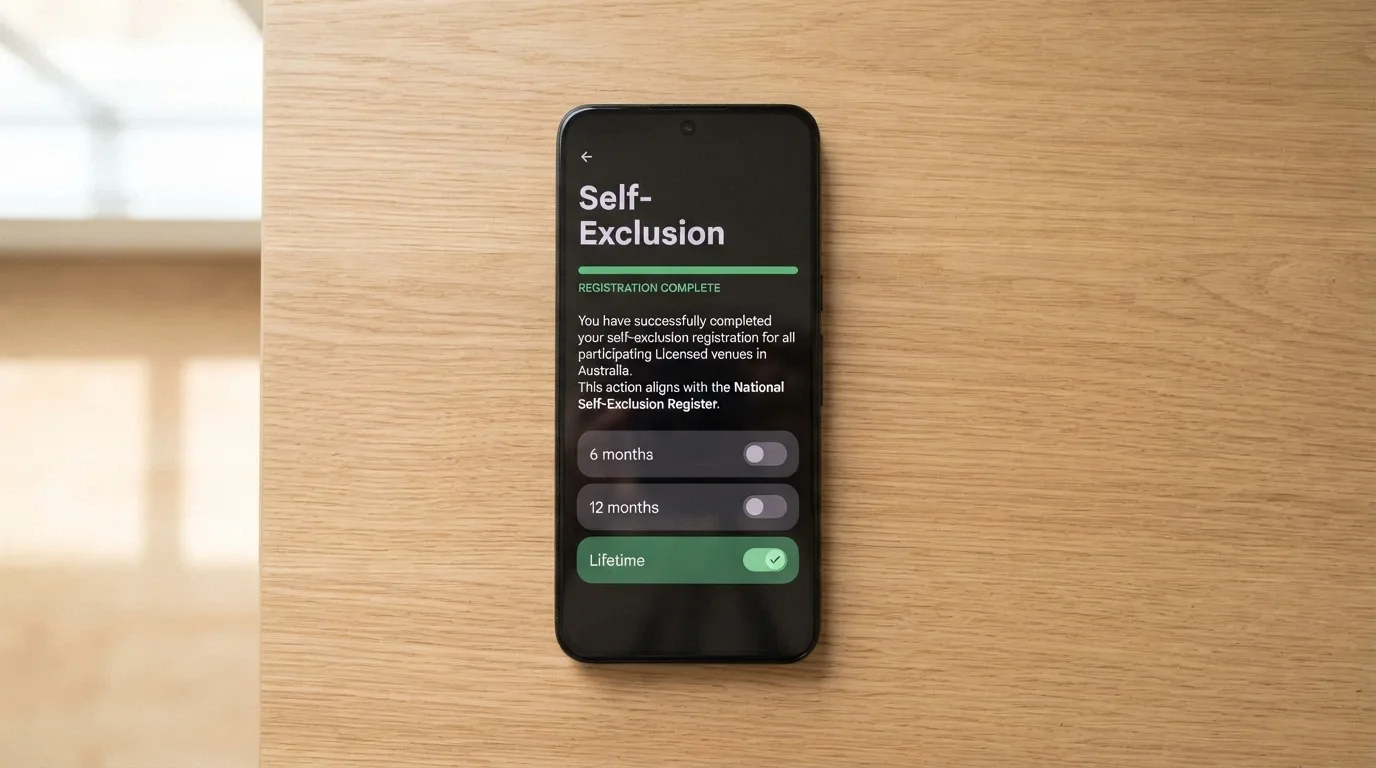
Australian-licensed operators have specific tools to address this. Customer-set deposit limits and activity statements are mandatory under state and territory conditions, though the specific terms vary between operators and between states. BetStop, the National Self-Exclusion Register, allows a player to exclude themselves from every AU-licensed wagering service in a single registration. From 1 January 2027, the BetStop framework expands with three-month post-deregistration inducement bans for new operators, and inducement marketing is prohibited indefinitely for at-risk customers.
The offshore VIP casino has none of these structures. There is no Australian admin oversight on its deposit-limit machinery; there is no BetStop coverage of its player base; there is no complaints body. A player who decides to step back from offshore play is doing it without the institutional support a BetStop registration offers.
BetStop, Self-Exclusion and Why It Doesn’t Cover Offshore Casinos
BetStop has been live since August 2023. One registration excludes a person from every Australian-licensed online and phone wagering service. As at 31 July 2026: 67,480 registrations, of which 41,290 are still active, with 78% of registrants under 40 and 38% choosing lifetime exclusion. The register is among the strongest self-exclusion mechanisms in any country.
BetStop binds Australian-licensed wagering services only. An offshore casino is not licensed in Australia, is not connected to the register, and will continue accepting a self-excluded person’s money. The player’s registration does exactly what the player asked for at every licensed Australian wagering service — and does nothing at the offshore VIP casino where the player is still playing.
The gap is structural: BetStop does exactly what it says, and what it says excludes offshore casinos. The honest reading is to register on BetStop if the player wants the protection it offers, and to recognise that registering addresses only the licensed-side risk. From 1 January 2027, the inducement marketing ban extends three months post-deregistration for AU-licensed operators, further tightening the licensed-side welcome flow.
A self-excluded Australian who continues playing at an offshore VIP casino is doing so without any external support structure. The offshore casino has no commitment to honour an AU self-exclusion, no reporting obligation to the ACMA, and no incentive to refuse deposits from a self-excluded player. The risk sits entirely with the player.
Help Services, Counselling and the Real Cost of VIP Spending
The National Gambling Helpline is 1800 858 858, a free, confidential, 24/7 service. Gambling Help Online — gamblinghelponline.org.au — provides online chat and counselling. Help is one phone call away, in any state, any time.
The harm statistics sit alongside the help line. About 2.1% of Australian adults (~430,000 people) experience problem gambling. The AIHW figure for high-risk gambling is 1.8% of adults (2022). The BetStop demographic skews young: 78% of the 67,480 registrants are under 40. The pattern is structural and affects tens of thousands of Australians actively.
A VIP program player considering whether the structure is doing what they want it to do can answer honestly with one piece of arithmetic. The cash, rakeback and comp-point return as a percentage of net losses is not a profit; it is a refund rate. The refund rate matters most when it allows the player to set a hard budget and walk away within it — and matters least, structurally, when it draws the player back the following week to keep the rate alive.
The help line and the online counselling service are the player-side commitment that the offshore VIP casino does not match. A player who wants the protective framework Australia offers — registered limits, BetStop coverage, complaints-body support, deposit-ceiling enforcement — cannot get it from an offshore operator. They can get the help line, which is free, anonymous, and the same regardless of where the player is playing.
10 Offshore VIP Casino Programs Compared
Every brand below is OFFSHORE and NOT Australian-licensed. No Australian online casino licence exists, and therefore no operator in this comparison can carry one. The “Licence” column states the offshore regulator the operator identifies with on its own terms or in public terms. “VIP Tiers” indicates the program structure as confirmed by this run; “n/c” means not confirmed in this run.
| # | Operator | Licence | Welcome Bonus | Wagering | VIP Tiers | Cashback Rate |
|---|---|---|---|---|---|---|
| 1 | SkyCrown | Offshore (Curacao); NOT AU-licensed | 120% up to A$1,200 (1st dep) or 50% up to A$3,000 high-roller; up to A$8,000 across 4 deposits | 40x | 10 levels | 10% weekly up to A$1,500 (3x wagering) |
| 2 | RocketPlay | Offshore (Curacao); NOT AU-licensed | — | — | Lifetime (Quark–Alloy) + Seasonal (Bronze–Diamond) | 7% Iron to 10% Diamond weekly |
| 3 | Stake | Offshore (Curacao); NOT AU-licensed | 200% up to $2,000 (KYC Level 2 + support contact, 24–48h credit) | — | Bronze → Platinum+ (rakeback from Bronze) | Rakeback (—) |
| 4 | Bizzo Casino | Offshore (Curacao); NOT AU-licensed | Up to A$7,250 + 175 FS (4 deposits); 200% crypto up to A$800 | 40x | 30 levels (grand prize: Porsche 911) | — |
| 5 | Royal Reels | Offshore (Curacao); NOT AU-licensed | 100% up to A$500 (min A$30) + A$10 no-deposit | 30–40x | Multi-tier | — |
| 6 | WinSpirit | Offshore (Curacao); NOT AU-licensed | — | — | Multi-tiered | 5–20% top tier |
| 7 | Fair Go | Offshore (Curacao); NOT AU-licensed | 300% welcome | 30x pokies, no max bet | Multiple tiers (comp points) | — |
| 8 | Rainbet | Possibly Malta MGA (offshore); NOT AU-licensed | 100% up to A$200 + 50 FS | 30x (deposit); 20x (FS) | — | — |
| 9 | Neospin | Offshore; NOT AU-licensed | — | — | 5 tiers: Bronze–Diamond | 5% Bronze to 15% Diamond |
| 10 | Scream Casino | Offshore; NOT AU-licensed | — | — | — | — |
Why SkyCrown’s 10-Level Program Leads the Featured Set
SkyCrown’s VIP structure is the most openly published in the comparison set. Ten levels posted on the VIP page, an explicit earn rule (1 CP per A$15 wagered on pokies and live dealer), and an explicit conversion (CP to bonus at A$1 per CP with no wagering requirement). The published cashback runs 10% weekly up to A$1,500 at 3x wagering, available to VIP players depositing a cumulative A$150 or more per week.
The no-wagering comp-point conversion is the structural advantage. Most programs issue comp points as bonus money with its own wagering multiplier, charging the player twice for the same loyalty benefit — once on the deposit clearing the wagering, once on the comp points. SkyCrown skips the second playthrough on its CP conversion, which makes the loyalty system pay closer to its face value.
The cashback carries only 3x wagering, compared with industry-standard 30x to 50x. A SkyCrown cashback credit converts to withdrawable at a rate five to fifteen times faster than a typical 40x bonus. The result: 10% cashback at 3x wagering is roughly equivalent in net return to 10% cashback at 40x wagering minus the player’s expected loss during the additional playthrough.
The welcome package runs to A$8,000 across four deposits at 40x wagering, with a 120% first-deposit cap of A$1,200 (or the 50% high-roller line up to A$3,000 for A$500+ deposits), plus free spins that push to 400 across the four deposits. The package is solid; it is not the largest in the comparison set (Stay Casino’s pack runs to A$50,000), but the published VIP terms are the most honest in the set, and the cashback-and-CP structure gives a higher-volume player a clearer roadmap than most peers.
SkyCrown is the best program structure in the set if the reader prioritises published transparency, accessible weekly cashback, and a comp-point conversion that does not carry its own wagering. The legal context sits beside that: SkyCrown is offshore, not Australian-licensed, and falls on the player-side risk side of every consumer-protection comparison above.
RocketPlay’s Dual-Track System — Lifetime vs Seasonal Tiers
RocketPlay’s structure rewards consistency in two ways at once. The Lifetime track (Quark through Alloy) never expires — once a player moves up, the tier sticks. The Seasonal track (Bronze through Diamond) resets every three months and requires reconfirmation through continued play. The split means the player who plays steadily keeps their Lifetime level untouched, while seasonal promotions provide additional rewards to the player who commits to higher volume each quarter.
The published numbers: weekly cashback ranging from 7% at the Iron tier to 10% at Diamond, daily loss rebates up to 25% on losses, and coverage thresholds running from A$1,000 (Bronze) to A$2,000 (Diamond). Standard withdrawal limits at the upper tiers are A$9,000 per week and A$35,000 per month.
The 25% loss rebate at the Diamond seasonal tier is the highest published loss-refund rate in the featured set. The mechanism: a player who deposits A$2,000 and loses the full amount in a daily cycle is reimbursed 25% — A$500 — provided they hit the Diamond threshold for the cycle. The percentage is structurally generous, but the 25% is paid only on losses (not on turnover) and the qualifying threshold means the player must have already committed A$2,000 of total deposits for the day.
The dual-track structure’s trade-off: a player gets honest long-term tier progression on the Lifetime side, but reconfirms quarterly on the Seasonal side to keep the additional reward flow. The mechanism is built to disincentivise time off. A player who takes a quarter off finds their Seasonal tier at base and their deposit-insurance square reset to the Bronze threshold.
RocketPlay suits a player who wagers at the qualifying volume across multiple seasons and wants the dual-track structure to keep two parallel reward ladders alive. For a more casual player, the seasonal pressure is the structural cost.
Stake — Rakeback, Originals and a 4,500-Game Catalogue
Stake’s VIP program pays rakeback from the entry Bronze tier and scales through Silver, Gold, Platinum and above. Platinum and above receive a dedicated VIP host, tailored reload offers and faster support response. The catalogue lists more than 4,500 games, including Stake Originals — the operator’s proprietary titles, which use provably-fair mechanics and are independently verifiable on-chain.
Rakeback is paid as a percentage of the house edge (on turnover, not on losses), which means a winning session still earns rakeback. The percentage at Bronze is small; the published specifics on per-tier rakeback percentage were not confirmed this run. The guarantee is that the percentage scales with tier, and the player’s catalogue breadth means more turnover-eligible games per wager than smaller libraries.
The Stake welcome bonus is structurally unusual. A one-time 200% first-deposit bonus up to $2,000, credited 24 to 48 hours after the player completes KYC Level 2 and contacts support. The bonus is paid as cash rather than as bonus money with a wagering multiplier. The mechanism is gated behind verification (KYC Level 2 requires government-ID submission) and a manual support interaction (contacting support to trigger the credit).
The verification requirement is the structural cost. The 200% bonus only unlocks after the player gives the operator the identity verification an anonymous crypto deposit was supposed to bypass. The crypto payment does not protect identity; it bypasses the credit-card-network transaction record, which is a smaller privacy benefit. A player who accepts the bonus has effectively provided KYC anyway.
The 4,500-game catalogue is what high-volume Stake players tend to cite as their reason for staying. The breadth matters for volume players who exhaust smaller libraries and migrate toward operators with deeper catalogues; the proprietary Originals offer verifiable RTP mechanisms the third-party catalogue cannot match.
Stake’s value for an Australian player: the rakeback architecture is a real recurring-value component, the bonus is paid as cash, the catalogue is the deepest in the comparison, and the KYC layer is the structural trade-off. The legal context — Curacao, not Australian-licensed — sits beside it.
Bizzo Casino — 30 Tiers, 8,000+ Games and a Porsche 911
Bizzo runs the longest tier ladder in the featured set and the largest game library. Thirty tiers, more than 8,000 titles, and the final prize — the Porsche 911 — is the most unusual grand prize at any offshore VIP program reviewed. The welcome package runs up to A$7,250 + 175 free spins across four deposits at 40x wagering, with the full 125% first-deposit match requiring a A$250+ deposit. An equivalent crypto offer runs alongside.
The tier escalation rewards structure is the headline. Per-tier reward specifics are not confirmed; what is confirmed is that rewards escalate through 30 levels, with up to 255 free spins distributed across the first five VIP tiers carrying no wagering requirement. A Porsche 911 sits at the summit of the ladder.
The library breadth is the second headline. 8,000+ titles outstrips Stake’s 4,500+ and the smaller libraries of the rest of the comparison set. The breadth is real on the operator’s published page; how much of it a player can browse without hitting the operator’s “offshore catalog” geographic-filtered-out titles depends on how the site handles Australian-facing logins, which the supported terms pages do not publish openly.
The structural critique: 30 tiers produce a “Bronze to almost-Diamond” experience for nine in ten players — most players never climb to the highest tiers in a monthly-recalculated tier system, and the Porsche 911 headline reads as marketing for the climb rather than as a likely outcome. A player choosing Bizzo for the grand prize should treat it as the lottery-style overlay and not as the structural reason to play. The standard welcome, the 255 no-wager free spins on the first five tiers, and the crypto line are easier to assess.
Bizzo suits a player who wants depth in the game library and is comfortable with a 30-tier progression. The legal context — Curacao, not Australian-licensed — applies identically.
Royal Reels — A Curacao Program with an A$10 No-Deposit Entry
Royal Reels operates with a Curacao licence, runs 30+ game providers (Pragmatic Play, Evolution, Yggdrasil, Hacksaw, and 30+ others), hosts 2,000+ games, and offers a 100% welcome bonus up to A$500 with a minimum A$30 deposit, plus a A$10 no-deposit bonus. The wagering runs 30x to 40x — competitive with the featured set’s mid-range.
The A$10 no-deposit offer is the standout entry line. It is the only genuine no-deposit offer in the comparison table at the time of this run, and the small cap (A$10) is well within Royal Reels’s gift budget — the player tries the casino without committing real money, and the operator absorbs the cost of the entry as marketing spend.
The VIP program itself runs multiple tiers, with specifics not confirmed this run. The known loyalty mechanics are cashback through tier rather than through a published weekly plan. The withdrawal cadence and the personal-manager access at upper tiers were not confirmed.
Royal Reels suits a player who wants to start with a no-deposit test, prefers a smaller welcome bonus over a giant headline, and is comfortable with the standard 30x to 40x wagering. The VIP tier specifics elude this review’s confirmation, which is why Royal Reels sits mid-table in the comparison rather than higher.
WinSpirit — Cashback from 5% to 20% with Dedicated VIP Support
WinSpirit’s standout published figure is the cashback curve: 5% at the base and 20% at the top tier. That range is the highest published top-tier cashback in the featured set, with Bizzo and Neospin lower (Neospin’s published 15% is the next highest).
The other confirmed details are partial: dedicated VIP support for upper-level members, withdrawals processing in 12 to 24 hours. Welcome bonus specifics and game provider list were not confirmed this run.
The 20% top-tier cashback is the headline that defines WinSpirit’s place in the comparison. Twenty per cent is structurally generous — higher than every other featured operator’s published top-tier number — though the conditions attached (which tier triggers 20%, what game weighting applies, what wagering requirement sits on the cashback credit) are not confirmed. A player choosing WinSpirit for the headline cashback should verify the conditions that determine the actual return.
WinSpirit suits a player prioritising the highest published cashback ceiling and who can confirm the conditions attached through their own reading of the operator’s terms. The legal context — Curacao, not Australian-licensed — applies identically.
Fair Go — RTG Pokies, 300% Welcome and a 30x No-Max-Bet Rule
Fair Go is the pokies-only specialist in the comparison. The catalogue runs RealTime Gaming (RTG) exclusively, the welcome bonus is 300% (among the highest published match percentages), and the wagering structure is 30x on pokies with no max-bet rule — among the fairest terms tested.
The 30x with no max-bet rule is the structural advantage. A Fair Go bonus player can spin at any stake they choose without voiding winnings. Operators that apply a max-bet rule (typically A$5 to A$10) force the bonus player to wind down stake size or risk bonus-and-winnings voiding on a single oversized spin. Fair Go’s absence of that rule is rare in the comparison set and is the reason high-volume pokies players cite when choosing Fair Go.
The 300% welcome is the headline figure. What sits beneath it is partial confirmation: the deposit minimum, the free-spin allocation, the validity window, and the max cashout from bonus are not fully published this run. A player choosing Fair Go for the match percentage should confirm the terms directly.
Comp points run through multiple tiers, the withdrawal timeline runs 12 to 24 hours, and the Australian-friendly positioning focuses the catalogue on the games Australian players historically prefer. Fair Go suits a pokies-only player who wants the highest match percentage and the lightest wagering rules.
Rainbet — Malta Licence Claim and a Modest 100% Welcome
Rainbet is the only featured operator claiming a Malta Gaming Authority licence rather than Curacao, though the claim is from a single source and not fully confirmed this run. The Malta frame matters meaningfully: a Malta MGA licence sits under a stricter EU-aligned regulatory framework than a Curacao one, with separate dispute pathways and stronger responsible-gambling machinery.
The welcome runs smaller than the comparison set: 100% up to A$200 plus 50 free spins, at 30x on the deposit match and 20x on free-spin winnings, with a 30-day bonus validity. The numbers are smaller than SkyCrown, Bizzo or Stay Casino, and they sit comfortably within the standard formula for entry-level offers.
The VIP program is not confirmed this run. The published terms do not name a tier structure or a cashback rate. A player choosing Rainbet for the Malta licence should not assume a public VIP programme exists at the same maturity as the Curacao-licensed peers in the comparison.
Rainbet suits a player who values the licence-stringency argument and prefers a smaller, lower-volume welcome offer. The programme details remain underdeveloped in this review.
Neospin — Five Tiers, Clear Thresholds, Cashback Up to 15%
Neospin publishes its full tier ladder. Five tiers (Bronze through Diamond), monthly wagering thresholds from A$500 (Bronze) to A$50,000 (Diamond), cashback ranging from 5% (Bronze) to 15% (Diamond), and personal manager access for Platinum and Diamond.
The transparency is the standout feature. Every per-tier threshold is published; every per-tier cashback rate is published; the progression path is fully visible to a player deciding whether to commit. That level of disclosure is rare in the featured set, where most operators publish tier names and headline cashback figures but not the full ladder.
The 500-to-50,000 monthly wagering range is the structural map. Bronze (A$500/month) is reachable for a casual player who wagers A$17 per day across a month. Diamond (A$50,000/month) is the work of a serious high-volume player. The five-step gradient means each tier jump is meaningful, and the published curve is honestly readable.
Neospin suits a player who values tier transparency and the published five-tier ladder over the larger tier-count programmes. The 15% Diamond cashback is below WinSpirit’s 20% but above the rest of the featured set, and the personal-manager access point (Platinum and Diamond) is genuinely useful for the upper tier.
Scream Casino — Offshore but Unconfirmed This Review
Scream Casino sits in the comparison set without confirmed specifics this run. The operator is offshore and not Australian-licensed — the rest is not verified by the public sources this review could consult.
The honest framing: the operator’s licence status (offshore, not AU-licensed) is established; the bonus terms, game provider, withdrawal cadence and VIP program structure were not confirmed in this research. The structural recommendation before signing up is to confirm the specifics directly with the operator’s published terms page, and to register with deposit amounts that limit the downside if the operator’s terms turn out to be stricter than the marketing suggests.
Scream Casino is included in the comparison set to maintain the 10-operator list the page’s plan committed to, but the included write-up is the warning a reader would need rather than the assessment a reader would want. The legal context — offshore, not Australian-licensed — applies identically.
How We Evaluated These VIP Casino Programs
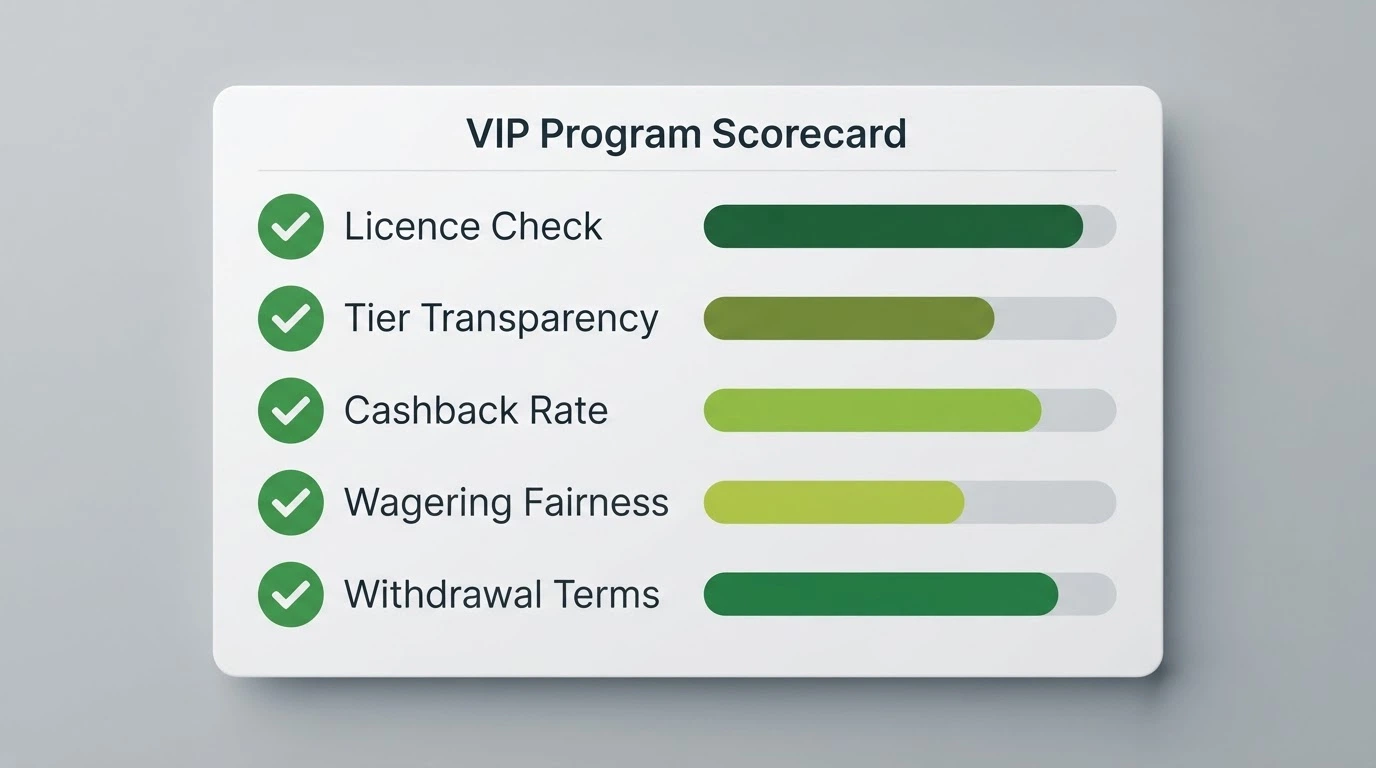
The evaluation took five criteria, each with a publicly checkable basis. Programme structure: tier count, transparency, lifetime-vs-seasonal split, with weight on operators that publish thresholds openly. Cashback rates: per-tier published percentages, weight on the curve’s shape (5% Bronze to 20% Diamond reads better than a flat 5% across all tiers). Wagering fairness: the multiplier, the validity window, the max-bet rule, the game-weighting clause. Withdrawal terms: published processing times, weekly and monthly limits, and any tier-based upgrades. Licence and recourse: what regulation the operator answers to, how a player escalates a dispute, and what the Australian consumer-protection position is.
Sources used. Operator VIP pages and published bonus terms (the Tier structure and Welcome Bonus sections of each operator’s site), affiliate review sites for cross-checking (Australian Gamblers, Casino Sites Review, Pokies.com.au, Casino Hub), and the regulator and statute side — the Interactive Gambling Act 2001 as amended, ACMA enforcement record, BetStop registration statistics, the National Gambling Helpline framework, and the 2026 reform Bill’s published texts.
What was checked and what was not. The licence-status check used the ACMA’s public enforcement register and operator-published terms of service. The bonus terms were checked against the operator’s published T&Cs at the time of research. The VIP program structure was checked against the operator’s own VIP page where available, and against affiliate reviews where the operator’s VIP page was inaccessible. Operators where the VIP page was inaccessible or unclear (WinSpirit, Scream Casino, Rainbet’s VIP programme) are flagged as “not confirmed this run” in their respective write-ups; readers should treat the table cells marked with em dashes as gaps the verification process could not close in this round.
The limits of this review. Offshore operators change terms without warning — a 25x bonus this month can become a 35x bonus next month. The Australian-facing details (whether certain slots or withdrawal methods are geo-filtered for Australian accounts) are not fully published. Cryptocurrencies accepted for deposits and whether on-ramps are restricted to specific jurisdictions vary between operators. None of these limits invalidate the comparison; they bound what a static review can guarantee, and a player should treat the published specifics at the time of signing up as the binding terms.
What Australian Players Should Actually Do About VIP Casino Programs
The legal reality sits beside every comparison above. There is no Australian online casino licence, and every operator in the set is offshore. The bonuses are real numbers; the operators are not accountable to Australian consumer law, do not connect to BetStop, and can be blocked at any time with a balance on the account. The mathematics the bonuses run on is the same mathematics every online casino runs on: the house edge, the wagering multiplier, the validity window. The structural protections Australian players rely on — the deposit limits, the self-exclusion register, the complaints body — stop at the waterline.
The position this page takes: there is no scenario in which an Australian player should treat an offshore VIP casino as a substitute for a licensed wagering service. The product being purchased is a prohibited one. The consumer protections Australians rely on are absent. The 2026 reforms (commencing 1 January 2027) tighten that gap further rather than narrow it.
If a reader still chooses to play at an offshore VIP casino after understanding the legal and consumer-protection context, the protective moves are limited but worth taking. Set hard deposit limits before depositing, and recognise that no Australian-administered enforcement will hold those limits if the operator ignores them. Treat the site’s published terms as binding; do not assume a manager will override them on dispute. Do not deposit money the reader cannot afford to lose to an operator that can disappear overnight or be DNS-blocked with a balance still on account. Avoid the no-deposit and small bonuses that come with high wagering and short validity windows. Cashback and rakeback return more than welcome bonuses once the player passes the early ladder.
Help is available and free. The National Gambling Helpline (1800 858 858) is 24/7, confidential, and free from any Australian phone. Gambling Help Online (gamblinghelponline.org.au) provides chat and online counselling for players who want privacy or who find phone calls difficult. BetStop (the National Self-Exclusion Register) is a single registration that excludes a player from every AU-licensed wagering service — and Australian-licensed operators provide the only Australian consumer-protection framework that exists for online play. AIHW harm statistics: roughly 2.1% of Australian adults — about 430,000 people — experience problem gambling, and 1.8% are in the high-risk range.
The player’s risk profile is theirs to assess. This page does not recommend any operator; it does what the research supports, which is to lay out the legal reality, the bonus mathematics and the consumer-protection gap, and let the player choose with the information laid out. The Australian-licensed path (state-licensed bookmakers offering pre-event and racing wagering, land-based Crown and The Star venues with regulated VIP programmes) is structurally protected in ways offshore VIP programs are not. The choice is the reader’s.
Frequently Asked Questions
Can Australian Players Get in Trouble for Joining a VIP Casino Program?
No — the Interactive Gambling Act 2001 targets the provider, not the player. The Act makes it an offence to provide online casino games to a person in Australia; the player who joins an offshore VIP casino does not commit an offence by doing so. The individual player is not prosecuted. The legal exposure sits at the operator and the payment-routing side, not at the player who signed up.
What Is the Difference Between a VIP Welcome Bonus and a Regular Welcome Bonus?
A VIP welcome bonus is sized for high-roller deposits — typically A$500 or more — with a higher match percentage (commonly 200% up to A$3,000) and a lighter wagering multiplier (25x to 35x versus standard 40x to 50x). A regular welcome bonus runs on smaller minimum deposits with a lower match cap and standard market wagering requirements. The VIP version’s lower multiplier is what differentiates it; the higher deposit minimum is the qualifying threshold.
Do VIP Players Get Faster Withdrawals and Higher Payout Limits?
Yes, at the operators that publish the figures. Pokies Net Australia VIP payouts are processed in under 30 minutes versus 90 minutes for standard accounts. RocketPlay publishes withdrawal limits of A$9,000 per week and A$35,000 per month at the upper tier. Neospin’s tier ladder gives Platinum and Diamond players personal-manager access and priority processing. The exact figures vary per operator and per tier.
What Happens to My VIP Status If an Offshore Casino Gets Blocked in Australia?
The status stays in the operator’s system; the player’s access is severed at the ISP level if the ACMA has the site on its block list. The ACMA has blocked 1,564 illegal gambling and affiliate sites since November 2019 and continues adding to the list. A blocked site does not need to delete player accounts — the player simply cannot reach them from an Australian connection. Funds on the blocked site sit inaccessible until the player uses an alternative routing, which Australian-based readers should not pursue as a workaround.
Can I Use Cryptocurrency to Join a VIP Casino Program in Australia?
Crypto is banned as a payment method for online wagering in Australia since 11 June 2024, with a penalty of up to A$247,500 for operators that fail to enforce it. An Australian player who uses crypto to deposit at an offshore VIP casino is being served outside Australian rules — the operator is not Australian-regulated, is not connected to BetStop, and offers none of the Australian consumer protections. From 1 January 2027, banks and payment providers can block these transactions.