
Australian Mobile Casinos in 2026: The Operator Comparison AU Players Actually Use
 Available in AU
Data current as of 18 October 2026; licence and operator claims verified against the ACMA register and the operators’ published terms.

A mobile casino in Australia is, almost without exception, an offshore website dressed up as an app. There is no licensed Australian online casino to choose from — the Interactive Gambling Act 2001 prohibits the product outright — and every operator accessible on a phone in 2026 is licensed somewhere else, accepting Australian dollars under its own house rules. This page compares those operators honestly: what their bonuses cost in real turnover, how their payments actually behave, and what protections an Australian player gives up by signing up.
The list below is not a ranking of safe casinos. There are no safe ones to rank. It is a description of the offshore operators Australians actually access, with the offshore label stated plainly and the bonus math worked out where the math can be worked.
Table of Contents
- Why Your 2026 Mobile Casino Runs in a Browser, Not an App
- No, There Is No Australian Mobile Casino App — Here’s What You’re Actually Using
- The Offshore Mobile Casinos Australians Actually Use in 2026
- Pokies, Live Tables and the Slots That Actually Pay Out
- Why Your 2026 Mobile Casino Bonus Is Smaller Than It Looks
- PayID at Mobile Casinos: Fast Deposits, Slower Withdrawals
- Crypto at Offshore Mobile Casinos: A Workaround, Not a Right
- Free Mobile Pokies: Play Without Spending a Cent
- New Mobile Casinos: What’s Changed in 2026
- Online Casino Is Illegal in Australia — Here’s What That Actually Means
- Responsible Gambling: Help That Actually Works
- How We Evaluate Mobile Casinos: Our Review Methodology
- Choosing a Mobile Casino in 2026: The Decision That Actually Matters
- Frequently Asked Questions
Why Your 2026 Mobile Casino Runs in a Browser, Not an App
The first thing to get straight about a “mobile casino” in Australia is what it physically is. The answer is surprisingly short: it is a website. The phone in your hand is a small computer with a web browser, and the casino runs inside that browser as an HTML5 application. Nothing is installed. Nothing is downloaded. No icon in your app drawer links to a casino executable — because Apple and Google both ban real-money gambling apps from their Australian stores, every operator accessible on a phone here is delivered through the browser instead. Over 75% of all online pokies sessions in Australia now happen on a mobile device, and not one of those sessions is running from a native app store binary. They are all browser tabs.
This matters because it changes what “app” means in the marketing. An offshore casino that advertises a “mobile app” is selling you a Progressive Web App — a website packaged so it can be saved to your home screen and opened with a tap, behaving like an icon but launching the same browser engine underneath. Some operators go further and ship an APK file (an Android application package) for sideloading onto a phone that has allowed installs from unknown sources. Both routes work, both bypass the official store bans, and both are the only ways to get an “app” experience at a real-money casino from an Australian phone.
What a mobile casino actually is (no download, no app store)
A mobile casino is HTML5 software served from an offshore server, rendered by the phone’s browser. When you tap a pokies thumbnail, the game loads as JavaScript and graphics inside the browser tab, not as a separate program. The whole lobby — sign-up, deposit, game, withdrawal — happens inside the browser surface. That is what “instant play” means: no installation, no update prompts, no storage space taken on the device. The phone is essentially a thin client; the casino runs in the operator’s data centre.
This delivery model is the reason every offshore operator in the Australian market advertises identically on mobile. They are not competing on installation friction, because none of them installs. They are competing on how quickly their pages load on Australian 4G and 5G networks, how their lobbies scale to a 6.1-inch screen, and how few taps it takes to get from the home screen to a working pokie reel. The standard that defines “good mobile casino” in 2026 is a load time measured in seconds, not a download size measured in megabytes.
The Progressive Web App format extends this further. A PWA is a website with a small manifest file and a service worker — a piece of JavaScript that runs in the background. Together they let a player tap “Add to Home Screen” in Safari or Chrome and produce a launcher icon that opens the casino in full-screen mode without the browser chrome. To the player it feels like an app. To the operating system it remains a website. The difference matters during the next operating system update: a native app might break, but a PWA keeps working because it never depended on the OS in the first place.
Mobile vs desktop: what changes on a smaller screen
What the smaller screen actually changes is the game interface. A five-reel, three-row pokie with twenty paylines fits a desktop monitor with room to spare for a paytable panel, a balance display and a feature-buy button. On a phone the same game compresses: reels fill the screen, paytables collapse behind a hamburger icon, and the spin button moves under the thumb. Live-dealer games are the most affected because a video stream of a real table is being squeezed into a portrait-oriented window. Most providers solve this by offering a landscape-only mode for live tables, which forces the player to rotate the phone — a small friction that most Australians accept without thinking.
Beneath the surface, the technology is identical. The same RNG (random number generator) is producing the same outcomes; the same server is processing the same bets. The mobile player is not getting a different game — they are getting a smaller viewport onto the same one. That is why every comparison list of Australian mobile casinos checks the same row in their evaluation matrix: “mobile compatibility: yes.” It is a universal tick. The interesting differences are not whether the casino works on a phone but how fast it loads, how cleanly the lobby scales, and whether the cashier is usable with thumb typing.
Data usage is the underappreciated trade-off. A live-dealer blackjack table streamed in HD to a phone burns roughly 1.5 to 3 GB per hour, depending on resolution and compression. Pokies, being animated rather than streamed, use a fraction of that. Players on capped mobile plans should be aware that a few hours of live-dealer play can use as much data as a month of normal browsing.
No, There Is No Australian Mobile Casino App — Here’s What You’re Actually Using
The Australian app stores are not missing casino apps by accident. Both Apple and Google operate regional policies that explicitly prohibit real-money gambling apps in Australia, and those policies exist because the Interactive Gambling Act 2001 makes it an offence to provide online casino games to a person in Australia. The two largest software distribution platforms on the planet have decided, separately and in writing, that they will not help an offshore casino put a binary on an Australian phone. This is not a quirk of the Australian market. It is the deliberate result of how Australia regulates the product.

Why Apple and Google ban real-money casino apps in Australia
Apple’s App Store Review Guidelines and Google’s Play Store policies both list Australia as a region where apps enabling real-money gambling must be blocked or geo-fenced. Apple requires a gambling app to carry a jurisdiction-specific licence and to geo-block every country where the licence does not authorise the product. Google’s policy is similar. Because no online casino licence exists under Australian law — only state-licensed wagering on sports and racing before the event — there is no licence for an offshore casino to show either store. The policy line is therefore simple: if you are offering real-money casino games to Australians, you cannot ship an app to an Australian phone.
The sideload workaround exists, and an Australian player can find APK files for some offshore casinos by following links in promotional emails or Telegram channels. This is where the marketing term “app” becomes materially misleading: an APK sideloaded onto an Android phone bypasses the Google Play protections that screen for malware and intrusive permissions. The file is unsigned by Google, may request far broader device permissions than a casino needs, and cannot be uninstalled cleanly through normal channels. It is a worse security posture than the browser, not a better one. Anyone promoting “download our Android app” in Australia is, at minimum, asking the player to turn off a safety feature on their own device.
iOS sideloading is harder but not impossible, and the same caveats apply once the file is on the phone. The cleanest rule for a player is the one the app stores have already enforced: there is no legitimate Australian casino app to install, and any binary claiming to be one is either a PWA shortcut or an unsigned third-party file. Both routes reach the same offshore website. The browser route is the safer one.
PWA and instant-play: how every “mobile casino app” really works
The technology that has filled the gap is the Progressive Web App, and it is genuinely good. A PWA opens in seconds over 4G, scales to any screen size, and accepts push notifications for bonus offers once the player grants permission. It updates invisibly the next time it is opened — there is no “please update the app” prompt because there is no app. The player’s balance, game history and bonus status persist across sessions because they live on the casino’s server, not on the phone.
For the operators, this is also the cheapest delivery model. They write one HTML5 codebase and it runs identically in every browser on every device. There is no Android team and no iOS team. There is no App Store review cycle delaying a release. The casino can change a bonus term at 9 am and have it live for Australian players by 9:01 am. This is one of the reasons offshore operators can move so much faster than Australian-licensed wagering brands, which have to ship app updates through the local app stores with full review cycles.
The performance bar for an Australian player in 2026 is set by 4G and 5G coverage plus a competent PWA implementation. A modern Pragmatic Play pokie will load its reels in under five seconds on a stable 4G connection; Evolution’s live-dealer interface takes another few seconds to negotiate the video stream. On a strong 5G signal or home WiFi, the experience is indistinguishable from a desktop. On a weak 4G signal in a regional area, the live-dealer product can stutter. The browser itself does not fail — the network does.
Software providers matter more here than at first glance. Pragmatic Play, Evolution, Pragmatic Play Live, BGaming, Hacksaw Gaming, Play’n GO, NetEnt and Yggdrasil all ship mobile-first HTML5 products. RTG (Real Time Gaming), which powers FairGO, is an older codebase that has been retrofitted for mobile and runs competently but not as slickly. A player chasing the slickest mobile experience will find it at the multi-provider aggregators; a player on a tight connection may actually prefer the leaner RTG catalogue.
The Offshore Mobile Casinos Australians Actually Use in 2026
The comparison below lists the ten operators research surfaced as active in the Australian offshore market in 2026. Every one of them is offshore. Every one of them is unlicensed in Australia. The table states that explicitly in the second column so the reader cannot mistake what they are looking at.

| Operator | AU Legal Status | Welcome Bonus | Wagering | No-Deposit Offer |
|---|---|---|---|---|
| Rocket Play | Offshore (no AU licence; Curacao claimed, not verified on register) | 100% up to A$1,000 + 100 free spins (1st 100% up to A$500 + 100 FS, 2nd 200% up to A$500) | 40x bonus | — |
| SkyCrown | Offshore (no AU licence; Curacao, Hollycorn N.V.) | Up to A$4,000 + 350 free spins (across five deposits) | 40x bonus | 100 free spins after phone verification |
| Royal Reels | Offshore (no AU licence; blocked by ACMA) | 100% up to A$500 (min deposit A$30) | 30x bonus | A$10 after phone verification |
| WinSpirit | Offshore (no AU licence) | 200% bonus + 25 free spins | 40x bonus | — |
| Stake | Offshore (no AU licence; Curacao; blocked by ACMA) | No traditional welcome; 200% up to $1,000 via promo | 40x on deposit + bonus | — |
| Rainbet | Offshore (no AU licence; MGA claimed) | 100% up to A$500 + free bets | 5x bonus | — |
| Scream Casino | Offshore (no AU licence) | — | — | — |
| FairGO | Offshore (no AU licence; RTG-only) | 100% up to A$200 on each of first five deposits (total A$1,000) | 30x–40x bonus | A$10–A$30 free chip |
| Bizzo | Offshore (no AU licence) | — | 40x bonus on spin winnings | 10–25 free spins |
| Rocket Casino | Offshore (no AU licence) | — | — | — |
The ACMA’s own line on these operators is unambiguous: “Even if a service looks legitimate, it’s unlikely to have important customer protections. This means Australians who use illegal gambling services risk losing their money.” Every brand in the table sits inside that warning.
How we picked and ranked these mobile casinos
The short answer is that the ranking did not pick them — research surfaced them, and the table preserves the order research returned. The selection criteria were operational rather than promotional: an operator had to be currently accessible from an Australian IP address, accepting Australian dollars, and offering a real-money mobile product. Licence status was checked against the ACMA’s published blocking list and operator terms pages; bonus terms were read off the operators’ own bonus pages where research surfaced them. Where research could not verify a term — a licence number, a withdrawal limit, a maximum cashout — the table left it blank rather than guess.
The framing matters because the alternative is the affiliate listicle, and the affiliate listicle is what dominates this market. Every top-10 result in Australian search is a commission-driven affiliate ranking built from the same template: a comparison table, a paragraph per brand, a call to action. The product those pages sell is the click, not the comparison. This page does not carry affiliate links and does not earn a commission from any operator on it. The only ranking logic is the one research applied: operators active in the market, ordered by the depth of verifiable data available about each.
What this means for the reader: an operator with a thin row in the table is not necessarily a worse casino. Scream Casino and Rocket Casino both appear with mostly empty cells because research could not surface their terms this round. They are real operators with measurable market share — Rocket Casino at 0.57% of the Australian-facing market and A$43.22M in revenue — but their bonus structures and game catalogues were not in the public snippets research worked from. A player who already has an account with one of them will not find new information here. A player choosing between them and a fully documented operator should read the empty cells as a sign of how little can be checked, and treat that as part of the comparison.
Rocket Play
RocketPlay is a Curacao-licensed casino whose Australian offering centres on a package of up to A$1,000 plus 100 free spins, structured across the first two deposits (100% up to A$500 with 100 free spins on the first, and 200% up to A$500 on the second). The wagering requirement is 40x the bonus amount, with a maximum bet of A$7.50 during wagering and a five-day bonus validity window. The free spins land twenty per day for five days, credited on BGaming’s Aztec Magic. The game catalogue runs into the low thousands, with BGaming and Pragmatic Play among the named providers.
The five-day window is the sharp edge of this offer. A 40x turnover on a A$1,000 bonus is A$40,000 of qualifying play, and the player has 120 hours to grind through it while capped at A$7.50 per spin. That is five thousand three hundred and twenty-eight spins at the maximum stake, requiring 7.4 hours of continuous play at a five-second spin interval. Realistically a player who logs in for an hour or two per day has very little margin for life getting in the way. The bonus expires before the wagering is complete and the winnings walk away with the bonus.
The verdict on RocketPlay is that it is best suited to a player with a full week to commit to the offer and the discipline to stay inside the A$7.50 stake cap. For anyone playing casually between other commitments, the validity window will eat the bonus. The bonus size is generous on paper; the conditions are tight in practice.
SkyCrown
SkyCrown runs under a Curacao licence through Hollycorn N.V. and carries the largest headline package on the list: up to A$4,000 plus 350 free spins distributed across the first five deposits, with wagering reported at 30x to 40x the bonus amount depending on the source. The game library runs to over 7,000 titles, with Evolution Gaming and Pragmatic Play Live supplying the live-dealer floor. A separate no-deposit offer of 100 free spins is available after phone verification, and crypto withdrawals reportedly clear in around ten minutes on average.
The headline figure of A$4,000 is a five-deposit ceiling, not a single deposit match, and the player who claims the full amount is signing up to five separate bonus cycles, each carrying its own wagering and its own validity window. A bonus of A$4,000 at 40x wagering is A$160,000 of required turnover — a number that dwarfs the headline value and that almost no casual player will clear in full. The package rewards a high-volume depositor with patience; it punishes a casual player who deposits the maximum once and walks away expecting a usable bonus.
The phone-verification no-deposit free spins are the more interesting product for an Australian player weighing SkyCrown. They require no deposit and carry the same wagering as the welcome package; they are a genuine free trial of the casino’s terms. SkyCrown’s verdict: a strong pick for a high-volume multi-deposit player who will actually clear five bonus cycles; a misleading pick for anyone reading the A$4,000 headline as a single deposit match.
Royal Reels
Royal Reels is the operator in the table with the lowest wagering multiple. The welcome bonus is 100% up to A$500 with a A$30 minimum deposit and 30x wagering on the bonus, and a genuine A$10 no-deposit bonus is credited after phone verification. The library runs over 5,400 pokies from forty-plus providers, including Pragmatic Play, Evolution Gaming, Yggdrasil and Hacksaw Gaming. Withdrawals via crypto and PayID are instant; the casino carries a ten-tier VIP programme. CasinoAudit’s published score is 75/100, with payout speed and mobile UX both rated 90. The operator is on the ACMA blocking list.
The 30x wagering multiple is the standout number. Compared with the 40x carried by RocketPlay and most of the welcome packages in the table, a 30x bonus on a A$500 deposit is A$15,000 of required turnover rather than A$20,000. That difference compounds across the playthrough: at the same representative slot RTP, the expected cost of clearing a 30x bonus is meaningfully lower than a 40x one. Royal Reels has chosen to compete on wagering rather than headline amount, and that is the right trade-off for any player who reads bonus terms before signing up.
The A$10 no-deposit bonus after phone verification is one of the few genuinely deposit-free offers in the table. It comes with the same 30x wagering as the welcome offer and almost certainly a maximum cashout cap, but the player is risking nothing of their own to find out what the casino feels like. The verdict on Royal Reels: the strongest pick in the table for a player who values wagering fairness over headline amount, with the caveat that the operator is on the ACMA blocking list and may require a VPN workaround to access from an Australian IP.
WinSpirit
WinSpirit is the AU-payments-focused operator in the table. The welcome offer is a 200% match plus 25 free spins, with 40x wagering on promotional play. Where WinSpirit stands out is on payment rails: PayID, BPAY, crypto and cards are all accepted, with a A$30 minimum deposit and crypto withdrawals that may process within hours. Banking-method withdrawals take longer.
The 200% match is a higher percentage than any other welcome offer in the table, but it applies to a smaller base. A A$100 deposit at 200% yields a A$200 bonus (so total bankroll A$300) with 40x wagering on the bonus — A$8,000 of turnover, smaller in absolute terms than RocketPlay’s headline package but proportionally just as heavy. The 200% structure rewards a player making a smaller first deposit because it doubles their starting bankroll more aggressively; it punishes a player depositing the maximum because the percentage does not scale.
The payment-method story is the real reason WinSpirit is on this page. PayID and BPAY are the two most Australian-native deposit rails available, and the operator that supports both — without forcing the player through crypto or cards — is the one a player prioritising familiar banking will gravitate toward. The verdict: a sensible pick for a player whose deposit method is PayID or BPAY and who is happy with a 40x playthrough on a smaller-but-bonus-heavier first deposit.
Stake
Stake is the operator that has chosen not to compete on welcome bonuses at all. There is no traditional deposit match; instead, every wager returns 3.5% as instant rakeback with zero wagering, alongside a VIP programme, daily races and weekly giveaways. A separate 200% deposit match up to $1,000 is available via promo code for players who want one, carrying 40x wagering. Stake runs under a Curacao licence, offers both a casino and a sportsbook, and is officially on the ACMA blocking list.
The rakeback model inverts the usual bonus arithmetic. A player who wagers A$10,000 on a 3.5% rakeback receives A$350 back in real cash with no wagering attached. That A$350 is theirs, withdrawable, with no turnover gate. The economics favour volume: a heavy player recoups a meaningful percentage of their action in cash, while a light player recoups very little. A player who plays thirty spins at A$1 and walks away will see less than A$1 in rakeback — visible in the account but not life-changing.
The blocked-by-ACMA status is the operational friction. Stake is reachable from Australia, but the work of reaching it is the player’s, not the operator’s. Some players use a VPN; others use mirror domains that Stake rotates when one is blocked. Neither workaround is something the operator can promise will keep working. The verdict on Stake: the right pick for a high-volume player whose play would clear a 40x bonus anyway and who benefits more from cashback than from bonus credits. A casual player is better served elsewhere — the rakeback only rewards the volume they are not generating.
Rainbet
Rainbet is the outlier on wagering. The welcome offer is 100% up to A$500 plus free bets on selected events, with a 5x wagering requirement on the bonus. The operator claims a Malta Gaming Authority licence — the only MGA-licensed brand in the table — and combines a casino with a sportsbook. The free bets land on selected sporting events rather than as standard pokie free spins.
A 5x wagering multiple is an order of magnitude below the 30x to 40x carried by every other operator in the table. At A$500 of bonus, 5x is A$2,500 of required turnover — less than a tenth of RocketPlay’s A$40,000. The expected cost of clearing a 5x bonus at the same representative slot RTP is correspondingly small. The trade-off is that Rainbet’s bonus is small in headline terms, and the free bets are tied to specific events rather than the player’s choice of pokie.
The MGA claim puts Rainbet in a different licence bracket from the Curacao-led pack. The Malta Gaming Authority is the most established European online gambling regulator and operates a real enforcement function, including dispute resolution. That does not make Rainbet legal in Australia — it is still offshore and unlicensed here — but it does give the player a complaints path that does not exist with a Curacao licence. The verdict: the right pick for a player who values wagering fairness above all else and is comfortable with a smaller bonus whose free-bet component is tied to a sportsbook schedule.
Scream Casino
Scream Casino appears in market-share data as an active operator in the Australian-facing offshore market, but research did not surface detailed terms this round. No welcome bonus amount, no wagering multiple, no game-provider list, no withdrawal speed figure. The operator exists in the space; the verifiable data about its offer does not.
What that means for the player is straightforward. Scream Casino is not reviewed positively or negatively here — there is not enough verified information to do either. The honest framing is that an operator with no public bonus terms, no verifiable game-provider list, and no documented withdrawal timeline is harder to evaluate than the rest of the table. A player who already has an account will not learn anything new; a player choosing between Scream Casino and a fully documented operator should weigh the empty cells as a cost.
The verdict on Scream Casino is that it is a placeholder in the comparison until terms surface. A player attracted by an aggressive bonus advertised elsewhere should read the terms on the operator’s own site before depositing, because what research could verify was thin.
FairGO
FairGO is the RTG-only casino in the table, running on a single software provider with a catalogue of around 280 games. The welcome offer is 100% up to A$200 on each of the first five deposits — total A$1,000 across the package — with wagering of 30x to 40x reported. A separate no-deposit offer of A$10 to A$30 in free chip is available, with 60x wagering on the bonus value. Payouts sit in a pending review queue for up to 48 hours before release.
The single-provider catalogue is the most distinctive feature of FairGO. Where every other operator in the table runs aggregations of dozens of providers and thousands of games, FairGO ships the Real Time Gaming library: a smaller, more uniform set of pokies with a recognisable visual style and a loyal player base in Australia and the United States. Some players prefer this consistency; others find it limiting after a few sessions. The RTG catalogue does not include the latest Pragmatic Play or Hacksaw releases.
The pending-review window is the practical friction. A 48-hour pending period before any withdrawal is processed is longer than the instant crypto payouts some competitors advertise, and a player who wants fast access to winnings will feel the delay. The 60x wagering on the no-deposit free chip is also steep — higher than the 40x to 60x band typical for no-deposit offers, and very close to the point where the expected cost of clearing approaches the maximum cashout. The verdict on FairGO: the right pick for a player who specifically wants an RTG-only catalogue and is willing to accept a 48-hour pending window and 60x free-chip wagering in exchange.
Bizzo
Bizzo Casino’s headline offer for Australian players is a no-deposit free spins package — 10 to 25 free spins credited on registration, with 40x wagering on spin winnings. The operator runs as a multi-provider aggregator. Welcome-package terms were not surfaced by research this round; the no-deposit spins are the documented entry point.
The 10 to 25 free spins on registration is a useful trial. The player risks nothing, plays a defined slot for a defined number of spins, and any winnings are subject to 40x wagering before withdrawal. The cap on the no-deposit winnings is not specified in the data research worked from, which is a meaningful gap — a player who converts the spins into a large balance and then discovers a low maximum cashout has lost time, not money, but the time would have been spent more usefully on a transparent offer.
The verdict on Bizzo is that the no-deposit spins are a sensible way to evaluate the casino’s mobile performance and game selection without committing funds. Beyond that trial, the welcome-package specifics are the next thing to verify on the operator’s own terms page before depositing. An operator whose most visible offer is a small no-deposit spins bundle is not necessarily a worse casino — it is just one whose larger bonus terms were not verifiable this round.
Rocket Casino
Rocket Casino appears in market-share data with a 0.57% share of the Australian-facing offshore market and reported revenue of A$43.22 million, which establishes the operator as a real business operating at scale. Research did not surface detailed terms — no welcome bonus amount, no wagering multiple, no game-provider list, no withdrawal speed. The operator is in the table because the market-share data is meaningful, not because the bonus terms could be verified.
The honest framing for a player is similar to Scream Casino. Rocket Casino is an active offshore brand with measurable revenue and an Australian-facing product; the bonus terms, game catalogue and payout speeds that would let a player compare it properly were not in the snippets research worked from. A player who has an account already will not find new information here. A player choosing between Rocket Casino and a fully documented operator should read the empty cells as a lack of public data and act accordingly.
The verdict on Rocket Casino is that it sits in the comparison as a documented market presence rather than as a thoroughly reviewed operator. The market-share figure establishes that real Australians are depositing there; the absence of terms in the research record establishes that those terms are not easy to verify from the outside. Until that gap closes, the comparison cannot say more than this.
Pokies, Live Tables and the Slots That Actually Pay Out
Pokies is the Australian word for slot machines, and it is the dominant product on every offshore mobile casino accessible in 2026. Over 75% of online pokie sessions in Australia now happen on a mobile device, which makes the mobile pokie experience not a niche within the offshore market but the centre of it. What changes between operators is not the games — most carry the same Pragmatic Play, Hacksaw, Play’n GO and BGaming catalogue through aggregators — but the speed of the lobby, the search filters and the live-dealer offering layered on top.

Mobile pokies: the Australian player’s staple
A pokie on a phone in 2026 is functionally the same game as on a desktop: a fixed RTP (return-to-player percentage), a published volatility band, and a reel layout that scales to the screen. Pragmatic Play’s pokies lead the catalogue across most operators, with Hacksaw Gaming supplying the higher-volatility end of the market and Play’n GO filling the medium-volatility middle. BGaming and Yggdrasil round out the standard offering; RTG supplies FairGO’s full library.
The Australian punter’s preferences show up in the popular-titles lists at every operator. Gates of Olympus, Sweet Bonanza, Big Bass Bonanza and Wolf Gold from Pragmatic Play are perennial top-five titles. Wanted Dead or a Wild from Hacksaw Gaming has become the standard recommendation for high-volatility play. Book of Dead from Play’n GO is the most-cited “starter” pokie for new mobile players, partly because its volatility and feature frequency are approachable. These titles appear so consistently across operators that a player switching casinos will recognise the lobby immediately.
The choice between real-money and free-play is the main decision a mobile player makes before a session. Most operators offer a demo mode that lets the pokie run on virtual credits — useful for testing volatility and feature frequency before committing a bankroll. The transition from demo to real-money play is a single tap at most operators, and the game runs identically in both modes: the same RNG, the same reel behaviour, the same bonus rounds. The only difference is whether the balance is real or virtual, and that is the only difference that matters to the player.
Live dealer tables on a phone screen
The live-dealer product on a mobile casino is a video stream from a studio, with a real dealer running a real table and the player’s bets placed through an interface overlaid on the video. Evolution Gaming and Pragmatic Play Live are the two dominant providers. SkyCrown carries both. Royal Reels carries Evolution. WinSpirit and Stake carry their respective multi-provider floors. Live blackjack, live roulette and live baccarat are the standard offerings; game-show titles (Crazy Time, Monopoly Live) are the higher-production variants.
The mobile live-dealer experience has improved markedly in the last few years. Earlier iterations forced the player to keep the phone in landscape mode and used a video stream that dropped frames on weaker connections. Modern implementations handle orientation switching cleanly, scale the betting interface to the screen, and use adaptive bitrate streaming to keep the video playing through bandwidth dips. The trade-off is data usage: a one-hour live-dealer session can consume 1.5 to 3 GB of mobile data depending on resolution. A player on a capped plan should treat live tables as a WiFi activity.
RNG table games are the alternative for players who want blackjack or roulette without the data cost. The interface is identical to a pokie — buttons, no video stream — and the outcomes are produced by a random number generator rather than by a physical wheel or shoe. The house edge on RNG blackjack and roulette is the same as on the live versions at most operators; the difference is atmosphere, not mathematics. A player who wants a fast session on a phone with minimal data use will prefer RNG; a player who wants the social texture of a real table will prefer live.
High-RTP slots worth your spin in 2026
The return-to-player percentage is the long-run theoretical return of a pokie to its players, expressed as a percentage of wagered amount. A 96% RTP pokie returns A$96 to players for every A$100 wagered, on average, over millions of spins. The numbers below are the published RTPs and characteristics for the eleven titles research surfaced as the Australian market’s high-RTP standouts.
| Slot Title | RTP | Provider | Volatility | Max Win |
|---|---|---|---|---|
| Mega Joker | 99.00% | NetEnt | High | 2,000x |
| Book of 99 | 99.00% | Relax Gaming | High | 12,075x |
| 1429 Uncharted Seas | 98.60% | Thunderkick | Low | 670x |
| Book of Dead | 96.21% | Play’n GO | High | 5,000x |
| Sweet Bonanza | 96.48% | Pragmatic Play | Medium | 21,100x |
| Gates of Olympus | 96.50% | Pragmatic Play | High | 5,000x |
| Wolf Gold | 96.01% | Pragmatic Play | Medium | 2,500x |
| Wanted Dead or a Wild | 96.38% | Hacksaw Gaming | Very High | 12,500x |
| Gates of Olympus 1000 | 96.50% | Pragmatic Play | High | 15,000x |
| Fortune Tiger | 97.00% | PG Soft | High | 2,500x |
| Big Bass Bonanza | 96.71% | Pragmatic Play | High | 2,100x |
Two of these titles — Mega Joker and Book of 99 — sit above 99% RTP, which is genuinely unusual for online pokies. The trade-off is that both are high-volatility: long dry stretches punctuated by large wins. A session of a few hundred spins on either can easily return less than the bet-in, even though the long-run return is the highest in the catalogue. 1429 Uncharted Seas is the unusual entry at 98.60% RTP with low volatility: more frequent, smaller wins, and a maximum payout of 670x the bet — modest compared to the 21,100x ceiling on Sweet Bonanza or the 15,000x on Gates of Olympus 1000. It is a session-friendly pokie rather than a jackpot chase.
The gap between published RTP and what a player experiences in a single session is the most important thing to understand about this table. RTP is a long-run statistical average over millions of spins; a session of a few hundred spins can produce any outcome within a wide distribution. A high-RTP pokie is not more likely to pay out on the next spin than a low-RTP pokie — both produce random outcomes — but over thousands of sessions the high-RTP pokie returns more to players on average. The volatility column is the companion: low volatility means smaller wins more often, high volatility means larger wins less often. A player with a small bankroll and a preference for longer sessions should weight volatility lower; a player chasing a single large payout should weight it higher.
Why Your 2026 Mobile Casino Bonus Is Smaller Than It Looks
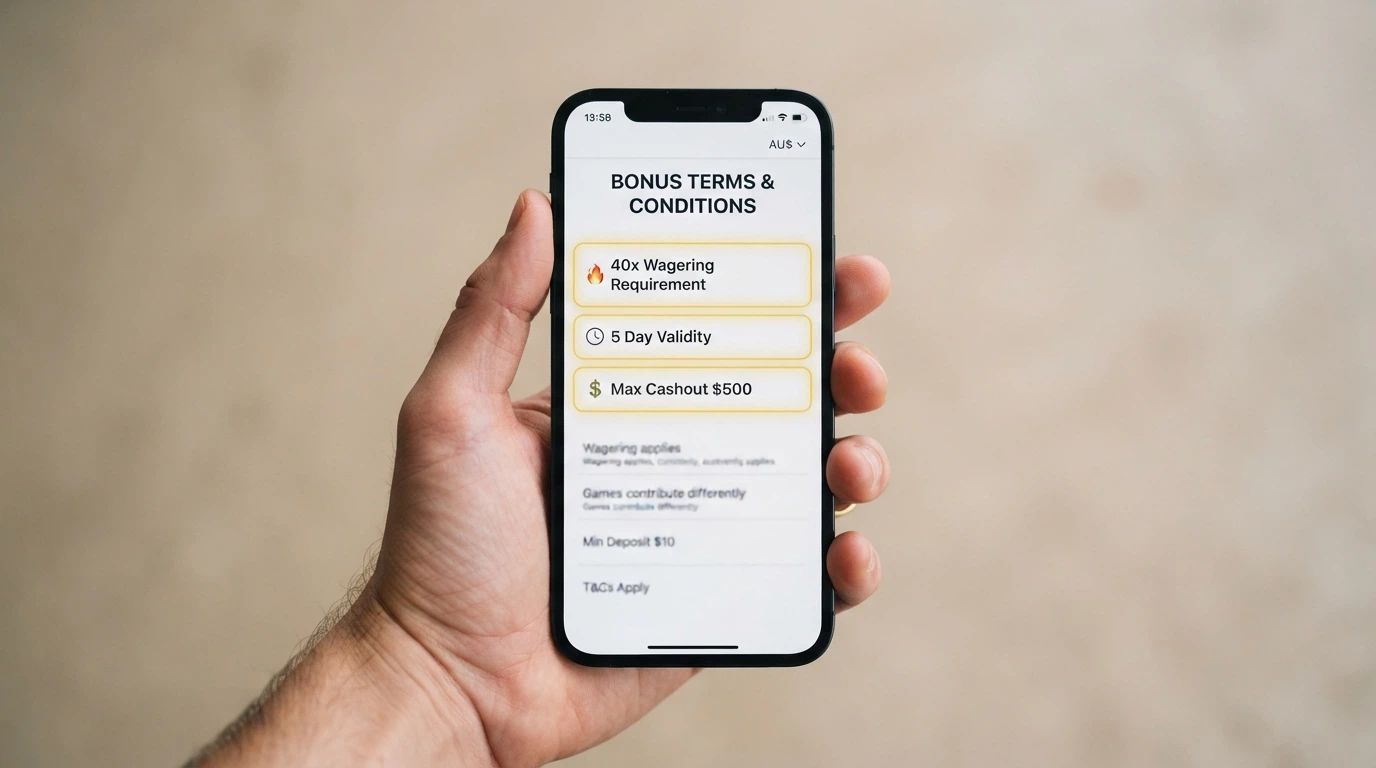
The headline number on every welcome package — A$1,000, A$4,000, A$500 — is the amount the casino will credit to the player’s bonus balance if the deposit and the terms are met. The amount the player actually walks away with depends on the wagering multiple, the maximum bet during wagering, the validity window, the game-weighting rules and the maximum cashout cap. Read the terms and the headline shrinks.
Welcome packages: what the headline number actually buys
Work through a RocketPlay first-deposit bonus to see the gap. The player deposits A$1,000 and receives a A$1,000 bonus, with 40x wagering on the bonus amount. The required turnover is A$1,000 multiplied by 40, which is A$40,000 of qualifying play. The bonus validity is five days, and the maximum bet during wagering is A$7.50 per spin. At A$7.50 per spin and five seconds per spin, A$40,000 of wagering requires five thousand three hundred and twenty-eight spins, taking 7.4 hours of continuous play. The expected cost of clearing that bonus, on a representative pokie at a 96.50% RTP such as Gates of Olympus, is A$40,000 multiplied by the 3.5% house edge, which is A$1,400.
That figure — A$1,400 — is larger than the A$1,000 bonus the player is trying to clear. The expected cost of meeting the wagering requirement exceeds the value of the bonus itself. The player is paying, on average, A$400 more than they receive in order to convert the bonus into withdrawable cash. A player who hits a lucky streak during the wagering can come out ahead; a player who plays through to completion without a major win will, on average, end up A$400 lighter than if they had never claimed the bonus.
The wagering multiple is the lever. SkyCrown’s headline package is A$4,000 at 40x, which is A$160,000 of required turnover across five deposits. At a 96.50% representative RTP, the expected cost of clearing the full A$4,000 package is A$5,600 — A$1,600 more than the headline value. Royal Reels’ 30x wagering on a A$500 bonus is A$15,000 of turnover, with an expected cost of around A$525. The headline is smaller; the bonus is more honest. Rainbet’s 5x wagering on a A$500 bonus is A$2,500 of turnover with an expected cost of A$87.50 — a fundamentally different offer from the 40x products elsewhere in the table.
The maximum bet during wagering is the second lever. RocketPlay’s A$7.50 cap is mid-range; some operators cap at A$5, others allow A$10 or higher. The cap matters because it limits how quickly the player can burn through the required turnover: a A$5 cap doubles the number of spins required at the same stake. The validity window is the third lever. A five-day window on A$40,000 of turnover requires a player to grind for several hours per day to clear in time; a player who logs in for an hour each evening may find the bonus has expired before the wagering is complete, with the winnings walking away with it.
Game weighting is the fourth lever and the one most often missed in the headline read. Most operators apply 100% weighting to pokies but reduce the contribution of table games and live-dealer play — sometimes to 10% or even 0%. A player who tries to clear a pokies bonus by playing blackjack will find their turnover counting at a fraction of the rate, and the bonus will not clear in time. The terms page is the source of truth here; the lobby buttons do not warn.
No-deposit bonuses: free spins and cash chips with strings attached
A no-deposit bonus is a small credit — free spins or cash chips — given to a player without requiring a deposit. In the Australian offshore market the typical scale is A$10 to A$50 in cash or 10 to 100 free spins, with 40x to 60x wagering on the bonus and a maximum cashout of A$50 to A$200. Free-spin no-deposit offers typically cap cashout at A$20 to A$100 with a 3-to-7-day expiry; cash-chip offers expire in 7 to 14 days; free spins often expire in 48 to 72 hours.
The economics of a no-deposit bonus are tilted sharply against conversion. A A$10 no-deposit bonus at 40x wagering is A$400 of turnover, with an expected cost of around A$14 at a 96.50% representative RTP. The maximum cashout is likely capped somewhere between A$20 and A$100. A player who converts the bonus into a A$50 withdrawal has, on average, given back more in expected cost than they receive — but the upside is real, because a lucky spin on the free-spin rounds can clear a much larger multiple. The expected value is negative; the variance is high.
Royal Reels’ A$10 no-deposit bonus after phone verification, SkyCrown’s 100 free spins after phone verification, Bizzo’s 10 to 25 free spins on registration, and FairGO’s A$10 to A$30 free chip are the documented no-deposit offers in this table. Each comes with its own wagering and cashout cap, and each is worth treating as a free trial of the casino’s mobile interface rather than as a path to a withdrawal. A player who enjoys the trial can move to a deposit bonus knowing what the cashier and the games feel like; a player who wins the trial is a happy exception, not a representative outcome.
PayID at Mobile Casinos: Fast Deposits, Slower Withdrawals
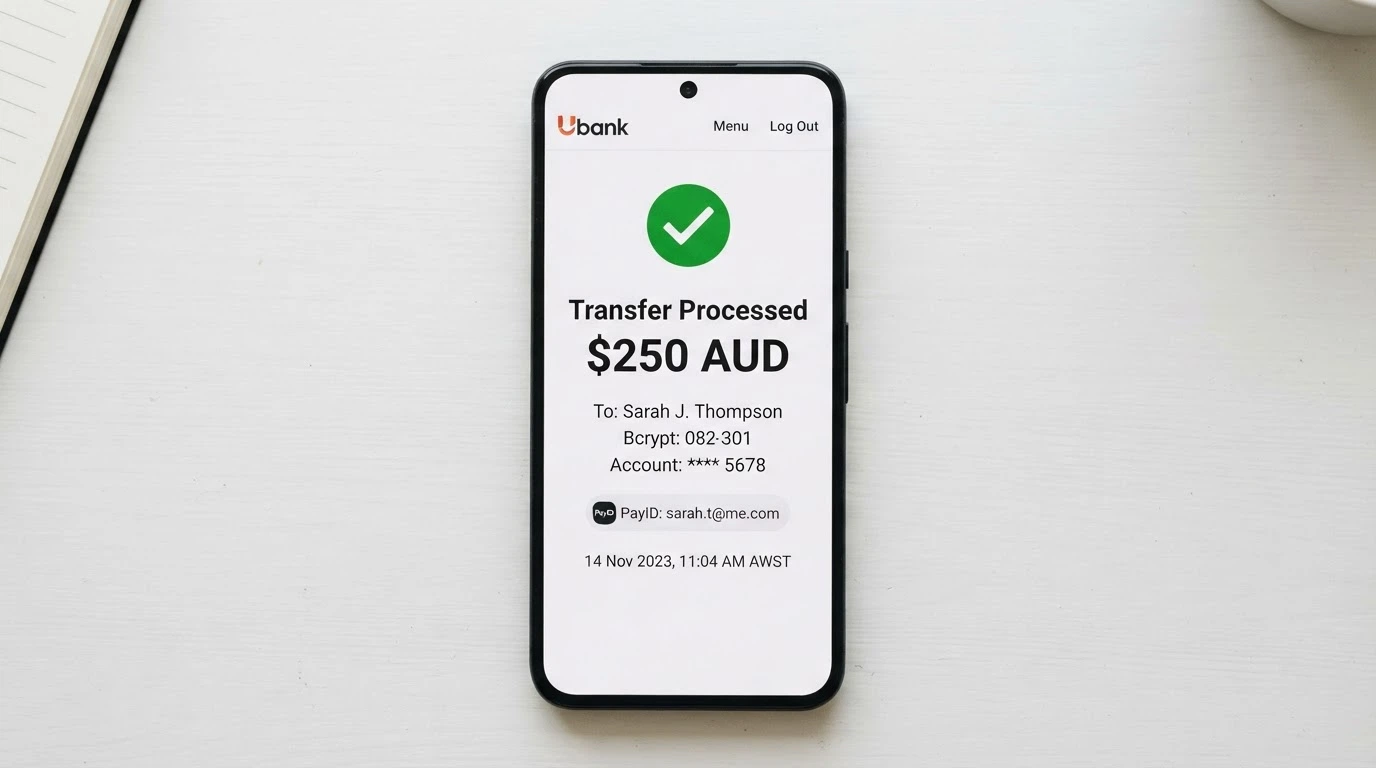
PayID is the Australian real-time payment rail that links a bank account to a phone number, email address or ABN. It is operated on top of the New Payments Platform (NPP) and routes through Osko for instant settlement. For a player at an offshore mobile casino in 2026, PayID is the most Australian-native deposit method available — no card details, no card fees, no waiting on a crypto confirmation.
PayID and Osko: instant deposits, realistic withdrawal timelines
PayID deposits at an offshore casino settle in under sixty seconds in most cases, with three seconds typical outside peak hours. The player enters their PayID — usually a phone number or email — confirms the amount in their banking app, and the balance appears in the casino within the same minute. There is no fee on the player’s end, and no card details are exposed to the operator.
PayID withdrawals are a different product. Data from Way2Win shows a clear tiering by amount: withdrawals under A$1,000 settle within four hours 94% of the time; withdrawals between A$1,000 and A$5,000 settle within twenty-four hours 87% of the time; withdrawals over A$5,000 trigger manual review 71% of the time, with settlement extending to seventy-two hours. The pattern reflects the operator’s risk controls rather than any PayID rail limitation — large withdrawals get additional KYC checks, source-of-funds verification and sometimes a request for documentation, all of which extend the timeline.
Royal Reels and WinSpirit are the two operators in the table where PayID is confirmed as a supported payment method. Royal Reels also runs instant PayID withdrawals on smaller amounts. The other operators in the table either do not support PayID, support it only on the deposit side, or have not had their payment methods documented in this round of research. A player for whom PayID is the deciding factor has a narrow choice in the documented set, and that is the honest framing of where the Australian-native rail meets the offshore market.
The implication of the withdrawal speed tier is practical. A player who wins A$500 on Royal Reels with PayID can expect the money in their bank account within hours. A player who wins A$8,000 on the same casino is now in the manual-review tier, where seventy-two hours is the realistic expectation and additional documentation may be requested. The operator is not unreasonable to ask — large withdrawals attract scrutiny in any regulated market — but the timeline should be planned for, not discovered at the cashout.
Phone billing, e-wallets and cards: the payment methods that still work
Pay-by-phone is the alternative rail at some offshore casinos, with the deposit charged to the player’s mobile phone bill or deducted from prepaid credit. The mechanism is simple: enter a phone number, confirm by SMS, and the deposit is added to the next bill or deducted from the existing balance. Limits are typically low — often A$30 to A$50 per transaction — and the method is deposit-only. Withdrawals cannot be returned to a phone bill.
BPAY is the Australian bill-payment rail and is supported by WinSpirit as a deposit method. The mechanics are familiar to any Australian who has paid a utility bill: the casino issues a BPAY reference, the player enters it in their banking app, and the funds settle in one to two business days. BPAY is deposit-only and does not appear as a withdrawal option at most offshore operators.
E-wallets are the gap in this market. PayPal is rarely supported at offshore casinos serving Australian players, because PayPal’s own terms restrict gambling transactions in jurisdictions where the underlying product is unregulated. Skrill, Neteller and a handful of less common e-wallets appear at some operators. Crypto is the de facto e-wallet of the offshore market, with its own legal complications — covered in the next section.
Credit cards have been banned as a payment method for online wagering in Australia since 11 June 2024, and the ban applies to credit-related products and crypto as well. The penalty for an operator failing to enforce the ban is up to A$247,500 per breach. For an offshore casino serving Australian players, accepting a credit card deposit is doubly problematic: it is a breach of the ban the operator is ignoring anyway, and it is a credit instrument the Australian player should not be using for gambling under any circumstance. Debit cards remain functional at most offshore operators. From 1 January 2027, banks and payment providers gain express authority to block transactions to illegal gambling operators, which means even legitimate debit-card rails may start failing as banks tighten their merchant category filters.
Crypto at Offshore Mobile Casinos: A Workaround, Not a Right
Cryptocurrency is banned as a payment method for online wagering in Australia since 11 June 2024, sitting alongside credit cards and credit-related products under the same prohibition. The ban applies to operators licensed in Australia — there are none for online casino — and is enforced through the Australian Payments system rather than through the casino’s terms page. Offshore casinos serving Australian players are not bound by the prohibition, and most accept crypto deposits regardless.
The practical effect is that a crypto deposit at an offshore casino is not protected by any Australian consumer law. There is no chargeback right, because crypto transactions are irreversible by design. There is no AUSTRAC reporting framework triggered, because the operator is outside the Australian regulatory perimeter. There is no dispute resolution service, because no Australian complaints body covers an offshore operator. The player has the speed and the privacy of crypto; the player also has the absence of every protection the licensed Australian wagering market provides.
Stake is the most crypto-native operator in the table. Its 3.5% instant rakeback is paid in crypto with no wagering attached, and its cashier is built around Bitcoin, Ethereum and a long tail of altcoins. WinSpirit and Royal Reels accept crypto as one option among several. AUSTRAC implications for the player are minimal at the deposit size most recreational players use, but the absence of chargeback rights is universal — once the crypto leaves the player’s wallet, it cannot come back without the operator’s cooperation.
The honest framing is that crypto is a workaround, not a right. It is faster than PayID on the deposit side (settlement within minutes rather than seconds, with confirmation latency on the Bitcoin blockchain) and it is the only payment method the Australian government cannot directly block at the rail level. It is also the method with the least recourse if something goes wrong. A player choosing crypto at an offshore casino is making a deliberate trade: speed and access over consumer protection. From 1 January 2027 the trade tightens, because banks gain express authority to block transactions to illegal gambling operators — a measure that could extend, depending on implementation, to crypto on-ramps and off-ramps at Australian exchanges.
Free Mobile Pokies: Play Without Spending a Cent
Every offshore mobile casino accessible in 2026 offers some form of free play. The mechanism varies: demo mode on individual games, no-deposit free spins bundles on registration, or browser-based play that does not require an account at all. The proportion of mobile pokie sessions in Australia that involve real money is unknowable, but free play is a meaningful share — players testing volatility, evaluating a new casino, or simply playing for entertainment rather than profit.
Demo mode and free-to-play: how to test a mobile casino risk-free
Demo mode is the most useful free-play tool at an offshore mobile casino. Most pokies load in a demo or “play for fun” mode without requiring registration, allowing the player to spin on virtual credits indefinitely. The game runs on the same RNG and produces the same outcomes as the real-money version — the difference is that winnings are virtual and cannot be withdrawn. Demo mode is the right way to test a pokie’s volatility and feature frequency before committing a bankroll, and most operators make it available without an account.
The limits of demo mode are worth noting. Progressive jackpots do not tick up in demo mode — the prize pool only grows when real-money players contribute, so a player evaluating a progressive pokie in demo will not see the same headline figure they would see with real money on the line. Bonus buys are available in demo at most operators, allowing the player to evaluate a feature round without burning through several hundred spins to trigger it naturally. Some operators restrict demo mode to logged-in players; others require the player to verify their email before unlocking it. The friction is minor.
No-deposit free spins are the second free-play tier. These are described in detail in the bonus section above — small bundles of free spins credited on registration or after phone verification, with wagering and a maximum cashout cap attached. They are a different product from demo mode in that they offer a real (if unlikely) path to a real-money withdrawal, but the expected value is negative for the same reason: the wagering requirement and the cashout cap combine to ensure the operator keeps the long-run edge.
The transition from free-play to real-money is the point at which the player’s situation changes. A player testing volatility in demo can sit with a game for hours without consequence; the moment they switch to real-money play, the house edge is collecting from every spin. Demo mode is a responsible-gambling tool as much as a marketing one — it lets a player decide whether they enjoy a pokie before deciding whether they can afford to play it. A player who finds themselves unable to stop at the end of a demo session has information about their own play that the casino is not going to provide.
New Mobile Casinos: What’s Changed in 2026
A new mobile casino in 2026 is most plausibly an offshore operator that has launched or rebranded in the last twelve to eighteen months. The Australian-facing offshore market is fluid: more than 230 services have withdrawn from the market since 2017, while new ones launch to replace them. The ACMA’s blocking activity tracks both flows — 1,788 websites blocked since November 2019, and 133 websites referred for blocking in Q4 2025 alone. The result is a market where brand-new operators appear regularly, some with novel bonus structures and some with familiar ones wrapped in fresh branding.
The Interactive Gambling Amendment (Gambling Reform) Bill 2026, passed by Parliament on 19 August 2026, tightens the framework from 1 January 2027. Its measures include a cap of three wagering advertisements per hour on television between 6 am and 8:30 pm, a live-sport blackout that prohibits wagering advertising from fifteen minutes before an event until five minutes after it ends, a bar on athletes, celebrities and influencers promoting wagering products, and a prohibition on direct marketing of inducements for fourteen days after sign-up, three months after BetStop deregistration, and indefinitely for customers identified as at-risk. None of these measures directly targets offshore casinos — they cannot regulate an offshore operator — but they reshape the Australian market context a new entrant is launching into.
The risks of an unproven operator are practical. A new offshore casino has no track record of paying out withdrawals, no public record of how it handles a complaint, and no independent verification of its RNG. The licence claim on the homepage may be real (a Curacao or MGA registration number) or aspirational, and the player has no easy way to verify which from the outside. A player who is attracted to a new entrant by a generous welcome offer should treat the first deposit as the test: how easy is the registration, how clean is the cashier, and — most importantly — does a small test withdrawal arrive in the time promised?
Rocket Casino’s market position in this round of research illustrates the verification gap. The operator has measurable market share (0.57%) and meaningful revenue (A$43.22 million), which establishes it as a real business rather than a fly-by-night operation. Its bonus terms, game providers and withdrawal speeds were not surfaced in the public snippets research worked from. A player evaluating Rocket Casino against a fully documented operator is making a choice between verifiable detail on one side and market presence on the other. The honest answer is that the choice is real, and the player has to make it with the information available.
Online Casino Is Illegal in Australia — Here’s What That Actually Means
Online casino games, online pokies and in-play sports betting are prohibited under the Interactive Gambling Act 2001. It is an offence to provide these services to a person physically in Australia. The law targets the provider, not the player, but the effect on the player is real: there is no Australian-licensed online casino to play at, no Australian complaints body to escalate a dispute to, no BetStop coverage of any offshore brand, and no chargeback path through Australian consumer law if a withdrawal is refused.
The Interactive Gambling Act and the ACMA: who enforces what
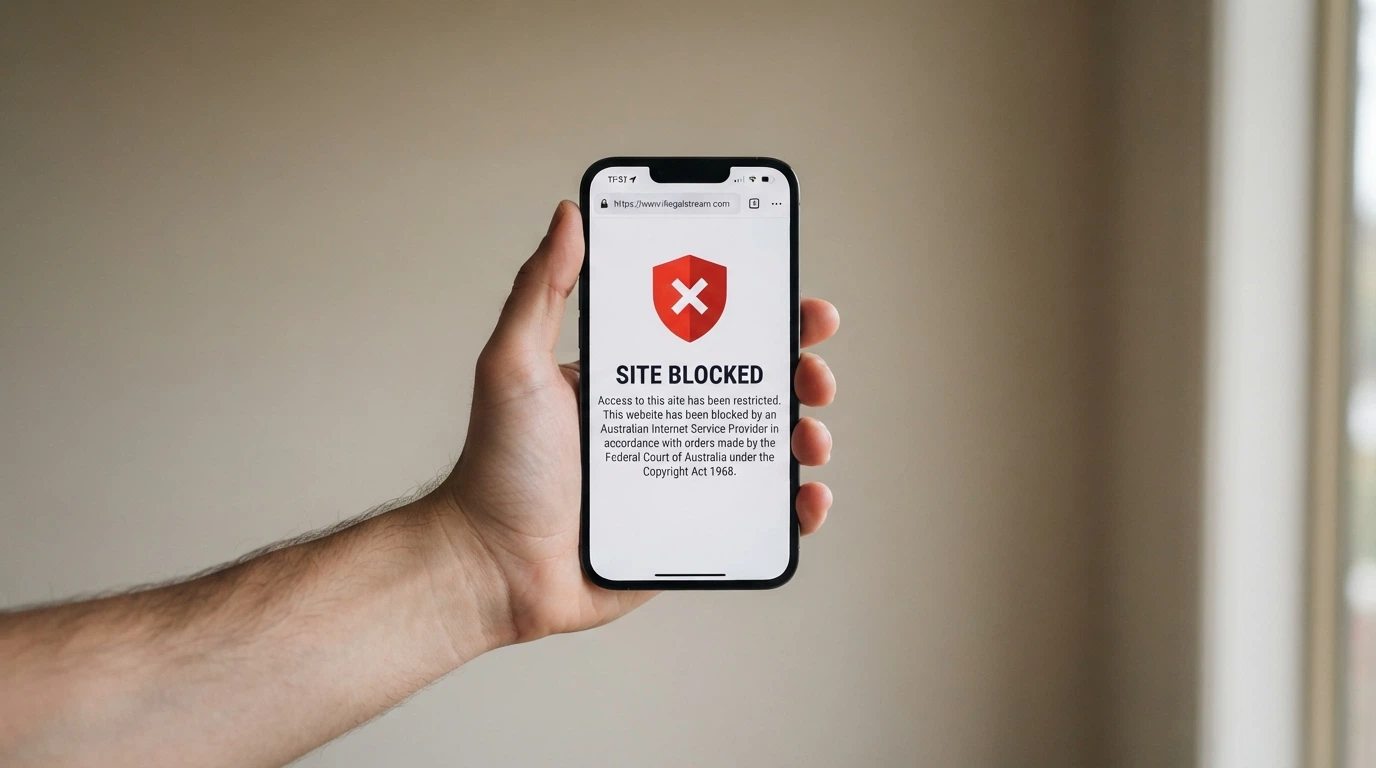
The Australian Communications and Media Authority (ACMA) is the federal regulator that enforces the IGA prohibition. Its powers include investigating complaints, issuing formal warnings, referring matters for civil penalty proceedings, and directing Australian internet service providers to block illegal gambling websites at the DNS level. The blocking is real: 1,788 illegal gambling and affiliate websites have been blocked since November 2019, and 133 additional websites were referred for blocking in Q4 2025 alone. The same quarter saw 23 investigations into 45 gambling sites, 69 findings of IGA breaches and 10 formal warnings issued.
The pace of enforcement has not slowed the offshore market. Over 230 illegal gambling services have withdrawn from the Australian market since 2017, but the volume of new entrants and rebrandings has roughly kept pace. A player who encounters an ACMA block notice on their phone has reached a website the regulator has acted against; the operator behind the block has typically launched a mirror domain within days and emailed the existing customer base with the new address. The blocking works as friction. It does not work as a wall.
The 2026 reform tightens the framework. From 1 January 2027, banks and payment providers gain express authority to block transactions to illegal gambling operators. The implementation is not specified in detail, but the intent is clear: extend the enforcement from the website level to the payment level. A player at an offshore casino may find that their usual deposit method has stopped working, not because the casino changed but because the bank declined the transaction under its new obligations.
The legal status of the player has not changed. CardPlayer, an industry publication, summarised it plainly: “The law doesn’t stop you from playing at offshore online casinos. These international sites are licensed and regulated overseas, which gives you access without attracting the attention of local authorities.” The player is not prosecuted. The player also has no Australian recourse when an offshore operator refuses a withdrawal, applies a bonus term in a way the player disputes, or simply closes the account.
Grey-market licensing: what Curacao and MGA actually mean for an AU player
A Curacao licence is the most common offshore credential in this market. Rocket Play, SkyCrown and Stake are all Curacao-licensed in their respective terms. The licence is real — Curacao does maintain a registry and does issue enforcement actions — but it does not extend any protection to an Australian player. A Curacao-licensed operator is regulated by the Curacao Gaming Authority for the players Curacao regulates; for Australian players, the licence is a marker that the operator has submitted to some external scrutiny, not a guarantee that any Australian dispute will be resolved through any Australian channel.
An MGA licence, claimed by Rainbet, sits higher in the European regulatory hierarchy. The Malta Gaming Authority operates a more developed enforcement function than Curacao, including a player-complaints pathway for Maltese-licensed operators. An Australian player filing a complaint with the MGA about an MGA-licensed operator will receive a hearing that a complaint about a Curacao-licensed operator will not. The casino portion of an MGA-licensed operator is still offshore and unlicensed in Australia; the player is still operating outside any Australian consumer protection framework. The MGA licence is a better dispute-resolution backstop than a Curacao licence, but neither one is a substitute for an Australian licence.
What “licensed” means on an operator’s homepage is therefore different from what it means for an Australian depositor. The homepage is stating that the operator has submitted to some regulator’s framework; the Australian depositor is depositing at an operator outside Australia’s framework. Both statements are true. The homepage language is not designed to make the difference clear.
There is no licensed online casino in Australia. Land-based casinos (Crown in Melbourne, The Star in Sydney and others) are state-licensed, and their licences cover their physical premises and any in-house digital offerings within the state licensing framework. None of those licences extends to an offshore mobile casino accessible from an Australian phone. The distinction is real and worth holding firmly: there is no brand in this comparison table that is licensed in Australia for the product it is offering to Australian players.
Responsible Gambling: Help That Actually Works
The Australian responsible-gambling infrastructure is built around licensed wagering operators and reaches every player who uses one. It does not reach the offshore mobile casinos on this page, because no offshore brand is part of the framework. The tools below are still available to a player at an offshore casino, but they operate outside the operator’s systems rather than within them.
BetStop, helplines and the support Australian players can actually access
BetStop is the National Self-Exclusion Register, live since August 2023 and operated by the ACMA. One registration excludes the player from every Australian-licensed online and phone wagering service — roughly 150 operators. As at 31 July 2026, BetStop had recorded 67,480 registrations with 41,290 active exclusions. Seventy-eight per cent of registrants were under 40, and 38 per cent chose lifetime exclusion. The earlier Q3 2025–26 data shows 59,830 cumulative registrations with 37,247 active exclusions, confirming the steady growth of the register across the financial year.
BetStop’s blind spot is the entire offshore market. None of the operators on this page is connected to BetStop, and registering with BetStop will not stop an offshore casino from accepting the player’s deposits or sending bonus offers. A player who wants to self-exclude from an offshore casino has to do it operator by operator, through the responsible-gambling or account-closure page of each brand. Most offshore operators offer some form of self-exclusion; the quality and the duration vary.
The National Gambling Helpline is 1800 858 858 — free, confidential, available 24 hours a day, with online chat through Gambling Help Online at gamblinghelponline.org.au. The helpline is staffed nationwide and is the single most useful number for an Australian player to save before depositing anywhere. It is the number the offshore casino does not put in its footer. Lifeline (13 11 14) is the crisis support line for anyone affected by gambling harm, and CommBank’s gambling support team (1800 222 387) can arrange a six-month block on gambling spend through CommBank credit cards.
The prevalence figures underline why these resources exist. Approximately 2.1% of Australian adults — roughly 430,000 people — experience problem gambling, with high-risk gambling at 1.8% as measured by the Australian Institute of Health and Welfare in 2022. The figures are not abstract: at Australia’s adult population, hundreds of thousands of people are affected in a way that interferes with their financial stability, their relationships or their mental health. The helpline and the self-exclusion register exist because the licensed wagering market acknowledges that some of its customers need protection from the product. Offshore casinos provide no equivalent.
From 1 January 2027, BetStop’s operation is strengthened and the inducement rules tighten. Direct marketing of inducements is prohibited for fourteen days after a customer signs up, for three months after a person deregisters from BetStop, and indefinitely for customers identified as at-risk. These measures apply to Australian-licensed wagering operators. They do not bind an offshore casino, which will continue to email bonus offers to anyone on its mailing list. The Australian framework protects players who use Australian-licensed operators. Players who use offshore operators are responsible for their own limits, with the helpline available when they need it.
How We Evaluate Mobile Casinos: Our Review Methodology
The operators in this comparison were selected because research surfaced them as currently accessible from Australian IP addresses, accepting Australian dollars, and offering a real-money mobile product. No operator on this page was selected because it paid an affiliate commission, sponsored the research, or otherwise influenced the inclusion. The page carries no affiliate links.
For each operator the evaluation drew on three sources: the operator’s own published terms pages (for bonus structure, wagering multiples, game-provider lists and payment methods), the ACMA’s published enforcement data (for blocking status and IGA-breach history), and independent third-party review aggregators where available (for payout speed data, audit scores and player feedback). Where research could not verify a term — a licence number, a maximum cashout, a specific withdrawal speed — the table left the cell blank rather than infer a value from marketing language.
The comparison is qualitative rather than scored. No operator has been assigned a numerical rating across multiple dimensions, because the underlying data does not support that level of precision for an offshore market where terms change without notice and where independent verification is incomplete. A reader who wants a scored comparison is best served by an established audit site that publishes regular updates; this page is best read as a current snapshot of the operators research could document, with the gaps acknowledged.
The limits of the review are worth stating plainly. Offshore operators provide limited public data, and what they do publish can change without notice. Licence claims are not independently verifiable on every run — Curacao-licensed operators are not always findable on the public registry, and the absence of a result is not the same as the absence of a licence. Terms verified in one round may be amended by the next. A player should treat every operator-specific figure in this comparison as accurate at 18 October 2026 and worth re-checking before depositing.
Choosing a Mobile Casino in 2026: The Decision That Actually Matters
The decision that matters is not which offshore casino has the largest welcome bonus. The decision is what the player is giving up by signing up, and what they are getting in return.
What the player is giving up is Australian consumer protection. There is no Australian complaints body that will adjudicate a dispute with Stake, SkyCrown or Royal Reels. There is no BetStop coverage of any operator on this page. There is no chargeback path through Australian consumer law if an offshore casino refuses a withdrawal, applies a bonus term in an unexpected way, or simply closes the account. The ACMA’s warning is the right frame: “Australians who use illegal gambling services risk losing their money.” It is not a risk of criminal prosecution. It is a risk of being unable to recover funds from an operator outside the Australian regulatory perimeter.
What the player is getting is access to a product the Australian market does not provide: online pokies, live-dealer tables, and the welcome bonuses attached to them. The product is real and the games are the same games available on every other site running the same software providers. The trade-off is the protection the player is foregoing.
Three figures matter more than the welcome bonus. The wagering multiple determines how much turnover the player must generate before any winnings become withdrawable; the withdrawal speed tier determines how long the player waits after that; and the licence transparency determines whether the player has any external path if something goes wrong. A 30x wagering on a A$500 bonus is more honest than a 40x wagering on a A$4,000 headline, even though the headline is eight times larger. An operator with PayID withdrawals confirmed is more useful to an Australian player than an operator whose fastest withdrawal route is an unverified crypto transfer.
The expected-loss arithmetic in the bonus section above is the page’s own figure supporting the argument. A A$1,000 bonus at 40x wagering on a representative 96.50% RTP pokie costs the player, on average, A$1,400 to clear. The bonus pays A$1,000. The arithmetic is the answer: a player choosing between a headline number and a wagering multiple should always choose the multiple. The bonus is smaller than it looks. The cost is larger than the marketing.
The verdict on this page is the same one the table carries: none of the operators on it is recommended over any other, and none is licensed in Australia. A player who chooses to access an offshore mobile casino in 2026 is making a real choice with real consequences, and the only responsible version of that choice is to make it with the helpline number saved (1800 858 858), with a deposit limit set before the first deposit, and with the ACMA’s warning read in full. The rest is the player’s call.
Frequently Asked Questions
Are mobile casino winnings taxed in Australia?
No. Betting and gambling winnings are not assessable income under section 6-5 of the ITAA 1997, and losses are not deductible under section 8-1 — unless the person is carrying on a business of gambling. A recreational player at an offshore mobile casino keeps what they win and cannot deduct what they lose. The ATO’s position is that gambling is a private recreational activity for most Australians, not a taxable income source, and the tax system treats it accordingly.
What does BetStop mean for offshore casino players?
BetStop excludes a player from every Australian-licensed wagering service — roughly 150 operators. None of the offshore mobile casinos on this page are part of BetStop, and registering with BetStop will not stop an offshore brand from accepting deposits. A player who needs to self-exclude from an offshore casino has to do it operator by operator, through each brand’s responsible-gambling or account-closure page. BetStop is the right tool for Australian-licensed wagering; the offshore market is its blind spot.
What happens if an offshore casino blocks Australian players?
An offshore casino that detects an Australian IP address may block the account, freeze the balance, or require additional verification before processing a withdrawal. The legal position is that the operator is not licensed to provide the service in Australia and is acting within its own terms to stop. The player has no Australian complaints body to escalate to and no BetStop coverage. The realistic outcome is that withdrawals may be delayed, additional documentation requested, or — in the worst case — balances forfeit.
Can I get a no-deposit bonus at an Australian mobile casino?
Yes. Royal Reels offers A$10 after phone verification, SkyCrown offers 100 free spins after phone verification, Bizzo offers 10 to 25 free spins on registration, and FairGO offers a A$10 to A$30 free chip. All carry wagering requirements of 40x to 60x and maximum cashout caps of A$20 to A$200. The expected value is negative; a lucky session can clear a real withdrawal; the bonus is best understood as a free trial of the casino’s mobile interface rather than as a path to a payout.
How fast are PayID withdrawals from mobile casinos?
PayID withdrawals under A$1,000 settle within four hours 94% of the time. Withdrawals between A$1,000 and A$5,000 settle within twenty-four hours 87% of the time. Withdrawals over A$5,000 trigger manual review 71% of the time, with settlement extending to seventy-two hours. The tiering reflects operator risk controls, not PayID rail limitations. A player expecting a fast large withdrawal should plan for the seventy-two-hour window or expect a documentation request that extends it further.
Written by the editors at POLi Casinos AU.