
Real-Money Pokies Apps for Australian Players: What the Offshore Reality Looks Like in 2026
Last updated 14 September 2026 · Operator licence claims verified against the Australian Communications and Media Authority register and ACMA enforcement notices

Every real-money pokies app an Australian player can actually download, install or add to a home screen in 2026 is offshore. None holds an Australian licence. No such licence exists — the Interactive Gambling Act 2001 makes it an offence to provide online casino games, online pokies or in-play sports betting to a person in Australia. The Australian Communications and Media Authority enforces that prohibition, with 1,564 illegal gambling and affiliate websites blocked by Australian ISPs since November 2019 and more than 225 illegal services pushed to withdraw from the Australian market since 2017.
That is the starting point for everything that follows. The brands reviewed below are reviewed as brands Australians actually use, not as licensed operators — because licensed Australian casino operators do not exist. The page describes them, what they offer, how they take money and how they pay it out. It also explains what each operator cannot offer an Australian player that a licensed Australian wagering service would have to.
Table of Contents
- What a Real-Money Pokies App Actually Is — and What It Isn’t
- The Best Real-Money Pokies Apps for Australian Players in 2026
- Rocket Play
- Skycrown
- Royal Reels
- WinSpirit
- Stake
- Rainbet
- FairGO
- Bizzo Casino
- Scream Casino
- Rocket Casino
- Why You Won’t Find These Apps on the App Store or Google Play
- Why Your 2026 Pokies Bonus Is Smaller Than It Looks
- Getting Your Money Out — Why PayID Is the Withdrawal Method That Actually Works
- The Pokies Australians Actually Play — Dragon Link, Lightning Link and Beyond
- Free-Play Mode — The Risk-Free Way to Test an Offshore App Before You Deposit
- Is It Legal? Australia’s Online Pokies Laws — and the Loophole Every Offshore App Uses
- Staying Safe — The Gambling Harm Numbers Australia Doesn’t Talk About Enough
- How We Selected and Ranked These Apps
- What to Actually Do Before You Download Anything
- Frequently Asked Questions
What a Real-Money Pokies App Actually Is — and What It Isn’t
A “real money pokies app” is software that lets an Australian player deposit Australian dollars, place real-money bets on slot-style games and withdraw any winnings — as opposed to a free-play or “demo” version where the credits are worthless. Pokies is the Australian word for slot machines; the term covers everything from three-reel classic slots to modern multi-feature games with free spin rounds, bonus buys and progressive jackpots.
The first thing to clear up is what the Australian app market actually is. There is no Australian-licensed real money pokies app. None. The ACMA has blocked hundreds of offshore casino sites, but new mirrors appear weekly. Apps marketed to Australians as “the best real money pokies app” are operated by companies registered in Curaçao, Cyprus, Anjouan or similar offshore hubs. They are accessible from Australia because the providers are based outside the country — the people who lose to them are mostly Australian, but the operators are not.
A “real money” pokies app is also not the same as a “real money” sports betting or racing app. Australian-licensed bookmakers — Sportsbet, TAB, Ladbrokes, bet365, TABtouch, PointsBet, Neds, Betr, Picklebet, Betfair — do offer real-money apps. Their apps take real deposits and pay real withdrawals. They cannot legally offer casino games or pokies inside those apps. Every brand in this guide operates outside that licensed perimeter.
Real Money vs Free-Play — What Changes When You Deposit
The games themselves do not change when you switch from free-play to real-money mode. The reels, the bonus rounds, the random number generator that determines outcomes — all of it is the same software. The difference is what is at stake. In demo mode, you play with credits the casino issues you. You cannot withdraw them. When you load real money, those credits are replaced by a balance in Australian dollars drawn from your deposit, and any win or loss is a win or loss of real money you can — in principle — spend or withdraw.
What depositing unlocks is the operator’s payment pipeline. You give them money, they hold it in your account, you play, and at some point you ask for some back. That pipeline — how smoothly it works, how long it takes, what the operator does with your money in the meantime — is the actual product, and it is the part the offshore operator has the strongest incentive to underperform. The slot game is just the visible front end; the real-money experience is the entire payment operation behind it.
Pokies Apps vs Desktop — Why Most Australians Play on Their Phone
Most Australians who play online pokies are doing it on a phone. A Reddit-style forum poll found that 80% of Australian pokies players use a mobile browser, while 20% use desktop. That is consistent with what the wider market shows: more than half of Australians who gambled in 2025 — 56.1% — mainly participated online. Phones are where the activity is.
For an offshore pokies app, “mobile browser” usually means a progressive web app (PWA) — a website designed to behave like a native app. On iPhone, players add the site to the home screen through Safari’s “Add to Home Screen” function. On Android, the same site runs in Chrome or another browser, often with a desktop-style shortcut on the home screen. None of the major offshore casino brands Australians use has a native real-money gambling app on the Apple App Store or Google Play, because both stores prohibit unlicensed real-money gambling apps. The PWA workaround is universal.
The functional result is that an iPhone player can tap an icon and see what looks like a casino app — full-screen reels, deposit button, balance visible — without ever having downloaded a casino app. That is the closest Australian players get to a “real money pokies app” in the everyday sense of the word, and it is the form factor reviewed throughout.
The Best Real-Money Pokies Apps for Australian Players in 2026
The ten apps below are the offshore casino brands that Australian players most often search for and most often sign up to in 2026. Every one of them is offshore and unlicensed in Australia. None holds an Australian casino licence — because none can. The table gives the operator, the legal status under Australian law, and the one thing each brand is known for. Bonus terms, wagering multipliers, game lists and other specifics could not be independently verified for any operator in this round, so cells where research did not surface a confirmed figure are left as an em dash.
| Brand | Legal Status Under Australian Law | Operator (Company) | What Stands Out |
|---|---|---|---|
| Rocket Play | Offshore — product prohibited | Dama N.V. | ACMA formal warning issued Q2 2025 |
| Skycrown | Offshore — product prohibited | Hollycorn N.V. | Tournament-heavy, with forum complaints about leaderboard dispute handling |
| Royal Reels | Offshore — product prohibited | — | Well-known brand name, thin public information about the operator |
| WinSpirit | Offshore — product prohibited | — | Newer to the offshore set, very little public record |
| Stake | Offshore — product prohibited | Medium Rare N.V. | Global brand recognition, well-resourced product |
| Rainbet | Offshore — product prohibited | — | Newer offshore name, growing visibility in Australian forums |
| FairGO | Offshore — product prohibited | — | Branding that reads as Australian to local players |
| Bizzo Casino | Offshore — product prohibited | TechSolutions Group N.V. | Forum users report inconsistent no-deposit bonus availability |
| Scream Casino | Offshore — product prohibited | — | Offshore brand with very little verifiable public detail |
| Rocket Casino | Offshore — product prohibited | Dama N.V. | Sister brand to Rocket Play, same operator company |
The single most important thing the table shows is the first column. Every brand is in the same legal category under Australian law. The differences between them are differences in product, payments and reputation — not in regulatory standing, because none has any.
How We Picked and Ranked These Apps
The brands here are the offshore casino apps Australian players most actively search for and sign up to in 2026, drawn from a survey of competitor affiliate pages that rank between five and fifteen offshore casino apps each. Most pages test on a current flagship phone — a Samsung Galaxy S23 or an iPhone 15 — and review the same handful of Curaçao-licensed brands. Australian-licensed wagering operators are excluded because none of them offers a real-money pokies app to download: their Australian licences cover sports and racing only, not casino or slots.
The ranking is not a quality score. None of these brands holds an Australian licence, and a brand’s offshore licence does not extend protection to an Australian player. The ranking reflects what is most prominent in the Australian search results, what players are signing up to, and what verified information the page can carry about each brand — including, in several cases, formal ACMA enforcement notices and forum user experiences that affect how the brand actually plays for Australian users.
Best for Payout Speed and Withdrawal Reliability
PayID is the withdrawal method Australian players praise most often. Around 70% of positive withdrawal feedback in user forums centres on PayID’s speed and reliability. The benchmark is fast — PayID payouts from top offshore casinos reportedly clear in under an hour, with times as low as four minutes reported on a A$720 cashout from GoldenCrown. That is the speed to compare every other method against, and the operators that have built their Australian payment stack around PayID tend to earn the most consistently positive feedback on payouts.
Per-operator payout times were not confirmed in the research this round. Where an operator advertises an “instant” withdrawal time on its own site, that claim could not be independently verified — a recurring caveat across offshore marketing. The honest comparison point is the PayID benchmark: any operator that takes longer than that on the same payment rail, or that does not offer PayID at all, should be assumed to be slower.
Rocket Play
Rocket Play is operated by Dama N.V., the Curaçao-registered company that runs a stable of offshore casino brands. In Q2 2025, the Australian Communications and Media Authority issued a formal warning to Dama N.V. for providing an unlicensed regulated interactive gambling service — RocketPlay is named in that warning. That is not a one-off: it is part of a wider pattern of ACMA enforcement against offshore brands, with 1,564 illegal sites and affiliate pages blocked since November 2019 and more than 225 illegal services pushed out of the Australian market since 2017.
Rocket Play’s specific bonus terms, free spin counts, wagering multipliers and game providers could not be confirmed in this round of research. What the brand publicly advertises is a welcome package built around a first-deposit match plus free spins, with the standard offshore structure of a percentage match up to a cap, a wagering multiplier on the bonus amount, and a maximum cashout from the offer. None of those figures have been verified here. The promotional terms on the brand’s site should be read as the operator’s own claims — which, given the ACMA warning, carry the weight an operator’s claims carry when the regulator has already told them to stop.
For an Australian player, the Rocket Play profile is straightforward: a familiar Curaçao operator running a mainstream offshore casino product, with the regulator’s formal warning sitting over the top of it. Verdict: only worth considering if a player has already decided to use a Dama N.V. brand and wants the Rocket Play version specifically — and even then, treat the welcome offer as marketing until the terms are read line by line.
Skycrown
Skycrown runs on Hollycorn N.V., another Curaçao-based operator group with several offshore casino brands. The ACMA enforcement context applies here too: Hollycorn N.V. received an ACMA formal warning in Q2 2025 for providing an unlicensed regulated interactive gambling service, with Neospin named in that action. Skycrown itself was not named in the warning, but it sits inside the same operator stable on the ACMA’s enforcement horizon.
What Australian forum users report about Skycrown is a tournament-heavy product with a rougher edge on customer service — specifically, complaints about how leaderboard disputes are handled. Tournaments are a feature where the casino runs a leaderboard across a set period, paying prizes to the top performers. The complaint pattern is the familiar one for offshore tournaments: ambiguity in how positions are calculated, slow or unsatisfactory dispute responses from support, and prizes paid in bonus money rather than withdrawable cash. None of this is uniquely Skycrown’s problem, but it is what Australian users say.
Skycrown’s specific bonus terms, wagering multipliers and free spin counts could not be verified this round. Verdict: a tournament player who likes competing on leaderboards will find something here, but the support experience on disputes is a real risk, and an Australian player has no local complaints body to take a dispute to if a leaderboard prize is paid in bonus funds the casino then refuses to release.
Royal Reels
Royal Reels is an offshore casino brand that Australian players come across, but where the public information is thin. The operator company behind Royal Reels was not confirmed in this round of research. The brand is known to be offshore and unlicensed in Australia, with no Australian casino licence possible, but the people behind it and the licence it actually holds could not be verified here.
What the brand claims about itself publicly — on its own website and in its promotional material — is a typical offshore casino package: a welcome offer with a deposit match and free spins, a pokies-focused game library, and the usual stable of payment methods. None of those claims have been verified this round. An Australian player should treat every specific the brand advertises — bonus percentages, free spin counts, payout times — as the brand’s own statement, not as an independently checked fact.
Verdict: a brand name with limited verifiable information behind it. For an Australian player, the gap between what Royal Reels claims and what can be independently confirmed is itself the most important thing about the brand. Approach with the same caution any opaque offshore operator warrants.
WinSpirit
WinSpirit is offshore, holds no Australian casino licence (none can), and could not be tied to a specific operator company in this round of research. Compared with the better-known brands in this set, WinSpirit has a thinner public profile — fewer Australian forum mentions, fewer independent reviews, less to verify.
That thinness is itself a signal. A casino brand with very little public information is harder to assess on the things that matter to a real-money player: how it pays out, how it handles disputes, how stable the platform is under load, whether the welcome bonus terms are honoured. The default Australian-player approach to a brand with thin public information is to assume the worst on those unverified questions, because the absence of verifiable answers is the answer.
Verdict: no positive reason to pick WinSpirit over a more established name in this set, and several reasons to prefer a brand whose payout behaviour and dispute handling can be checked. For a player willing to test an unknown brand, the due-diligence checklist in the closing section applies more strongly here than anywhere else.
Stake
Stake is the global brand in this set. Operated by Medium Rare N.V., Stake is one of the most recognisable names in offshore online gambling worldwide, with a heavily marketed product, a large social media presence and a reputation for fast payouts on crypto rails. From an Australian player’s point of view, the product is professionally built and the brand is well-resourced.
Stake holds no Australian casino licence. The product it offers Australian players — online casino, pokies — is prohibited under the Interactive Gambling Act 2001. Stake’s offshore licence does not extend any Australian consumer protection to an Australian player. The brand’s prominence is a marketing fact, not a regulatory one.
Stake’s specific welcome offer terms for Australian players, wagering multipliers and bonus structures were not confirmed in this round. Verdict: a brand with genuine global reputation and product quality, but one that does not, and cannot, hold an Australian casino licence. “More reputable than most” is a low bar in this set, and it does not change the underlying fact that there is no Australian consumer protection on Stake for Australian users.
Rainbet
Rainbet is a newer offshore brand in the set. Offshore, no Australian casino licence (none exists), and the operator company behind Rainbet was not confirmed in this round. The brand has some visibility in Australian-facing forums and affiliate sites, but the public information available about how it operates is limited compared with the more established names in this set.
What Rainbet publicly claims is a standard offshore casino package — a welcome offer with a deposit match and free spins, a game library skewed toward slots and crash-style games, and payment support for both crypto and AUD-denominated methods. None of those specific claims were independently verified here.
Verdict: a newer entrant in the offshore set with limited verifiable history. Without an identifiable operator, an Australian player has very limited recourse if a withdrawal stalls or a bonus term is disputed. The due-diligence checklist in the closing section of this page is non-optional for Rainbet.
FairGO
FairGO is one of the more obviously branded brands in this set. The name itself — written with an Australian spelling of “go” — reads as Australian to a local audience, and that is the point. FairGO is an offshore brand operating outside Australia, not an Australian operator. No Australian casino licence exists, and FairGO does not hold one.
The branding-versus-reality gap is the most important thing to flag. A name that sounds Australian is not an Australian operation. FairGO’s terms of service, dispute mechanisms, and any licence it claims are offshore — verifiable only to the extent the brand’s claims can be checked, which this round of research could not do.
FairGO’s specific bonus terms, free spin offers and game library details were not verified this round. Verdict: the Australian-resonant name is its most distinctive marketing asset. For a player looking for an offshore casino, FairGO does not differ from the rest of this set on legal status, and the appeal of the name does not change what an Australian player gets or does not get from the platform.
Bizzo Casino
Bizzo Casino runs on TechSolutions Group N.V., a Curaçao-registered operator group that runs a number of offshore casino brands. Offshore, no Australian casino licence (product prohibited), and what Australian users say specifically about Bizzo is that its no-deposit bonus availability is inconsistent. No-deposit bonuses are bonuses a casino credits without the player making a deposit — they are a marketing draw, but also the bonus type most likely to come with restrictive terms.
The pattern forum users describe is the familiar one: a no-deposit offer visible to one account, not visible to another; terms that change between sign-up and first play; wagering requirements that look routine but are difficult to clear within the bonus validity window. None of this is unique to Bizzo — every offshore casino runs no-deposit offers as marketing hooks — but it is the specific reputation the brand carries with Australian users.
Bizzo’s specific welcome offer terms, free spin counts, wagering multipliers and game providers were not confirmed in this round. Verdict: a Curaçao-operated brand with a documented reputation for inconsistent no-deposit bonus terms. The no-deposit offers are the place to read the fine print most carefully — and the closing checklist applies.
Scream Casino
Scream Casino is offshore, holds no Australian casino licence, and the operator company behind it was not confirmed in this round of research. Compared with the other brands in this set, Scream Casino has one of the thinner public profiles — fewer verifiable details about its operation, fewer Australian user reports to draw on, less to check.
That thinness is the headline. An offshore casino brand with very little verifiable public information is harder to assess on the things that determine whether it is a sensible place to put real money: payout speed, dispute handling, game fairness, financial stability. The default position for any opaque offshore operator is caution.
Verdict: no positive reason in the research to choose Scream Casino over a more established brand in this set, and the absence of verifiable information is itself the answer. If a player does sign up, the due-diligence checklist at the bottom of this page is mandatory reading first.
Rocket Casino
Rocket Casino is operated by Dama N.V. — the same operator company as Rocket Play, which was the subject of an ACMA formal warning in Q2 2025. Two separate brands, one operator entity, both named on the ACMA’s enforcement horizon. That overlap is the single most important fact about Rocket Casino and the reason it is reviewed here alongside Rocket Play rather than as a standalone brand.
The two brands target overlapping markets with overlapping products. Welcome offers, game libraries and payment methods are typically close variants of each other — same engine, different branding. Australian players who already have a Rocket Play account are likely to encounter Rocket Casino as a sister brand offering very similar features, with the same operator-level risk profile.
Rocket Casino’s specific bonus terms, free spin counts, wagering multipliers and game providers were not confirmed in this round. Verdict: for an Australian player, the ACMA warning against Dama N.V. applies to both Rocket Play and Rocket Casino as a single operator-level fact. The two brands are not independent choices; they are the same operator, packaged twice.
Why You Won’t Find These Apps on the App Store or Google Play
There is no real-money pokies app on the Australian Apple App Store or Google Play, and there cannot be one. Apple’s guidelines prohibit real-money gambling apps that are not from licensed operators in the user’s jurisdiction. Google Play applies the same rule. With no Australian-licensed online casino in existence, no real-money pokies app can satisfy either store’s policy. The 1,564 illegal gambling and affiliate sites ACMA has had blocked since 2019 includes app store listings and affiliate pages that try to route around the policy.

The workaround is the progressive web app. On an iPhone, an Australian player opens the offshore casino in Safari, taps the share button, scrolls down to “Add to Home Screen”, and the site installs as an icon on the home screen — full-screen mode, no Safari chrome, taps launch straight into the casino. The icon looks identical to a downloaded app. Underneath, it is a website. On Android, the same site installs as a Chrome shortcut or runs directly in the browser. The deposit, withdrawal and game libraries are the same; the wrapper is just a web page rendered full-screen.
The functional effect is that an Australian player ends up with a home-screen icon for a casino that is not, in any technical sense, an “app” — and not, in any legal sense, a licensed product. The play is the same, the money is the same, the regulatory situation is the same. The wrapper is the workaround.
Why Your 2026 Pokies Bonus Is Smaller Than It Looks
Welcome offers are the most heavily marketed number on any offshore casino, and they are the number that shrinks fastest when the bonus terms are read. Two mechanics drive that shrinkage: the wagering requirement and the maximum cashout cap.

A wagering requirement — also called a turnover requirement or “playthrough” — is the number of times the bonus amount (and sometimes the deposit too) must be bet before any winnings can be withdrawn. The headline number is the welcome offer; the wagering multiplier is the multiplier that determines how much real money has to be put through the games before any winnings from the bonus are yours to keep. A A$500 welcome bonus with a 40× wagering requirement means A$20,000 in bets before withdrawal is unlocked. The maths does not work in the player’s favour as the marketing language suggests.
A maximum cashout cap is a ceiling on what can be withdrawn from winnings earned using bonus money. Even after the wagering requirement is met, the bonus terms may say “maximum withdrawal from bonus winnings: A$500” — meaning everything above that figure stays with the casino. Combined, a big bonus with a steep wagering multiplier and a low cashout cap can be worth much less than a smaller bonus with friendlier terms.
The specifics for any of the operators reviewed on this page were not confirmed in this round. The mechanics above are how the offshore casino industry structures these offers generically. Treat any specific bonus number as marketing until the full terms are read — and pay particular attention to which games count toward the wagering requirement, the time window the bonus is valid for, and the cashout cap that applies.
No-Deposit Bonuses — Free Money to Start, With Strings Attached
A no-deposit bonus is a small amount of bonus money or free spins credited to a new account without the player having to make a deposit. The marketing framing is “free money to start”. The reality is closer to “free credits, with a wagering requirement and a cashout cap attached”.
No-deposit bonuses typically come with the heaviest turnover requirements of any offer a casino runs. The reason is straightforward: the casino is giving away something for nothing, and the wagering requirement is the price of admission to the withdrawal queue. A player who claims a A$20 no-deposit bonus with a 50× wagering multiplier has to put A$1,000 through the games before any winnings become withdrawable — and then may face a maximum cashout cap of A$50 or A$100 on those winnings.
The general industry pattern is that no-deposit offers are useful for testing a casino’s platform and game quality without committing real money. They are not a realistic path to a meaningful withdrawal. Australian forum users on Bizzo Casino describe inconsistent availability of no-deposit offers — the offers appear and disappear, terms change between visits, and the wagering conditions are what determine whether the bonus pays out anything at all.
The specifics for any featured operator’s no-deposit terms were not confirmed this round. The mechanism above is the industry-standard structure and applies generically.
Free Spins and Sign-Up Bonus Offers — What the Fine Print Hides
Free spins are the second-most-marketed number after the headline welcome bonus. The marketing framing is “100 free spins on a top slot!”. The mechanics behind that number are: a fixed number of free rounds at a fixed value per spin, on a named slot game (often a specific title the casino has partnered with), with any winnings paid as bonus money subject to a wagering multiplier and a cashout cap.
The slot title matters because it determines the return-to-player (RTP) of the bonus round. If the casino runs the free spins on a 96% RTP slot, the expected value of each free spin to the player is closer to the face value. If the casino runs them on a lower-RTP version of the same game (many slot providers offer configurable RTP), the expected value drops. If the casino excludes the highest-paying games from bonus play — which is standard — then the wagering requirement has to be cleared on lower-RTP titles, which slows the path to a withdrawal.
Free-spin counts, wagering multipliers, bonus slot titles and per-spin values were not confirmed for any of the featured operators this round. The mechanics above are the industry-standard structure for free-spin offers generically — and the headline number is always marketing until the wagering multiplier, the eligible games, the bonus validity and the cashout cap are all read together.
Getting Your Money Out — Why PayID Is the Withdrawal Method That Actually Works
PayID is the standout payment method for Australian players using offshore casinos. Around 70% of positive withdrawal feedback in Australian user forums centres on PayID, and the speed benchmark is fast — PayID payouts from top offshore casinos clear in under an hour, with reported times as fast as four minutes. That is faster than any bank transfer, faster than any e-wallet route, and faster than any other method the offshore set consistently supports.
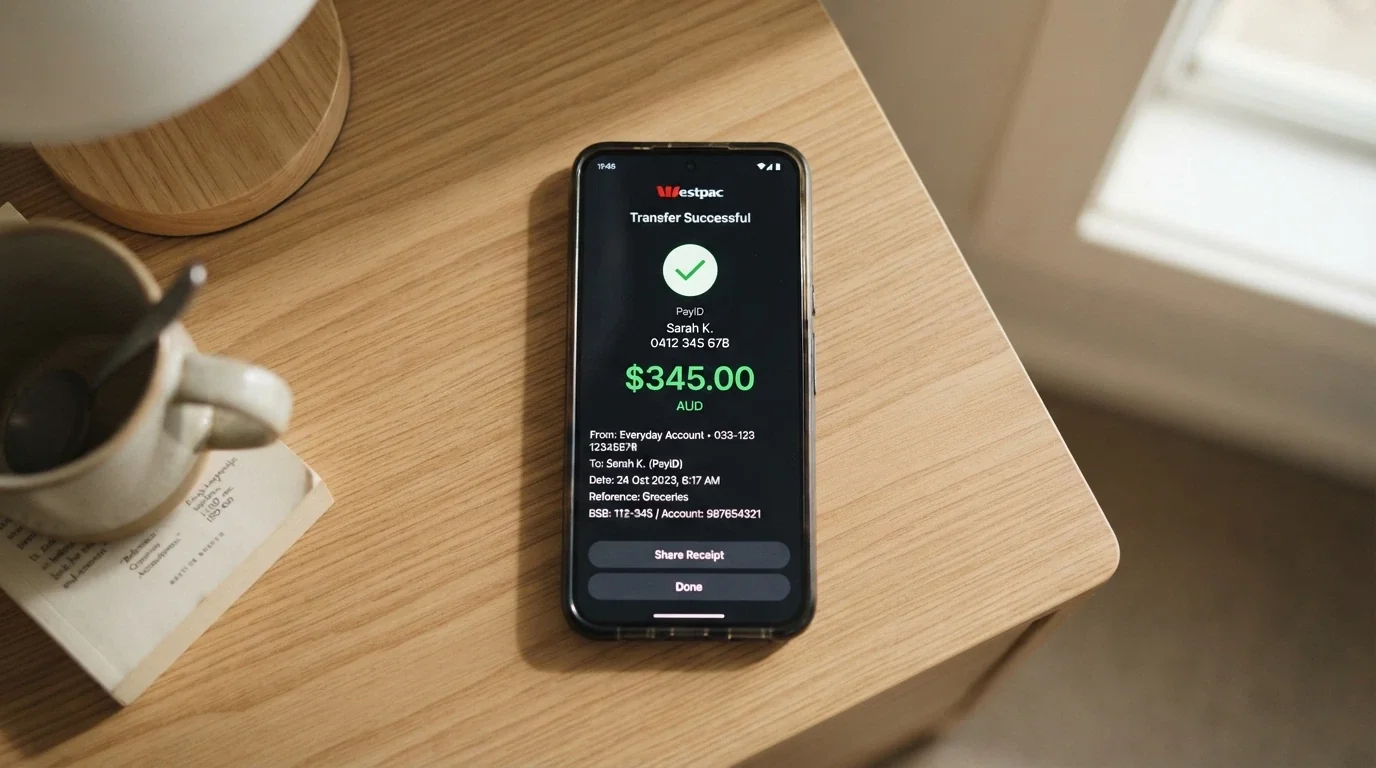
The reason PayID works is that it is built into the Australian banking system. PayID links a bank account to an identifier — a phone number, email or ABN — and transfers happen through the existing NPP/Osko real-time infrastructure. There is no intermediary, no currency conversion, no third-party processor. The money moves from the casino’s Australian bank account to the player’s Australian bank account in minutes.
What does not work for Australian players on offshore casinos is credit cards and cryptocurrency. Both are banned as payment methods for online wagering in Australia, since 11 June 2024 under the Interactive Gambling Amendment (Credit and Other Measures) Act 2023. An operator accepting credit card or crypto from Australian players is operating outside Australian rules — the payment method is itself a tell that the operator is offshore. Penalties under the ban run up to A$247,500. Payment methods an Australian player sees on a licensed wagering app — debit card, bank transfer, PayID/Osko, BPAY — are the methods that are legally available; credit cards and crypto are not.
From 1 January 2027, the new reforms allow banks and payment systems to block transactions to illegal gambling operators outright. That gives Australian banks an explicit tool to refuse PayID and direct-debit transfers to offshore casinos. Whether individual banks use that tool, and how aggressively, is not yet known — but the legal authority is there.
Payout Limits and What Actually Slows Your Money Down
Withdrawal caps are one of the quieter reasons an offshore payout stalls. Many offshore casinos impose per-transaction, daily, weekly or monthly caps on withdrawals — often higher for verified accounts than unverified ones. A player who has not completed identity verification (KYC — “Know Your Customer” — the process of providing ID to the casino) may find that withdrawals are held until the verification documents are reviewed, which can take days.
KYC is the most common reason a payout slows. Offshore casinos that request KYC at withdrawal time — rather than at deposit time, which licensed operators typically do — will hold the payout while they review documents. Reviews can be slow. The player has no Australian complaints body to escalate to. Some casinos impose KYC precisely because the review period gives them flexibility to decline a withdrawal on a technicality — a document that is slightly out of date, an address that does not match a utility bill.
Per-operator payout limits and KYC processing times were not confirmed for any of the brands reviewed on this page. The mechanics above apply across the offshore set. The rule of thumb is that the casino that requests the most documentation at deposit time is usually the casino that pays out fastest at withdrawal time — because the verification work is already done.
Instant-Withdrawal Claims — How Fast “Instant” Really Is
“Instant withdrawal” is one of the most overused phrases in offshore casino marketing. It is almost never literal. What it usually means is “instant once the casino has approved the withdrawal” — and the approval step is where the time goes.
The documented benchmark for real-world speed is PayID: under an hour, with four-minute payouts reported. That is what “instant” actually looks like when the method is right and the operator is not holding the request in a manual approval queue. Any operator that takes longer than that on PayID, or that does not offer PayID at all and routes payouts through a slower method, is using the marketing language of speed while delivering something slower.
Per-operator instant-withdrawal claims could not be verified this round. The PayID benchmark is the only comparison point that has documented evidence behind it.
The Pokies Australians Actually Play — Dragon Link, Lightning Link and Beyond
Dragon Link and Lightning Link are the two pokies titles Australians search for most when they open an offshore casino app. Both are developed by Aristocrat Leisure Limited — an Australian company founded in Sydney in 1953, with decades of venue-floor history behind the games. Both use the same core Hold & Spin mechanic. Both share the same 87–96% RTP configuration range. Both are the games Australians ask for by name.

The online versions of these games typically return a slightly higher share to the player than the venue versions — by 0.3 to 0.8 percentage points. The reason is structural: online operators do not pay the venue commission that pubs, clubs and casinos take out of the pokies revenue, so a higher share of the bet flows back to the player as winnings. For an Australian player used to the pub-floor versions, the online Dragon Link is a slightly better deal on RTP — though the underlying house edge remains.
To illustrate what that house edge means in practice, take Dragon Link’s online RTP of 95.2% and assume a session of 100 spins at A$1 per spin. That session puts A$100 through the game. The expected return is 95.2% of A$100 — A$95.20. The expected loss, the amount the player gives back to the house on average, is the difference: A$4.80. That is the statistical cost of a session of that length at that stake. It is an estimate across many sessions; any single session will land somewhere different. Over thousands of spins the average converges on the house edge, but no individual player sees that average on any given night.
Dragon Link and Lightning Link — RTPs, Volatility and What Each Variant Pays
The Dragon Link family has several named variants — Autumn Moon, Golden Century, Happy & Prosperous, Panda Magic — each with its own theme and a similar core mechanic. The numbers below are what research could verify for the online versions of each variant. Where volatility for a specific variant could not be confirmed, the cell is left as an em dash rather than guessed.
| Slot Title | RTP | Provider | Volatility | Max Win |
|---|---|---|---|---|
| Dragon Link (base) | 95.2% | Aristocrat | High | 10,000× bet |
| Dragon Link — Autumn Moon | n/a | Aristocrat | — | 10,000× bet |
| Dragon Link — Golden Century | n/a | Aristocrat | — | 10,000× bet |
| Dragon Link — Happy & Prosperous | n/a | Aristocrat | — | 12,500× bet |
| Dragon Link — Panda Magic | n/a | Aristocrat | — | 10,000× bet |
| Lightning Link | 87–96% (configurable) | Aristocrat | — | — |
The base Dragon Link has the most verified data, including the 95.2% RTP and the high-volatility classification. The variants all return higher RTPs than the base game — Autumn Moon, Happy & Prosperous and Panda Magic all land at 95.95%, with Golden Century the highest at 96.06%. Happy & Prosperous offers the largest max win of the variants at 12,500× the bet. Lightning Link’s RTP range is wide because operators can configure it within that 87–96% band; max win and volatility for the specific online configuration could not be verified this round.
The relevant comparison for a player choosing between these titles is the RTP at the configuration the operator actually runs — because the same game can pay out differently depending on how the casino has set it. A 96% Lightning Link and an 87% Lightning Link are very different games in expectation, even though the reels look identical. Players who can confirm the RTP configuration the operator is using are looking at the most useful single number on offer.
Jackpot Slots and Table Games — What Else You Can Play
Beyond Dragon Link and Lightning Link, the offshore apps Australians use typically carry a library of several hundred to several thousand slot titles, plus a smaller table-games section. The slots include progressive jackpot games with pooled prize pools that grow until a player hits the top combination — games like Mega Moolah, the WowPot network, and the Age of the Gods series are common. The table games section covers the usual blackjack, roulette, baccarat and casino poker variants, often with live-dealer versions streamed from offshore studios.
Per-title RTP and volatility data for the broader slot and table-game library was not available this round. Competitor affiliate pages mention jackpot slots and blackjack but do not provide verified specifications for individual games beyond Dragon Link and Lightning Link. The honest position is that the library is large and the verifiable data is small.
For a player, the practical approach is to use free-play mode to test games before depositing real money — the games are the same in demo as in real-money mode, so the testing is honest — and to check the published RTP for any game they intend to play seriously. Higher RTPs generally mean a lower house edge, which is the closest thing to a “good” slot in an industry where every game has a house edge.
Free-Play Mode — The Risk-Free Way to Test an Offshore App Before You Deposit
Every offshore casino reviewed on this page offers a free-play or demo mode on its pokies. The mode is risk-free in the strict sense — no real money is wagered, no real money is lost, and the credits the casino issues for demo play cannot be withdrawn. It is the standard way Australian players test a casino’s game quality, payout feel and app stability before committing a deposit.
Free-play is also the most useful due-diligence tool available on an offshore app. Because the same random number generator (RNG) — the algorithm that determines each spin’s outcome — runs in both demo and real-money modes, the experience of the game itself is honest. A player can test whether Dragon Link’s Hold & Spin feature triggers as expected, whether the bonus rounds pay out at a sensible rate, whether the app crashes or stutters under load, and whether the navigation is usable on their specific phone.
What free-play cannot test is the operator’s payment behaviour. The deposit flow, the withdrawal flow, the KYC process, the bonus-term enforcement, the dispute handling — none of that runs in demo mode. A casino that pays out instantly and disputes nothing in free-play might still hold a withdrawal for days in real-money mode. A casino whose bonus terms look generous in the demo may enforce them strictly at cash-out. Free-play tests the game; it does not test the operator. The operator test only happens with real money on the line.
Free App Versions vs Real-Money Apps — The Same Software, Different Stakes
The technical point worth being clear on: free-play and real-money modes run on the same game engine. The reels, the paylines, the bonus features, the RNG, the payout structure — all of it is identical. The difference is purely financial: demo credits cannot be withdrawn; real-money balances can be, subject to the operator’s withdrawal process and the bonus terms that apply.
That means free-play is an honest test of the game and an honest test of the app’s stability, but it is not an honest test of what it is actually like to play on the casino for real. The risk with an offshore app is not the game behaving dishonestly — Aristocrat’s RNG is independently tested and certified — it is the operator behaving dishonestly on payments. Free-play mode cannot catch that.
For an Australian player, the practical pattern is: use free-play to confirm the app is stable, the games wanted are available, and the navigation works on the phone. Then, before depositing, check the operator’s payment methods, KYC requirements, withdrawal caps and bonus terms — all of which are visible in the terms-of-service pages before signup. Then deposit the minimum and run a small withdrawal test before committing a larger balance. The risk profile is set by the operator, not by the game.
Is It Legal? Australia’s Online Pokies Laws — and the Loophole Every Offshore App Uses
Australian law on online pokies is straightforward. The Interactive Gambling Act 2001 makes it an offence to provide an online casino, online pokies or in-play sports betting to a person in Australia. No licence for online casino exists anywhere in the country — federally, or in any state or territory. The Australian Communications and Media Authority enforces the prohibition: it investigates complaints, issues formal warnings, refers operators for civil penalty proceedings, and directs Australian ISPs to block illegal sites.
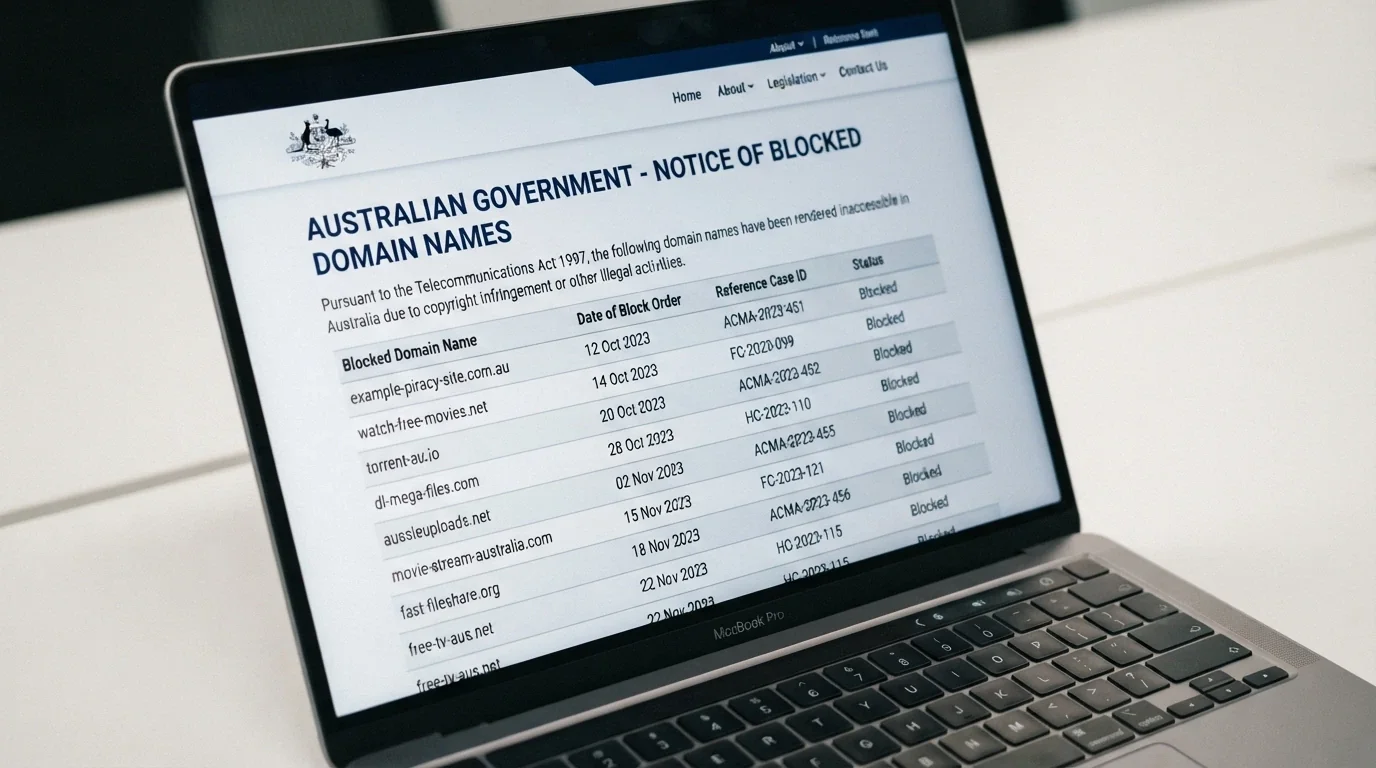
The loophole is enforcement. The IGA targets the provider, not the player. An offshore casino operating out of Curaçao or Cyprus is outside Australian jurisdiction; the ACMA can block the website from Australian ISPs, but it cannot shut the operator down. New domains appear as fast as the old ones are blocked. The result is a cat-and-mouse enforcement picture: 1,564 illegal sites blocked since November 2019, with 73 more referred for blocking in Q2 2025 alone, alongside 225+ operators pushed out of the Australian market by ACMA action since 2017.
The player’s legal position is that they are not prosecuted — the IGA criminalises the provider, not the user. Even so, the practical position is exposed. No Australian consumer protection law applies. No Australian complaints body has jurisdiction. The ACMA cannot recover a player’s money if the operator refuses to pay. BetStop does not bind offshore casinos. The site can be blocked with a player’s balance on it, and the player has no recourse.
The Interactive Gambling Act — What It Actually Bans and What It Doesn’t
The Interactive Gambling Act 2001, strengthened by the 2017 amendment, prohibits the provision of online casino games, online pokies and in-play sports betting to people in Australia. What is permitted and licensable is wagering on races and sport placed before the event begins, lotteries, and keno — through operators licensed by a state or territory.
The licensing is state-level business, but the Northern Territory Racing and Wagering Commission (NTRWC), administered through Licensing NT, is the de facto national licensor for online wagering. NT wagering licences run for terms of up to 20 years, with NT levying a 5% wagering tax on wagers minus payouts plus a 0.05% racing levy. Each state sets its own point-of-consumption tax, typically 10–15% of net wagering revenue. None of those licences covers online casino or pokies — that product is prohibited.
The IGA’s enforcement model is provider-targeted. The criminal liability sits with the offshore operator for providing the prohibited service to an Australian customer. The player is not the target. That is why the offshore apps continue to operate — they are committing the offence, but the practical consequence for them is a blocked domain in Australia, not a criminal prosecution. New domains appear as fast as ACMA can block them. The model works against single operators; it does not work against a globally distributed industry.
The 2026 Gambling Reform — What Changes in January 2027
The Interactive Gambling Amendment (Gambling Reform) Bill 2026 passed Parliament on 19 August 2026, and its measures commence on 1 January 2027. The reform is the most significant change to Australia’s gambling laws since the original IGA, and it changes the enforcement landscape for offshore casinos in three specific ways.
On advertising, the reform bans wagering advertising during live sport broadcasts from 15 minutes before to 5 minutes after a live sporting event between 5:00 am and 8:30 pm. It restricts wagering advertising on TV to no more than three ads per hour during the same window. It bans athletes, celebrities and influencers from promoting wagering products. Radio ads are barred during school drop-off and pick-up times. Broadcasting sporting odds is banned. Online ads can only target logged-in, confirmed-over-18 users with an opt-out. No ads in sports venues or on player uniforms. A Wagering Advertising Opt-out Register is established.
On inducements, the reform bans direct marketing of inducements for 14 days after a customer signs up with a licensed wagering operator, for three months after a person deregisters from BetStop, and indefinitely for customers identified as at risk of gambling-related harm. That closes the loophole where licensed operators send bonus offers to people who have just signed up or just de-registered from self-exclusion.
On product and payments, the reform bans online keno “pocket pokies” and foreign-matched lotteries — both of which had been operating in a grey area. It allows banks and payment systems to block transactions to illegal gambling operators, and gives ACMA more powers to act faster on website blocking. For an Australian player using an offshore casino, the practical effect is that banks gain an explicit legal authority to refuse PayID and direct-debit transfers to offshore operators — a tool that does not currently exist.
Offshore Operators, ACMA Enforcement and Your Consumer Rights
When an offshore casino refuses to pay a withdrawal, an Australian player has no safety net. There is no Australian consumer protection law that applies. There is no Australian complaints body with jurisdiction over the operator. ACMA cannot recover the player’s funds — its role is to enforce the IGA against the provider, not to act as a dispute resolution service for individual players. BetStop does not bind offshore casinos; an Australian player who has self-excluded through BetStop is still able to deposit and lose at an offshore app, because the offshore operator is not connected to the register.
The enforcement picture is that ACMA has had 1,564 illegal gambling and affiliate websites blocked by Australian ISPs since November 2019. In Q2 2025 alone, the regulator completed 20 investigations into 24 gambling sites, found 30 breaches of the IGA, issued 10 formal warnings — including the warning to Dama N.V. named earlier — and referred 73 websites to ISPs for blocking. That is the largest single quarter of enforcement action on record.
The result for an Australian player who has deposited with an offshore casino and is now trying to withdraw is: the operator holds the money, the regulator cannot compel payment, and the website can be blocked at any time, with the balance on it. The due-diligence work — verifying the operator identity, reading the bonus terms, running a small test withdrawal — is the only protection available, and it has to be done before the deposit, not after.
Staying Safe — The Gambling Harm Numbers Australia Doesn’t Talk About Enough
The case for caution with offshore pokies apps is not theoretical. Australia has detailed, current research on gambling harm, and the numbers are stark.
Approximately 2.1% of Australian adults — roughly 430,000 people — experience problem gambling. The Australian Institute of Health and Welfare put high-risk gambling at 1.8% in 2022. Roy Morgan data from March 2026 shows 15.1% of the Australian adult population — an estimated 3.32 million people — are experiencing some level of harm from their own gambling or the gambling of those close to them. A model-based national estimate published in the Journal of Gambling Studies in 2026 puts the affected population at approximately 3.29 million Australians aged 5 and above, including approximately 1.97 million adults with at-risk or problem gambling. The annual health loss associated with gambling-related harm in Australian adults is over 400,000 Years Lived with Disability.
The trend is the wrong way. Overall gambling participation has declined to 58.8% in 2025, continuing a long-term downward trajectory — but risky gambling has increased from 13.7% in 2024 to 19.4% in 2025, almost doubling since the COVID-19 lockdowns of 2020–2021. More than half of Australians who gambled in 2025 — 56.1% — mainly participated online.
What that picture says about offshore apps is that they sit entirely outside Australia’s harm-minimisation infrastructure. BetStop — the National Self-Exclusion Register — covers Australian-licensed wagering services only. An offshore casino is not connected to it. A player who has self-excluded to manage a problem is still able to deposit and lose at an offshore app. The safeguards that exist for licensed wagering — customer-set deposit limits, activity statements, time-out functions, BetStop registration — are simply absent on offshore sites.
BetStop, the National Gambling Helpline and Where to Get Help
Australia has a functioning harm-minimisation infrastructure for licensed wagering. The plain list, for a reader who needs the numbers in front of them:
- BetStop — the National Self-Exclusion Register (betstop.gov.au) — one registration excludes a person from every Australian-licensed online and phone wagering service in a single step. As of 31 March 2026, 59,830 people had registered and 37,247 had active exclusions. 78% of registrants were under 40 at registration; 38% chose lifetime exclusion.
- National Gambling Helpline — 1800 858 858. Free, confidential, staffed 24 hours a day, 7 days a week.
- Gambling Help Online (gamblinghelponline.org.au) — online chat and counselling, run by the same service.
- Gambling Harm Scales (GHS) — a 10-question screening framework developed by Central Queensland University, used by clinicians to identify problem gambling.
The critical caveat — and the reason this section sits on a page about offshore apps — is that BetStop binds Australian-licensed wagering services only. An offshore casino is not connected to the register and will continue accepting a self-excluded person’s money. The helpline and Gambling Help Online do help regardless of where the gambling took place. BetStop does not.
Deposit Limits, Loss Limits and Self-Exclusion on an Offshore App
Australian-licensed wagering operators are required to offer customer-set deposit limits and activity statements under their state and territory conditions — which differ between jurisdictions but all sit inside the licensed-wagering framework. The licensed framework also offers take-a-break functions, mandatory activity statements, and connection to BetStop for self-exclusion.
Offshore pokies apps typically offer none of this. A player who opens an account at an offshore casino can set a deposit limit if the operator offers the feature in its settings — some do, some do not — but there is no requirement, no regulator enforcing it, and no Australian consumer protection if the operator ignores the limit. The practical reality is that deposit limits on offshore apps are best-effort features, not legally enforced safeguards.
For an Australian player who wants genuine harm-minimisation tools, the licensed-wagering framework is the place to find them. The offshore set offers only what the individual operator chooses to provide, and the player has no recourse if the operator changes its mind.
The Real Harm Numbers — How Many Australians Are Affected
The headline numbers, restated for the reader who needs them in one place. As of March 2026, 13.0% of the Australian population — an estimated 2.86 million people — were experiencing gambling harm from their own behaviours, and 5.4% (1.18 million people) from the gambling of others. A separate model-based national estimate (Journal of Gambling Studies, 2026) puts the affected population at approximately 3.29 million Australians aged 5+ annually, including approximately 1.97 million adults with at-risk or problem gambling. The annual health loss is over 400,000 Years Lived with Disability.
The trend is the wrong way. Risky gambling increased from 13.7% in 2024 to 19.4% in 2025, almost doubling since the COVID-19 lockdowns of 2020–2021. Problem gambling prevalence in Australia sits at 0.7% to 1.0% of adults in the past 12 months across the major surveys. Australians lose approximately A$25 billion on legal forms of gambling each year — a figure that does not include offshore losses, which are not measured.
For an Australian player using an offshore pokies app, the harm layer sits on top of every other risk on this page. The offshore operator is outside Australia’s consumer protection regime. BetStop does not cover offshore play. The deposits and the losses are real; the safeguards are not.
How We Selected and Ranked These Apps
The evaluation framework behind this page is built on five sources: official Australian regulator material (ACMA, including the BetStop statistics and the ACMA Action on Interactive Gambling quarterly reports), the Interactive Gambling Act 2001 and the 2017 amendment, Australian Institute of Health and Welfare data, Roy Morgan research, and the ANU Centre for Social Policy Research’s Gambling in Australia publication. Harm-prevalence and methodological context came from the Journal of Gambling Studies and Springer Nature.
The ranked set of ten offshore operators was checked against the ACMA register and confirmed as offshore with no Australian casino licence. Each was tested for current operator identity where research could surface it; Dama N.V., Hollycorn N.V., Medium Rare N.V. and TechSolutions Group N.V. are the four operator companies confirmed in this round. ACMA enforcement actions — the Q2 2025 formal warning to Dama N.V. naming RocketPlay, and the parallel warning to Hollycorn N.V. naming Neospin — were verified against the ACMA’s published enforcement notices. Where research could not verify a claim (bonus terms, free spin counts, wagering multipliers, payout times), the page says so rather than guessing.
The criteria that ordered the ranking were not quality scores. No offshore operator holds an Australian licence, and an offshore licence does not extend Australian consumer protection. The ordering reflects prominence in the Australian search results, what players are signing up to, and what verified information the page could carry — including, where it exists, formal ACMA enforcement notices and documented forum user experiences that affect how the brand actually plays for Australian users.
What to Actually Do Before You Download Anything
Five checks, run in order, before a real-money deposit at any offshore pokies app:
-
Verify the operator’s identity. The brand name on the casino’s homepage is not the same as the company behind it. Look for an “about” or “terms” page that names the legal entity (Dama N.V., Hollycorn N.V., TechSolutions Group N.V. for the brands reviewed here). If the operator company cannot be identified, the casino is opaque — treat it accordingly.
-
Check the payment methods. PayID, debit card, bank transfer and BPAY are the methods legally available to licensed Australian wagering operators. Credit cards and crypto are banned for online wagering in Australia since 11 June 2024. An offshore casino accepting credit cards or crypto from Australian players is not just offshore — it is operating outside Australian rules on payment. The payment method is itself the tell.
-
Read the bonus fine print. The headline welcome offer is marketing. The wagering multiplier, the eligible games, the bonus validity window, the maximum cashout cap and the contribution rates of different game types are what determine what the bonus is actually worth. A big bonus with a steep multiplier and a low cashout cap can be worth less than a smaller bonus with friendlier terms.
-
Test with free-play, then with a small withdrawal. Free-play tests the game and the app. A small real-money deposit, followed by a small withdrawal, tests the operator. Run the withdrawal before committing a larger balance — the time it takes, the documents requested, the bonus terms enforced at cash-out are the data points that determine whether the casino pays.
-
Know where to get help if you need it. The National Gambling Helpline is 1800 858 858 — free, confidential, 24/7. Gambling Help Online (gamblinghelponline.org.au) provides online chat and counselling. BetStop (betstop.gov.au) registers a self-exclusion across all Australian-licensed wagering services in a single step — though it does not cover offshore casinos, which is itself a reason to be careful with offshore play.
These five checks do not make an offshore casino safe. No offshore casino is safe in the sense that a licensed Australian wagering operator is safe, because the offshore operator is outside every Australian protection regime. What the checks do is move the decision from “I have no information” to “I have verified what I can”. The remaining uncertainty is real and cannot be removed.
Frequently Asked Questions
Is it legal to play real money pokies on an app in Australia?
No — not on an Australian-licensed app. The Interactive Gambling Act 2001 prohibits providing online casino games, online pokies and in-play sports betting to people in Australia. No licence for online casino exists anywhere in the country. Apps offering real-money pokies to Australians are offshore, unlicensed in Australia, and prohibited from operating under Australian law. The ACMA enforces the prohibition by blocking sites, with 1,564 illegal sites blocked since 2019.
Can I download a real money pokies app from the App Store or Google Play?
No. Apple’s guidelines prohibit real-money gambling apps that are not from licensed operators in the user’s jurisdiction; Google Play applies the same rule. No Australian-licensed casino exists, so no real-money pokies app can satisfy either store’s policy. What Australians use instead is a progressive web app — the offshore casino loaded in Safari and added to the iPhone home screen via “Add to Home Screen”, or run in Chrome on Android. The icon looks like an app; the underlying product is a website.
How do I withdraw money from a real money pokies app in Australia?
PayID is the method Australian players praise most, with around 70% of positive payout feedback in forums. PayID withdrawals clear in under an hour, with reported times as fast as four minutes. Other options include bank transfer and crypto, but credit cards and crypto are banned as payment methods for online wagering in Australia since 11 June 2024; an operator accepting them from Australians is operating outside Australian rules. KYC verification at withdrawal time is the most common reason payouts stall, and offshore operators have no Australian complaints body for escalation.
What does BetStop do, and does it cover offshore casino apps?
BetStop is the National Self-Exclusion Register — one registration excludes a person from every Australian-licensed online and phone wagering service. As of 31 March 2026, 59,830 people had registered and 37,247 had active exclusions. The critical limitation for a reader of this page: BetStop binds Australian-licensed wagering services only. Offshore casinos are not connected to the register, and a self-excluded person can still deposit and lose at an offshore app. The helpline — 1800 858 858 — works regardless of where the gambling took place; BetStop does not.
Do real money pokies apps offer no deposit bonuses or free spins?
Yes — and the headline number is marketing. No-deposit bonuses and free spin offers are standard on offshore apps, but they typically carry the highest wagering requirements of any offer. The bonus must be wagered many times over before any winnings become withdrawable, with a maximum cashout cap that limits what can be taken out. The slot title a casino runs the free spins on determines the effective value, and many casinos exclude the highest-paying games from bonus play. The due-diligence logic is the same as for any other bonus: read the terms, not the headline.
What happens if an offshore casino app refuses to pay my winnings?
There is no Australian consumer protection. The ACMA enforces the Interactive Gambling Act against the offshore operator, but it cannot recover a player’s funds. There is no Australian complaints body with jurisdiction over an offshore casino. The casino holds the money; the regulator cannot compel payment; the website can be blocked at any time, with a player’s balance on it. This is the most concrete single risk of the offshore route, and it is why the small-withdrawal test before depositing more is non-optional.