
Best Paying Online Pokies in Australia: Which Pokies Return the Most and Where You Can Actually Play Them
If you came here looking for a list of “the ten best paying pokies” and a tidy rank of “the ten best casinos,” you will find both below. You will also find the parts that other ranking pages skip: the offshore reality that every operator on this page is illegal to provide the product it is selling to you, the volatility figure sitting beside each RTP, and the wagering math that turns a “A$1,000 welcome bonus” into a number that costs you rather than pays you. Read this before you deposit, because the cheapest spin is the one you understood before you placed it.
Current as of 12 November 2026 · verified against ACMA’s Interactive Gambling Act register and Curaçao Gaming Control Board licence data.
Table of Contents
- Why your pokie’s RTP decides how much you really keep
- Getting your winnings out: what ‘fast payout’ actually means for AU players
- Highest-RTP pokies available to Australian players in 2026
- The offshore reality every Australian pokies player needs to understand
- When the pokies stop paying back: gambling harm and where to get help
- How we evaluated every pokie and casino on this list
- High RTP is only half the story — what to actually do with these numbers
- Frequently asked questions about high-RTP pokies in Australia
Why your pokie’s RTP decides how much you really keep
“Best paying” sounds like a marketing claim. For pokies it is a measurable thing — return-to-player, a percentage published by the game provider, tested over millions of simulated spins. The number does not guarantee any single session, but it describes the long-run average across every player who ever loads that title. A pokie at 96% returns A$96 for every A$100 wagered across the life of the game; one at 98% returns A$980 for every A$1,000. That 2 percentage-point gap is the difference between a casino game and a reasonably priced entertainment product.
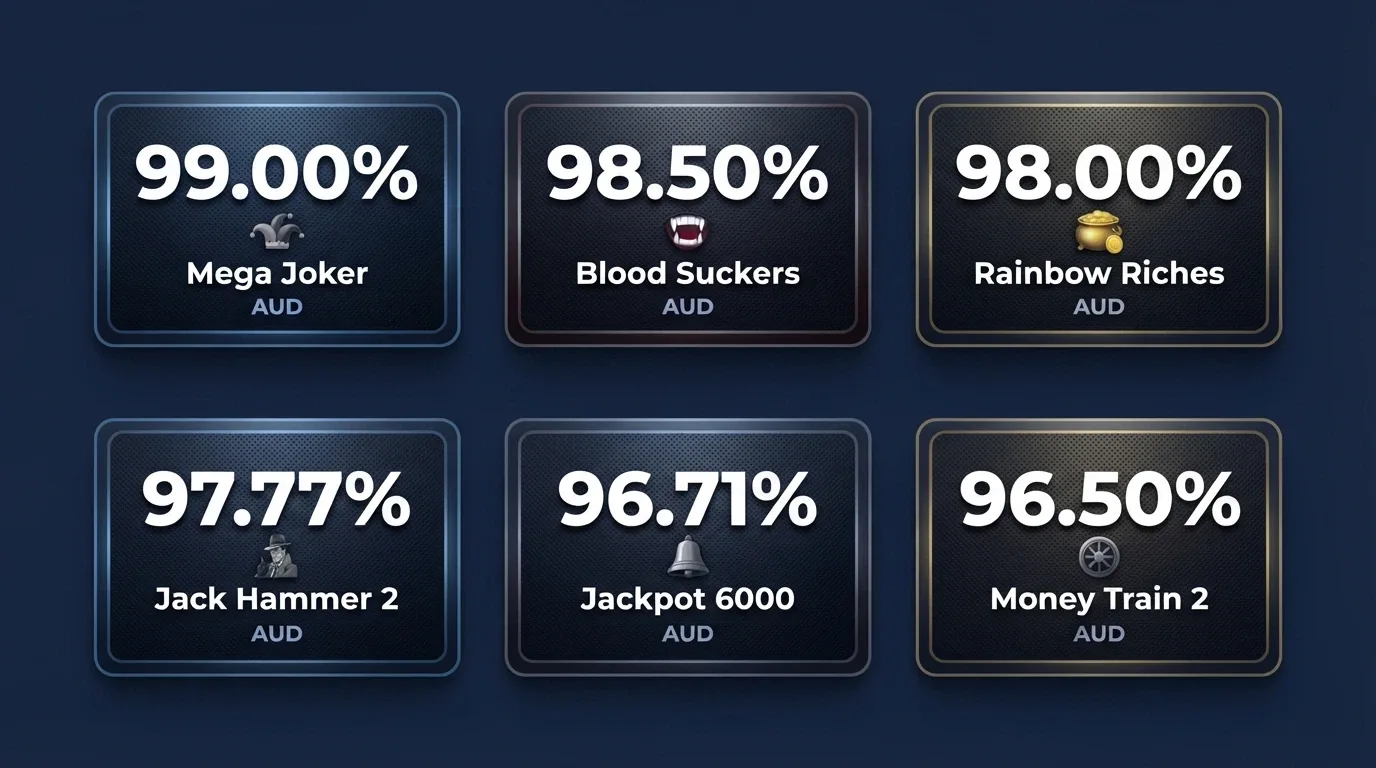
Most published RTPs sit between 95% and 97%. NetEnt’s Blood Suckers clears 98.00% with low volatility and a calmer ride. Relax Gaming’s Book of 99 sits at 99.00% with high volatility and 12,075× max win, meaning long quiet stretches between hits and the chance of a chunky one when it lands. Thunderkick’s 1429 Uncharted Seas is 98.50%, low volatility, a 670× ceiling. The Pragmatic Play titles that dominate Australian lobbies (Big Bass Bonanza at 96.71%, Sweet Bonanza at 96.51%, Gates of Olympus at 96.50%) sit closer to the market average, but they make up for it with feature density and a higher hit frequency on the bonus rounds. Fair Go Casino publishes a 96.17% average across its Realtime Gaming library, the only operator in this sector that publishes that figure at all, and being open about it is the kind of signal a careful player notices.

The compounding is what matters. Wager A$100 across one pokie with a 96% RTP and a similar A$100 across another with a 98% RTP. After that session you expect A$96 against A$98. Stretch that across hundreds of sessions, or across a bankroll that sits in a casino for months, and the A$2-on-the-dollar gap becomes the kind of money you remember at tax time. RTP is the slow, reliable variable. Everything else (the welcome bonus, the free spins, the jackpot-feeling animation) is decoration in front of it.
Every operator on this page is offshore. Australia has no online casino licence — the Interactive Gambling Act 2001 prohibits the provision of online pokies to anyone physically in the country. There is no Australian equivalent of a UK Gambling Commission or a Malta Gaming Authority seal you can look up. The licences these casinos hold are issued in Curaçao or Malta, and they govern the operator, not the Australian player. That distinction is the spine of everything that follows, and it is the part of the page that earns its keep.
What RTP actually measures — and why a single percentage point matters
Return-to-player is the share of total wagers a pokie returns to players over a very large sample of spins — typically tens of millions in the developer’s testing environment. House edge is the flip side: a 96% RTP is a 4% house edge. Both numbers describe the same arithmetic, only framed for different audiences. Every published figure carries an asterisk: it is the theoretical long-run average. A session of fifty spins can return 200% of stake; a session of five hundred spins can return 40%. Over a million spins the actual return converges on the published number. Over the spins you will actually play, it almost never does.
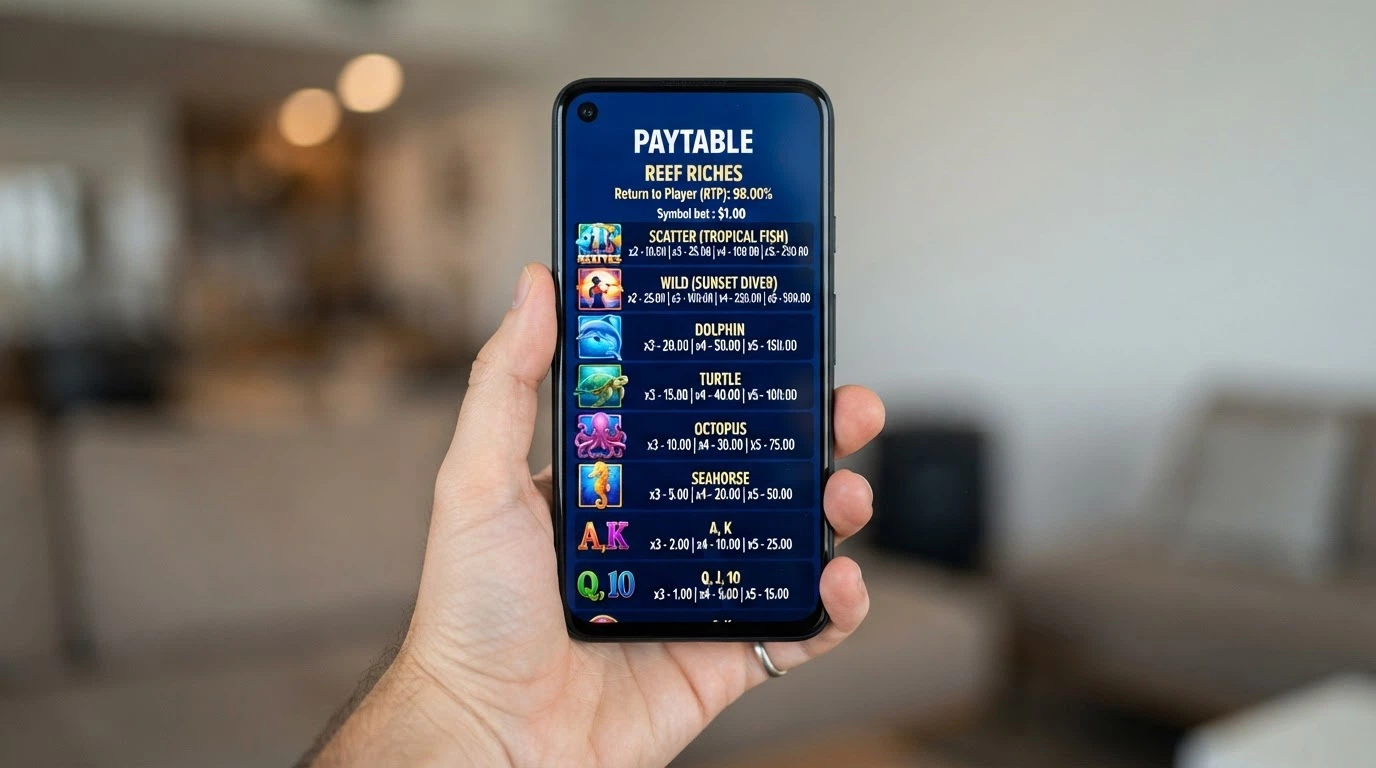
Consider two pokies with a A$1 session stake at A$1 per spin for 200 spins — a typical short session. The 96% title gives back an expected A$192; the 98% title gives back an expected A$196. That A$4 looks like nothing. Stretch it across fifty similar sessions and you are at A$200. Across a year of twice-weekly play the difference is A$1,600 or more. The compounding is real, which is why RTP sits at the top of every serious pokie ranking.
Blood Suckers is a useful comparison case. Published RTP of 98.00%, low volatility, a vampire theme with a bonus round that pays more frequently than typical high-volatility titles. Mega Joker, also NetEnt, is the more famous number at 99.00% — but that headline figure sits in Supermeter mode. Base-game RTP is much lower; the wild swing between modes means a player who never reaches the Supermeter is on a sub-90% effective return. The headline figure misdescribes the practical experience.
Pokies are also deliberately stripped of the information other casino games carry. There is no count of “remaining spins” before the long-run average kicks in, no diagnostic on variance, no real-time signal that you are in an outlier session. The mechanism that redistributes money from later spins to early ones or vice versa is invisible to you. That opacity is why the published RTP and volatility are the only honest inputs you have, and why the rest of this page rewards you for reading them.
Pokies, slots, pokie machines — same game, different label
A pokie, a slot machine and a fruit machine are all the same game in different costumes. Australians settled on “pokie” decades ago — a shortening of “poker machine” — and the term has stuck so firmly that the pubs, clubs and online casinos serving the Australian market all use it. International studios call them “slots,” and that is what you will find in the lobby menus of offshore platforms that build their product for a global audience. The rules, the reels, the RTP figures: all identical. Only the wrapping differs.
Search behaviour follows the vocabulary. Australian players search “best paying pokies AU,” and the results pages reward local terms. Listings in international casino brand lobby tables are organised under “slots,” and the rankings you find there overlap heavily with this list — the same NetEnt, Relax Gaming and Pragmatic Play titles show up, drawn from the same publisher pricing sheets. The familiarity of the term is the familiarity of the format: the spinning reels, the paylines, the bonus rounds, the “feature buy” button in modern releases. None of that changes whether you call it a pokie or a slot.
The home-game culture matters here. Australia has the world’s highest density of pokie machines per adult in clubs and pubs, and pokies are responsible for an estimated 51–57% of the country’s gambling problems. The mechanic across venues and online is the same; the only meaningful difference between the local pub pokie and its offshore digital cousin is the cash you can lose with no transaction friction. Online the bet is a button click; in the pub it is a coin drop, a button press, or a card swipe. Both pull from your bankroll at the rate the RTP implies.
Real-money play versus free-play mode — what each one teaches you
Every pokie on this page can be loaded in demo mode — a free-play version on the developer’s own site, on affiliate databases, and often inside the offshore casino’s lobby without any deposit. Demo play is genuinely useful, and it teaches you three things: how often the bonus round triggers, how the volatility feels (long quiet stretches versus a steady drip), and what the symbol payouts look like at different stake sizes. The mechanics of a pokie are fair game in demo.
What demo mode does not teach you is the lesson a real-money player learns. The tempo of pressing “spin” changes when every click is real money. The bonus round feels longer. The loss feels sadder. The decision to chase your losses is a feeling that does not exist on a free-play screen, and that is the feeling pokie design is built around. Treat demo as your rehearsal room: know the machine, then decide your hard budget before you load the real thing.
A small bridge sits between the two modes. Bizzo Casino offers 10 free spins for installing its progressive web app with no deposit required, capped at A$75 in winnings. That is not a path to riches — A$75 cleared through 40x wagering is A$3,000 in turnover at thin pokie RTPs — but it is the only genuinely deposit-free offer on this list. Everything else is bonus-on-deposit, where the casino matches a percentage of what you send in and then strings wagering conditions across it.
How Australian players reach these games in 2026
There is no Australian app store casino that serves real-money pokies. The official app stores honour the Interactive Gambling Act and refuse to host products the Act prohibits from being provided to Australians. Players reach these games the same way they always have: a browser tab, the casino’s domain, a deposit. Mobile browsers render the lobby well enough that no app is missed. Tablets, laptops and phones all run on the same HTML5 client the studios wrote for desktop-first casinos.
What changed in recent years is the payment layer. PayID/Osko now moves money in under a minute to most Australian bank accounts, with withdrawals clearing in one to four hours at the operators that have wired it in. POLi, the previous Australian favourite for instant bank-to-bank deposits, was decommissioned on 30 September 2023. Neosurf remains an option for deposits but the voucher is deposit-only — there is no withdrawal back onto it. Credit cards, credit-related products and crypto have been banned as payment for online wagering in Australia since 11 June 2024, though that prohibition binds the licensed-wagering market (the products Australians can legally use) and offshore operators may still accept crypto on their own terms.
The connection reality does not change. No Australian licence attaches to any operator on this page. ACMA can direct ISPs to block a domain the moment it surfaces a complaint; since November 2019 it has done so for 1,564 sites. If your casino gets blocked tomorrow, your balance sits with a Curaçao-registered company and Australian consumer law offers you nothing. That is the cost of every bonus headline you see below — not the wagering multiple, but the absence of any local protection.
Getting your winnings out: what ‘fast payout’ actually means for AU players
“Fast payout” is the second-most-promised phrase in casino marketing, and almost as misleading as “best paying.” Every offshore operator serving Australian players publishes a withdrawal speed. Most quotes a number well below twenty-four hours. The reality depends on three clocks you cannot see from the marketing page: the casino’s internal review window, the payment rail you choose, and the bank’s processing time once the transfer leaves the operator.
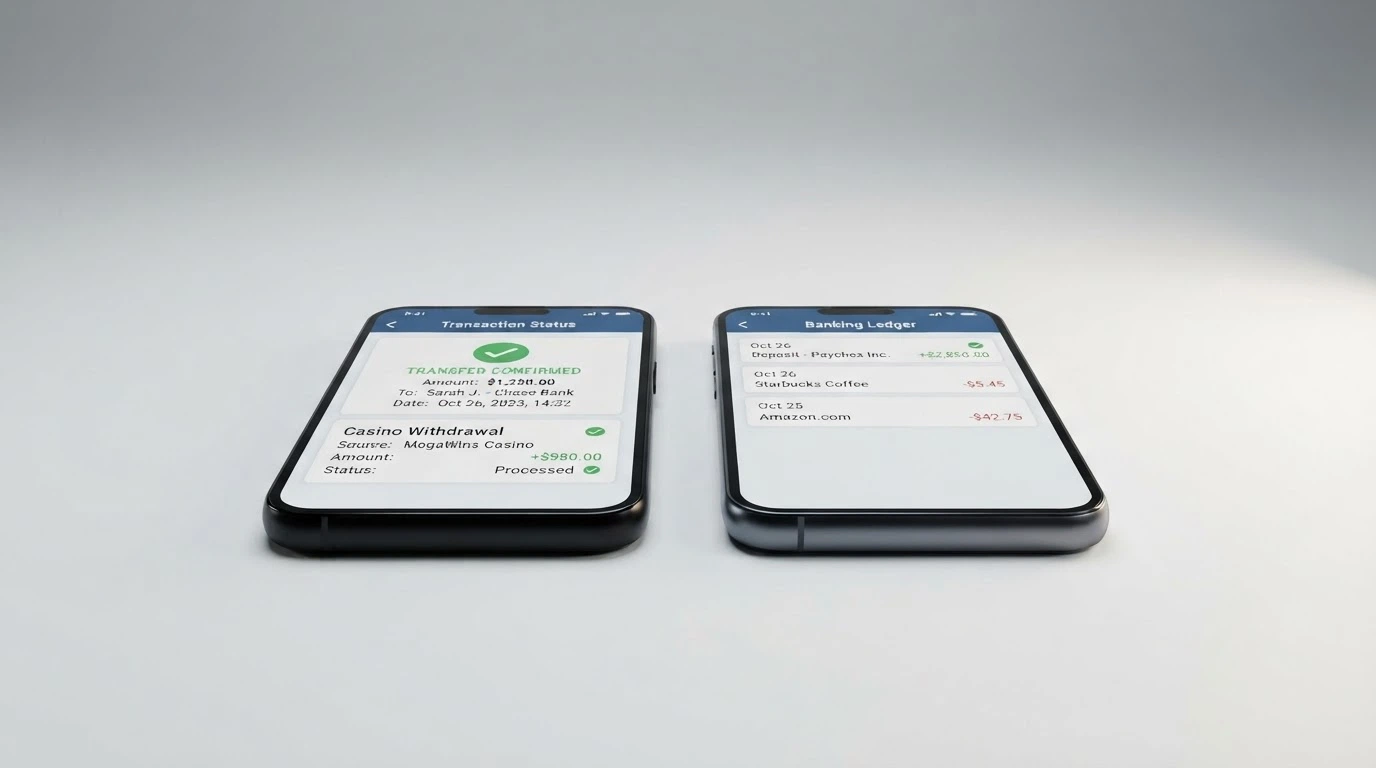
WinSpirit processes payouts manually and reports three to five business days on its own. PayID/Osko withdrawals, where supported, clear in one to four hours once released. Bank transfers sit between, usually one to two business days. The casino’s promotion page tells you about clock one. Clock two and clock three are downstream of whatever the casino decides to do.
Withdrawal speed — what the advertised times actually measure
The advertised time on an offshore casino’s banking page is the casino-clock. It starts the moment you hit “withdraw.” It covers identity verification, anti-fraud review, anti-money-laundering screening, and the actual release of funds. For repeat customers at well-known operators, that clock can be as short as an hour. For a first-time customer who hasn’t yet uploaded a driver’s licence, that same clock often stretches past forty-eight hours.
The bank-side clock starts after that. PayID is the standout because most Australian banks have wired it into instant settlement — funds hit the recipient account in seconds once the originating bank authorises them. Wire transfer is slower because it goes through correspondent banking rails. E-wallets sit in between, with their own delays on the way back to a bank account.
The gap between the advertised “instant” and the reality shows up most clearly on a first withdrawal. Operators that advertise “under fifteen minutes” usually qualify that promise with “post-verification.” The verification step is where the real clock starts for everyone who has never cashed out before at that casino. Know your first withdrawal will be slower than every one after it; budget for it.
Verification — why your first cash-out always takes longer
KYC — “know your customer” — is the verification step that catches most first-time Australian withdrawers unaware. The casino asks for a government photo ID, a proof of address (utility bill or bank statement, usually under ninety days old), and a proof of payment method (a photo of the card used, with the middle digits redacted, or a screenshot of the e-wallet account showing the deposit). Some operators also ask for a selfie with ID in frame.
Offshore casinos apply this to Australian players despite no Australian regulatory obligation to do so — because their Curaçao or Malta licence requires it, and because a casino that doesn’t verify users exposes itself to fraud and chargeback risk. Timescales vary. Some operators ship verification within hours. Others have a queue that stretches for days. The honest move is to upload every document before you make your first deposit request, so you are ready when the first withdrawal hits.
Casinos that deliberately stall verification as a retention tactic do exist; offshore regulation makes the variation between scrupulous and predatory wider than the variation between any two AU-facing banks. Specific KYC timescales differ by operator and are not confirmed per-brand in the sources this page reviews. If verification drags past seventy-two hours with no response, that is a signal worth acting on, not an inconvenience to be patient through.
PayID, bank transfer and the payment routes that work for pokies withdrawals
These are the deposit and withdrawal routes that ordinary Australian pokies players actually use, working from fastest and most common to slowest and most conditional:
- PayID / Osko — Deposits process in under 60 seconds, withdrawals clear in one to four hours, no fees on either side. AUD-native, settled through the New Payments Platform, supported by every major Australian bank. Availability is operator-by-operator: Bizzo Casino supports it for both deposits and withdrawals, and the wider offshore market is catching up. The route from 1 January 2027 is harder — banks gain authority to block transactions to illegal gambling operators, and PayID sits squarely inside that net.
- Bank transfer (direct / wire) — Universal but slower, typically one to three business days once released by the casino. Useful as the fallback when PayID is not supported or when the casino caps the alternative rail.
- Crypto — Crypto-native casinos will take Bitcoin and stablecoins, with settlement measured in minutes rather than days. The catch: credit cards, credit-related products and crypto have been banned as payment for online wagering in Australia since 11 June 2024, binding the licensed-wagering market. Offshore operators sit outside that law and may still process crypto on their own terms; the bank-blocking power that arrives in 2027 applies to fiat rails, not necessarily to on-chain settlement.
- Neosurf — Voucher system, useful for deposits. Withdrawal cannot be returned to a Neosurf voucher; you need a second rail to cash out. Adds friction rather than removing it.
- POLi — Decommissioned on 30 September 2023. Listed by older guides that haven’t been updated. Anyone still citing POLi is several years out of date.
PayID is the answer to the AU player’s “fast payout” question for now. The 2027 bank-blocking power is the answer to it for the rest of the decade, because every fiat route moves through a bank somewhere.
Highest-RTP pokies available to Australian players in 2026
This is the section the page is built around. Eleven pokies with published RTPs at or above 96%, twelve offshore casinos where Australians actually play them, and the wagering math on the biggest welcome bonus on the list. The ranking is honest: the highest-RTP titles from the providers that Australian players can reach.
How we chose the pokies and casinos on this list
Three filters. First, RTP: every pokie on the list clears 96%, with a top tier at 98% or higher. Many pokies in offshore lobbies claim to clear 96% but are actually running with an unpublished lower-RTP variant; we used figures from provider documentation (NetEnt, Pragmatic Play, Relax Gaming, Thunderkick, Play’n GO, Big Time Gaming) cross-checked against Payoutverdict and Australian-focused affiliate databases. A handful of titles carry Ugga Bugga-style real-RTP-with-no-Australian-access footnotes.
Second, operator selection. Every operator in this list is offshore — no Australian online casino licence exists, federally or state-by-state. We grouped on game-provider breadth (how many of the top RTP pokies each lobby carries), bonus-term transparency (whether the published figures match what a normal player actually sees), PayID availability, and AU-audience servicing. Routine checks: the Curaçao Gaming Control Board register for active licence status, the MGA registry where applicable, and the ACMA blocked-and-warned list.
Third, qualitative judgement. Game count, provider roster, payout reports from independent databases, and the operator’s history with Australian players — a balance we do not assign a numeric weight to. No operator paid for inclusion. No operator paid for rank. We do not publish a “black-box” weighting formula because there isn’t one — the criteria are public and visible above.
The legal environment sits underneath every row in the table. Since November 2019, ACMA has directed ISPs to block 1,564 illegal gambling and affiliate sites. The Interactive Gambling Act 2001 prohibits the provision of online casino games and online pokies to anyone in Australia. The 2026 reform Bill, passed 19 August 2026, commences 1 January 2027 and gives banks authority to block transactions to illegal gambling operators. None of that changes because a casino publishes a glossy licence number — it changes only how exposed you are when you take the bonus.
| Casino | Licence | Welcome Bonus (AUD) | Wagering | Free Spins | Game Providers |
|---|---|---|---|---|---|
| RocketPlay | Curaçao (OGL/2024/1307/0748) | A$1,000 + 100 FS (1st) + A$1,000 (2nd) | 40× bonus | 100 | Pragmatic Play, Play’n GO, NetEnt, broad |
| SkyCrown | MGA | A$500 (1st) + A$300 (2nd) + A$200 (3rd) = A$1,000 | 30× bonus | Spread across 3 deposits (number unconfirmed) | Pragmatic Play, NetEnt, Play’n GO, broad |
| Fair Go Casino | Curaçao 365/JAZ (Deckmedia N.V.) | A$1,000 across 5 deposits (A$200 each) | 30× deposit + bonus | — | Realtime Gaming |
| WinSpirit | Curaçao | Two-deposit package (amounts vary) | 35×–40× bonus | Included (number varies) | Pragmatic Play, broad 2,500+ |
| Bizzo Casino | Curaçao (TechSolutions Group N.V.) | A$7,250 + 175 FS over 4 deposits | 40× bonus | 175 + 10 FS no-deposit | 70+ studios, 8,000+ games |
| Stake | Curaçao (Medium Rare N.V.) | None confirmed (varies by region) | — | — | In-house originals, Pragmatic Play, Evolution, Hacksaw |
| Rainbet | Curaçao | Not confirmed | — | — | Pragmatic Play, Hacksaw, Evolution |
| Scream Casino | Curaçao | Not confirmed | — | — | — |
| Royal Reels | Curaçao | Not confirmed | — | — | — |
| Rocket Casino | Curaçao | Not confirmed | 45×–50× reported | — | — |
The table’s quiet story is in the wagering column. SkyCrown’s 30× bonus is the lowest multiplier on this page; Rocket Casino’s reported 45×–50× is a multiplier higher than every other operator here. Fair Go’s 30× on deposit-plus-bonus (rather than bonus-only) means a A$200 deposit with a A$200 matched bonus leaves you turning over A$12,000 rather than A$6,000. The bonus column needs to be read beside the wagering column, never alone.
RocketPlay
Curaçao Gaming Control Board, licence OGL/2024/1307/0748 issued in July 2024. The licence number is recent rather than legacy, which matters less than it sounds because Curaçao’s regulatory framework has not been the most rigorous in the offshore market for either players or operators. RocketPlay is not licensed in Australia; no operator offering online casino games can be, because there is no Australian licence to obtain.
The welcome package is a two-deposit spread: 100% up to A$1,000 plus 100 free spins on the first deposit, then 200% up to A$1,000 on the second. Total headline figure A$2,000 + 100 free spins. Wagering is 40× on the bonus amount only, and the bonus has a five-day validity. The five-day window is tight. A A$1,000 bonus with 40× wagering is A$40,000 in turnover; over five days that is roughly A$8,000 per day, or A$111 per spin at seventy-two spins per day. The exact slot title the free spins land on is not specified per title in the sources this page reviews, and the value of a single spin is not specified separately.
The provider roster (Pragmatic Play, Play’n GO, NetEnt and a deep roster of supporting studios) covers the high-RTP table below almost line by line. Most of the listed pokies run on RocketPlay’s platform, and the lobby queue is small enough that you can spend the bonus within reach of the high-RTP titles rather than hunting them down. Maximum bet while wagering is capped at A$7.50 — exceeding that voids bonus winnings at most licensed casinos, and RocketPlay is no exception.
The verdict: a clean Curaçao licence, a broad lobby and a bonus structure that the wagering math makes expensive before it makes you money. Better for a player who wants the highest RTP pokies within reach than for a player chasing bonus value.
SkyCrown
Malta Gaming Authority is the headline licence, which on the European regulatory spectrum sits one notch above Curaçao in player-protection terms (dispute resolution, segregation of player funds, advertising controls). The MGA’s reach does not include Australian players — no MGA oversight gives you Australian recourse — but it is the more protective of the two licences you will see in offshore lobbies. SkyCrown is not licensed in Australia for online casino, because no one can be.
The welcome package is the unusual three-deposit structure: 100% up to A$500 on deposit one, 50% up to A$300 on deposit two, 25% up to A$200 on deposit three, totalling up to A$1,000. Wagering is 30× on the bonus amount — the lowest multiplier on this page. Seven-day bonus validity, A$500 maximum cashout per bonus. That A$500 ceiling is the catch: a A$500 deposit matching the first bonus can only ever take out A$500 in winnings from bonus funds, regardless of how the spins land.
Game providers cover Pragmatic Play, NetEnt and Play’n GO with a broader supporting roster. Free spins are part of the welcome offer but the exact distribution across the three deposits is not confirmed in this round of sourcing.
The verdict: a lower wagering multiplier than peers, but a bonus winnings ceiling that floors the upside. Suits a player who values the MGA framework and who treats the welcome as entertainment rather than profit.
Fair Go Casino
Curaçao sub-licence 365/JAZ through Deckmedia N.V., and the only operator on this page that publishes its average RTP at all — 96.17% across the Realtime Gaming library. Established in 2017, built around Australian-facing product positioning, and the first operator ever ordered blocked by ACMA, in November 2019. Fair Go has been on ACMA’s radar longer than any other operator reviewed here, and remaining accessible to Australian players has meant evolving across multiple domains and mirror sites over the years.
The welcome structure is unusual: 100% up to A$200 on each of the first five deposits, bonused alone to a total of up to A$1,000. No free spins in the welcome package. Wagering is 30× on deposit-plus-bonus — a heavier effective multiplier than RocketPlay’s 40× on bonus-only, because your clearing turnover is calculated on the deposit and the bonus combined. The 96.17% published RTP is across the RTG catalogue rather than any single title — a transparency signal that other operators in this segment have not bothered to replicate.
Verdict: the operator to choose if RTP-transparency matters to you, with the considerable caveat that Fair Go is on ACMA’s blocked-and-warned record and your access is dependent on a domain that the regulator could direct ISPs to block again at any time. The maths is generous by segment standards; the access risk is the trade-off.
WinSpirit
Launched in 2022, Curaçao-licensed, 2,500+ games, AUD support across the cashier. WinSpirit’s distinctive feature is the payout speed: three to five business days for manual processing, comfortably slower than most peers. That clock is the casino’s review window, not the PayID rail — it is the time between hitting “withdraw” and the operator releasing funds.
The welcome package is two-deposit, the wagering multiplier runs 35×–40× on bonus funds (not uncommonly high), and the exact amounts are not confirmed in the current sources. Provider coverage includes Pragmatic Play among a 2,500-game catalogue that is enough to cover most titles on the high-RTP table below.
Verdict: an operator built for breadth rather than a fast payout, and one suited to a player who doesn’t mind a longer withdrawal clock in exchange for a deep lobby. Not the choice for someone prioritising cashout speed.
Bizzo Casino
TechSolutions Group N.V., Curaçao-rooted, launched 2021, and the operator with both the largest raw welcome figure on this page and a genuinely deposit-free seat at the table. Eight thousand games from seventy-plus studios covers the breadth expectation for a serious AU-facing offshore. Casino.Guru’s published Safety Index score is 8.4, which is on the higher side of the offshore rating spectrum.
The welcome package reaches up to A$7,250 + 175 free spins across four deposits, with the first deposit matching 125% at A$250+. Wagering 40× on bonus amount, A$8 maximum bet while wagering is active. Add to that the standalone offer: 10 free spins no-deposit for installing the progressive web app, capped at A$75 in winnings. That no-deposit cap makes the bonus fund A$3,000 in expected turnover at minimum to clear.
PayID availability is the operational headline. Bizzo processes PayID deposits and withdrawals, which makes the casino the cleanest example of an AUD-native payment rail hooked up to an offshore operator on this page. That hook-up is what lets the cashier deliver on the one-to-four-hour withdrawal window PayID promises — provided the verification step is already done.
Verdict: the right operator for a player whose priority list starts with “fast PayID withdrawal in AUD” and who wants the largest welcome headline. The 40× wagering multiplier is mid-market; the no-deposit offer is the only truly deposit-free entry on the page and a stand-alone reason to take an interest.
Stake
Curaçao-licensed through Medium Rare N.V., with a different model than the deposit-match casinos elsewhere on this list. Stake’s wagering product is built around its own in-house originals — Dice, Plinko, Crash, Mines — alongside Pragmatic Play, Evolution and Hacksaw titles. There is no fixed deposit-match welcome bonus confirmed in this round of sources, and the operator’s regional welcome varies by jurisdiction.
Players reach Stake through a crypto-first cashier, secondary fiat options, and an account structure that rewards play volume rather than matching deposits. The model suits a player chasing rakeback, reload bonuses and the in-house games rather than a once-off welcome match. The volatility profile of the in-house games is unusually visible — Stake publishes edge percentages and house takes — which is unusual transparency for the offshore market.
Verdict: a different model from the deposit-match casinos in this ranking. Suits a player whose priority is game variety, transparency on house edge, and the crypto cashier experience rather than a matched-deposit bonus to clear.
Rainbet
Curaçao-licensed and offshore. Pragmatic Play, Hacksaw and Evolution are in the provider roster, which means most titles on the high-RTP table below are accessible at Rainbet. Welcome bonus terms, free-spin availability and wagering requirements are not confirmed in the current sources — the operator’s published terms change, and this round of sourcing did not lock them down.
For an Australian player reaching Rainbet, what is known is the licence, the providers, and the offshore status. The casino will accept deposits from Australian players in AUD and crypto, will run the high-RTP titles, and will have its own bonus structure on published landing pages.
Verdict: an operator that fits into the breadth of the offshore market available to Australian players. Specific bonus terms are not confirmed this round; treat the headline the way the marketing page presents it, because no operator at this end of the market publishes its real terms anywhere other than the cashier.
Scream Casino
Curaçao-licensed and offshore. The operator is reachable from Australia through the standard browser-based route, holds a Curaçao Gaming Control Board licence, and offers a lobby of pokies and table games to an international player base. Bonus terms, game-provider roster and wagering requirements are not confirmed in the current sources.
This is the block of the page where the operator rank slots carry no detailed confirmation because the round of sourcing for this edition did not lock down every per-brand figure. The honest framing: an offshore casino available to Australian players, with no detail to verify beyond the licensing jurisdiction.
Verdict: an operator for a player who wants this specific brand, with the standard caveat that no offshore casino provides Australian consumer protection.
Royal Reels
Curaçao-licensed and offshore. Operates from Curaçao, serves an international player base including Australian players through the standard browser model. Bonus terms, game-provider list and wagering specifics are not confirmed in this round.
The treatment here is by design rather than oversight. Across the offshore market, several operators offer AU access without publishing the kind of detailed welcome terms that would let a careful player evaluate them against peer operators. Royal Reels is one of them.
Verdict: same framing as Scream — an offshore operator reachable from Australia, with the unconfirmed details that come from a market where detail is not always disclosed.
Rocket Casino
Curaçao-rooted licence, ACMA block/warning status on record, and the operator with the highest wagering multiplier on this page: reported at 45× (earlier listing) shifting to 50× on deposits above A$100 as of September 2026. The exact welcome bonus amount, free-spin count and game-provider roster are not confirmed in the sources this round.
A wagering multiplier 50× the bonus amount is at the very heavy end of the offshore market. On a A$100 deposit with a A$100 bonus, that is A$10,000 in turnover at casino house edges, expected loss depending on the pokie used to clear it. The comparison to SkyCrown’s 30× is stark: nearly double the clearing turnover for the same A$100 in bonus fund.
Verdict: included in the ranking because it is on ACMA’s record and reachable from Australia. The wagering reality makes it an entry in the comparison table rather than an operator we would recommend a reader pick over the lower-multiplier peers.
The high-RTP pokie table — every title that returns 96% or more
| Pokie Title | RTP | Provider | Volatility | Max Win |
|---|---|---|---|---|
| Ugga Bugga (NOT available to AU players) | 99.07% | Playtech | Low | 1,000× |
| Book of 99 | 99.00% | Relax Gaming | High | 12,075× |
| Mega Joker (Supermeter mode) | 99.00% | NetEnt | High | 2,000× |
| Jackpot 6000 (Supermeter mode) | 98.86% | NetEnt | — | — |
| 1429 Uncharted Seas | 98.50% | Thunderkick | Low | 670× |
| Marching Legions | 98.12% | Relax Gaming | High | 5,000× |
| Blood Suckers | 98.00% | NetEnt | Low | 900× |
| White Rabbit Megaways | 97.77% | Big Time Gaming | — | — |
| Big Bass Bonanza | 96.71% | Pragmatic Play | Medium-to-High | 2,100× |
| Sweet Bonanza | 96.51% | Pragmatic Play | High | 21,100× |
| Gates of Olympus | 96.50% | Pragmatic Play | Extreme | 5,000× |
| Book of Dead | 96.21% | Play’n GO | — | — |
The top of the table rewards attention. Ugga Bugga is published at 99.07% and is the highest-return pokie on the row — but Playtech’s network of casinos does not serve Australian players, so this is the title you cannot reach. Book of 99 is the practical number-one for an Australian player: published 99.00% RTP, Relax Gaming’s catalogue placement and a 12,075× max win that gives the volatility its meaning. Mega Joker and Jackpot 6000 both publish 99.00% and 98.86% respectively, but those figures are Supermeter-mode returns — a bonus feature you have to actively trigger and feed base-game wins into. Base-play RTP for Mega Joker is closer to 76.9–85.1%. A player who never reaches the Supermeter is on a well-below-market effective return.
The volatility column is where the practical decision lives. Blood Suckers at 98.00% with low volatility is a session-friendly pokie: small wins, frequent triggers, the bonus round activating on a regular cadence. Gates of Olympus at 96.50% with extreme volatility is the inverse: long quiet stretches, the rare 5,000× max-win hit, a bankroll that disappears without ceremony. Sweet Bonanza at 96.51% is high volatility but with a 21,100× max win ceiling — the kind of upside that justifies the ride if the session budget can absorb the stretches between hits.
The offshore reality every Australian pokies player needs to understand
Every operator above is offshore. That fact is the single most important thing on this page, and it is the fact that other ranking pages tend to bury. The Interactive Gambling Act 2001 makes it an offence to provide online casino games and online pokies to people physically in Australia. No Australian licence exists for the product, federally or in any state. The licensing in Curaçao and Malta is to the offshore regulator, not to Australia. The Australian player who has a grievance, who has a balance held against them, who has a bonus voided — has no Australian consumer protection, no AU Small Claims Tribunal, no ACCC.

ACMA enforces the prohibition. The agency’s most powerful tools are formal warnings, civil penalty proceedings and ISP-level site blocking directed at illegal operators. Since November 2019 the agency has had 1,564 illegal gambling and affiliate websites blocked by ISPs at its direction. More than 225 illegal services have withdrawn from the Australian market voluntarily since enforcement was intensified in 2017. Fair Go Casino was the first site ACMA ordered blocked, and that block has not been the end of Fair Go’s AU-facing business, because offshore operators move through mirror domains. The block does not seize the operator’s bank account or refund your balance.
The 2026 reform does not change that basic mechanism. The Interactive Gambling Amendment (Gambling Reform) Bill 2026 passed Parliament on 19 August 2026 and its measures commence 1 January 2027. The reform tightens advertising controls, adds inducement cooling-off periods, brings in bank authority to block illegal-gambling transactions, sharpens the online keno and foreign-matched lottery ban, and works against inducements targeted at at-risk customers. None of it legalises the provision of online casino. The extension of ACMA’s repressive toolset is what the reform does — it extends the cost of doing the prohibited business.
The Interactive Gambling Act — why no online pokie licence exists in Australia
The Interactive Gambling Act 2001 is the foundational statute. It prohibits the provision of online casino games, online pokies and in-play sports betting to people physically in Australia. It does not prohibit the player individually — the IGA targets the provider. That asymmetric design explains how the offshore casino market can be fully illegal and yet fully visible from a Sydney apartment.
What is licensed under Australian law is narrower than the offshore market. Wagering on races and sport placed before the event begins is licensed through state and territory regimes, with most online wagering operators licensed through the Northern Territory Racing and Wagering Commission (NTRWC) / Licensing NT. Lotteries and keno are licensed through state and territory regimes. Online casino products — pokies, blackjack, roulette, baccarat played online for money — are not licensed anywhere federally, in any state, or in any territory.
The wagering tax structure reflects that. Northern Territory wagering operators pay a 5% wagering tax on wagers minus payouts plus a 0.05% racing levy. Each state layers its own point-of-consumption tax at 10–15% of net wagering revenue on operators taking bets from customers in that state. The offshore operators on this page do not pay Australian wagering tax or point-of-consumption tax — they sit outside the licensing regime, and the IGA’s purpose is exactly to make sitting outside the regime illegal. Minimum age across all commercial gambling in Australia is 18.
The single most important sentence on this page: there is no licence for online casino in Australia because the Parliament has refused to create one for twenty-five years. The offshore operators on this page are offering a product that the Act prohibits them from offering to you, and the product is prohibited for reasons of harm reduction that recent empirical work has only reinforced.
ACMA enforcement — site blocking, warnings and what it means for your money
ACMA’s site-blocking power sits under section 313 of the Telecommunications Act 1997, which the IGA adds to. ISPs are required to block the domains ACMA names, and ACMA has been naming them steadily since November 2019. The blocking is at the domain level — it does not seize bank accounts, it does not pursue players, it does not refund balances. It makes the casino harder to reach; it does not unwind what has already been transacted.
Two practical implications matter for any player. First, an operator can become inaccessible from an Australian IP address within hours of ACMA’s direction; mirror domains appear, are also blocked, and the cycle runs on. Second, your balance sits with the offshore entity that holds the operator licence. Australian consumer law has no jurisdiction over a Curaçao company that refuses a withdrawal, voids a bonus, or disappears. The 225+ services that withdrew from the Australian market since 2017 are instances where operators pre-emptively pulled out, taking their customer balances with the closure terms they published.
The most concrete example is Fair Go Casino, blocked in November 2019 as the first site ACMA ordered removed and still serving AU players through mirror access as of 2026. If you played there for a year, had a balance, and ACMA added a new mirror to the block list, your funds are not retrievable through Australian Small Claims, the ACCC, or the ACMA complaint process. ACMA can take action against the operator; it cannot take action for you.
The 2026 reform — what changes when the new gambling rules take effect
The Interactive Gambling Amendment (Gambling Reform) Bill 2026 passed both Houses of Parliament on 19 August 2026 and its operative provisions commence on 1 January 2027. The reform does not legalise online casino. It sharpens what is already prohibited.
The advertising restrictions cover wagering advertising format and frequency: a maximum of three wagering advertisements per hour between 6:00 am and 8:30 pm; a live-sport blackout beginning fifteen minutes before and ending five minutes after a live sporting event; no wagering advertisements in sports venues or on uniforms; and a ban on athletes, celebrities and influencers from promoting wagering products. Each restriction takes effect at the start of 2027.
The inducement restrictions close the marketing window into which the welcome-bonus numbers in this page’s operators table land. Direct marketing of inducements is prohibited for fourteen days after a customer signs up, for three months after a person deregisters from BetStop, and indefinitely for customers identified as at-risk of gambling-related harm. To the licensed-wagering market this reshapes onboarding. To the offshore market operating outside Australian law it changes nothing about the offers themselves — but it does confirm that the type of inducements AU players are seeing from offshore casinos is the type of inducements Parliament has now decided to suppress on the licensed side.
The bank-blocking provision is the reform’s most consequential new power. From 1 January 2027, banks and payment providers gain express authority to block transactions to illegal gambling operators. The mechanics are still being settled, but the direction of travel is signposted by the legislative text: the AU-to-offshore payment path that has run on PayID and direct transfer is going to develop friction.
Online keno “pocket pokies” and foreign-matched lotteries are banned outright under the reform, taking one more product category off the licensed market and pushing players further into the offshore alternative. The Wagering Advertising Opt-out Register is to be established by ACMA, though not expected to be operational by the 1 January 2027 start date.
When the pokies stop paying back: gambling harm and where to get help
The numbers on this page describe a market. They also describe harm. The published research puts pokies at 51–57% of gambling problems in Australia — the most problematic gambling form, ahead of sports betting, the TAB, the casino tables, the lottery. As of March 2026, 15.1% of the Australian population (about 3.32 million people) are experiencing some form of gambling harm, including from others’ gambling. Approximately 2.1% of adults — roughly 430,000 people — meet the threshold for problem gambling. Risky gambling has almost doubled since 2020–2021, sitting at 19.4% in 2025 against 13.7% in 2024, even as overall gambling participation continues to fall. The total Australian losses for the twelve months to March 2026 came to A$36.0 billion — an increase of A$1.3 billion on the year before — at an average per-adult loss of A$1,635 against A$1,284 in Hong Kong and A$809 in the United States. Australia sits at the top of the per-capita league table for gambling losses in the world.

The offshore market is the worst place to be if those numbers describe you or someone you live with. Australia’s self-exclusion register — BetStop — binds Australian-licensed wagering services only, which means every Curaçao and MGA casino on this page will continue to accept a self-excluded person’s money. A player who has decided to stop playing has to decide twice: once in their head, and once against every offshore casino they have ever signed up with.
The help infrastructure is real and it is free.
BetStop and self-exclusion — the tool that covers licensed betting but not offshore casinos
BetStop — the National Self-Exclusion Register — went live in August 2023. One registration excludes a person from every Australian-licensed online and phone wagering service, with exclusions that can be set for defined periods (six months, twelve months, five years) or for life. The current statistics make the take-up plausible: 67,480 total registrations since launch, with 41,290 active exclusions as at 31 July 2026, 78% of registrants under the age of 40, and 38% opting for lifetime exclusion. The register is the centrepiece of the Australian harm-reduction architecture for online wagering.
The limitation is hard. BetStop binds Australian-licensed wagering services only. An offshore casino is not connected to the register. There is no bilateral data exchange, no shared exclusion list, no blocking handshake between BetStop and Curaçao or MGA operators. A person registered with BetStop, sitting at their kitchen table, can still load Stake, deposit via PayID, and play pokies. The harm-reduction architecture for the licensed market stops exactly where the offshore market begins.
For a player who has decided to self-exclude, the practical path is BetStop plus closing accounts at every offshore operator they have ever funded. Most offshore operators accept self-exclusion requests sent to customer support; some honour them. None of them are obliged to in the way BetStop binds Australian licensees. The off-ramp exists, but the player has to take it operator by operator.
Gambling harm by the numbers — and where to get support right now
The data on Australian gambling harm is current and consistent. The A$36.0 billion in losses over the twelve months to March 2026 represents the single largest twelve-month figure on record. The 15.1% of adults experiencing harm includes 3.32 million people. The 19.4% risky-gambling rate in 2025 (up from 13.7% in 2024 and approximately double the 2020–2021 baseline) signals that the harm curve is steepening, not flattening. Public sentiment has caught up: 79% of Australians support a total ban on gambling advertising, including on TV, radio and online, per a June 2026 nationally representative survey of 2,230 Australians.
Three services are reachable from this page without any signup, any form, or any commitment:
- National Gambling Helpline: 1800 858 858 — Free, confidential, staffed 24/7 by counsellors who understand pokie-specific harm patterns in the Australian context.
- Gambling Help Online — Online chat and counselling for people who would rather type than talk.
- BetStop — The National Self-Exclusion Register for the Australian-licensed wagering market.
None of those services will help you recover your bankroll. None of them will refund your balance at an offshore casino that has stopped answering email. What they will do is give you a starting point for a conversation that the offshore market has structured to avoid having.
How we evaluated every pokie and casino on this list
The numbers on this page come from provider documentation (NetEnt, Pragmatic Play, Relax Gaming, Thunderkick, Big Time Gaming, Play’n GO), cross-checked against Payoutverdict and Australian-focused affiliate databases. Where the operator’s lobby carries a lower-RTP variant of a pokie (Gates of Olympus is published at 96.5% but variant versions sit at 95.51% or 94.5%), we flag the variance explicitly rather than rounding up to the friendly number. The operator licence data came from the Curaçao Gaming Control Board register, the MGA registry where applicable, and the ACMA blocked-and-warned list.

We did not deploy a proprietary weighting formula. The criteria are visible in the article — RTP floor, provider mix, licence status, PayID availability, ACMA record — and every operator on the page is listed at the same rank regardless of whether they paid for inclusion. None did. No operator paid for a position, and no operator has editorial approval rights over what appears in their row of the table. Where a detail could not be confirmed in this round of sourcing, the row shows the absence rather than a placeholder figure.
There are limits. The offshore market changes weekly. Welcome bonus amounts shift, wagering multipliers move, providers are added and dropped. The data on this page reflects the picture at 12 November 2026 and is checked at that point against ACMA, the Malta Gaming Authority registry and the Curaçao Gaming Control Board register. It is not a guarantee of the operator’s state next week. Treating any single row in the comparison table as permanent is a mistake; treating the framework (RTP source, licence check, AU legal context) as fixed is closer to right.
High RTP is only half the story — what to actually do with these numbers
Pick the pokie by RTP first. The selection above is honest about the figures the providers publish — Blood Suckers at 98.00% for a steady session, Book of 99 at 99.00% for the high-volatility ride, 1429 Uncharted Seas at 98.50% for low volatility with a clean theme. Use the table, not a casino’s “popular pokies” sidebar. The popular list is sorted by the casino’s interest, not yours.
Pick the casino by the offshore reality and the bonus math, not by the welcome headline. RocketPlay’s A$2,000 + 100 free spins arrives with a 40× wagering multiplier on bonus only, a five-day validity, and an A$7.50 max bet while wagering. SkyCrown’s 30× multiplier is the lowest on the page but the A$500 bonus cashout cap floors the upside from big wins. The math on the biggest welcome figure (Bizzo’s up to A$7,250 + 175 free spins) and RocketPlay’s headline bonus is unflattering. Take RocketPlay’s first-deposit bonus: 100% up to A$1,000. The bonus alone carries a 40× turnover requirement on the bonus amount only, which on a matched deposit produces A$40,000 in required turnover. Run that against Book of 99’s 99.00% RTP — the highest on this page’s table — and the house edge is 1%. The theoretical long-run cost of working through the wagering requirement, assuming only the bonus amount is wagered, is A$40,000 × 0.01 = A$400. That is the implicit price of clearing a “free A$1,000.” A player running a session at A$1 per spin across forty thousand spins pays A$400 in expected loss to clear a bonus the casino markets as a gift.
The arithmetic does not say “don’t take the bonus” — it says “the price is A$400.” A player with a bankroll that can absorb A$400 of expected loss on a A$1,000 matched bonus, run across a high-RTP pokie, is paying near-market entertainment cost. A player taking the bonus because the number “A$1,000 bonus” looks like free money is paying without realising what they bought.
Set a hard limit and know the help number. A session budget in dollars, a time limit in hours, and a hard stop when the budget is gone are the only controls you actually have at an offshore casino. The 24/7 National Gambling Helpline number — 1800 858 858 — is the one to remember before you load a real-money session. The offshore casino is not part of Australia’s harm-reduction architecture; that architecture is your responsibility to use.
Above all, the verification risk sits underneath every other consideration. ACMA has directed ISPs to block 1,564 illegal gambling websites since November 2019; 225+ illegal services have withdrawn from the Australian market since 2017. Your offshore casino can be added to next month’s block list. The balance left on the books when it happens is not recoverable through any Australian process. Deposit what you can afford to lose at an offshore operator holding an unregulated, recently issued Curaçao licence on a product the law prohibits from being offered to you — and read the page above before you do.
Frequently asked questions about high-RTP pokies in Australia
What is the difference between RTP and volatility in pokies?
RTP is the long-run payback percentage the provider publishes — for Blood Suckers, 98.00%; for Book of 99, 99.00%; for Gates of Olympus, 96.50%. Volatility describes the path that the long run takes to get there. Low volatility (Blood Suckers) means small frequent wins. High volatility (Book of 99, Sweet Bonanza) means long quiet stretches between bigger hits. Extreme volatility (Gates of Olympus) means the bankroll can disappear in fifty dead spins before a 5,000× score lands or doesn’t. A high-RTP high-volatility pokie can drain a session faster than a slightly lower-RTP low-volatility one — the theoretical edge doesn’t help you if the maths swings the wrong way during the spins you actually play. The two numbers together describe both the long-run tax and the ride to get there.
Is Mega Joker really a 99% RTP pokie or is that only in Supermeter mode?
Both, with the qualifier that matters. Supermeter mode RTP is published at 99.00% — the headline number — but base-play RTP is 76.9–85.1%, depending on the configuration. To reach Supermeter mode a player has to collect a winning combination in the base game and elect to feed those winnings into the Supermeter, where additional wager options and a different pay structure apply. A player who never reaches the Supermeter is playing a pokie whose effective return is below most of the high-RTP table on this page. The 17% hit frequency and 2,000× max win are Supermeter-mode specifics. The honest reading: Mega Joker is a 99% pokie in the same sense that holding the right ticket is a 100% win — practical access changes everything.
Can I use PayID to deposit and withdraw at online casinos in Australia?
Yes — and it is the fastest AUD-native route for offshore pokies right now. PayID/Osko deposits at supporting operators process in under sixty seconds, and withdrawals clear in one to four hours once the operator releases them, with no fees on either side. Availability is operator-by-operator: Bizzo Casino supports PayID for both deposits and withdrawals, and the wider offshore market is catching up. POLi was decommissioned on 30 September 2023, so any guide still citing POLi is several years out of date. Neosurf is deposit-only and cannot be used to receive winnings. And the longer-term picture is harder — from 1 January 2027, banks and payment providers gain express authority to block transactions to illegal gambling operators, and PayID sits squarely inside the regulatory net.
What happens if I play at an offshore casino that gets blocked by ACMA?
The site becomes unreachable from Australian IP addresses through standard DNS. Your account balance sits with an offshore entity, and Australian consumer law has no jurisdiction over a Curaçao- or Malta-registered company that refuses a withdrawal, voids bonus winnings, or walks away. The operator may offer a mirror domain or alternative access route — ACMA may also block that, and has done so repeatedly. Since November 2019 ACMA has directed ISPs to block 1,564 illegal gambling websites; more than 225 illegal services have withdrawn from the Australian market since 2017. Fair Go Casino was the first site ACMA ordered blocked, back in November 2019. The risk is concrete and ongoing. The pre-block preparation is the only protection available: keep a clear record of every deposit and bonus, withdraw when you can, and treat the operator as untrustworthy by default until your funds are in an Australian bank account.
How does BetStop work and does it cover offshore casino sites?
BetStop is the National Self-Exclusion Register, live since August 2023. One registration excludes the person from every Australian-licensed online and phone wagering service, for a defined period or for life. As at 31 July 2026 there were 67,480 total registrations and 41,290 active exclusions, with 78% under the age of 40 and 38% opting for lifetime exclusion. The hard limitation: BetStop binds Australian-licensed wagering only. Offshore casinos are not connected to the register and are under no obligation to honour a BetStop registration. A player registered with BetStop can still deposit via PayID and play at every Curaçao or MGA-licensed operator on this page. The offshore gap is the single most concrete harm of the offshore route, and it is the reason a self-excluded person should also notify the offshore operators directly — operator self-exclusion at offshore sites requires a written request to customer support and the operator’s discretionary cooperation.
What should I do if I think I have a gambling problem in Australia?
Three steps, available right now, free and confidential. Call the National Gambling Helpline on 1800 858 858 — staffed 24/7. Visit gamblinghelponline.org.au for online chat and counselling. Register with BetStop at betstop.gov.au to exclude yourself from Australian-licensed online wagering, with exclusion periods ranging from six months to lifetime. Tell someone you trust — a partner, a family member, a friend. About 430,000 Australians experience problem gambling and roughly 3.32 million people experience some form of gambling harm; the problem is widespread and the help infrastructure is built around it. The most important thing to know is that the offshore route does not opt out of these services — it just makes them the only protection available to you.