
Anonymous Crypto Casinos in Australia: What the Offshore Route Actually Costs the Player
 Available in AU
The phrase “anonymous crypto casino” carries a promise the Australian market cannot keep. Online casino is prohibited under the Interactive Gambling Act 2001, and no Australian licence for the product exists — not federally, not in any state or territory. Every casino an Australian player can reach through a Bitcoin deposit is offshore by definition, and every one of them sits outside BetStop, outside AUSTRAC supervision and outside Australian Consumer Law. The “anonymous” in the name is a description of what the operator does not collect, not a guarantee of what the player keeps.

That is the picture this page lays out: what the three tiers of casino anonymity actually hide, why crypto is the rail that makes the route possible, which of the ten operators Australian players reach most often, what the bonus numbers really cost once wagering is done, and where the protections stop. The legal status, the responsible-gambling gap and the 2026 reform that takes effect on 1 January 2027 sit in their own sections because they are the parts that change what the rest of the page means.
Data current as of 18 October 2026, verified against the ACMA’s Interactive Gambling Act guidance, the BetStop National Self-Exclusion Register figures to 31 July 2026, and the Curaçao eGaming and Anjouan Gaming Authority public registers.
Table of Contents
- Why “Anonymous” Means More Than Just Skipping ID
- How Crypto Turns a Regular Casino Into a Hands-Off One
- 10 Anonymous Crypto Casinos Australian Players Can Reach Right Now
- The Hidden Maths That Make Your 2026 Casino Bonus Harder to Clear Than It Looks
- The Legal Reality: No Anonymous Casino Holds an Australian Licence
- Responsible Gambling Tools That Disappear the Moment You Go Offshore
- How We Evaluated These Anonymous Casinos
- What to Actually Do About Anonymous Crypto Casinos as an Australian Player
- Frequently Asked Questions
Why “Anonymous” Means More Than Just Skipping ID
“Anonymous” is the marketing word. The reality is a spectrum, and the tier you land on decides what the operator holds about you and what triggers a document request when you try to withdraw.
Real-money anonymous play — what changes when your own cash is on the line
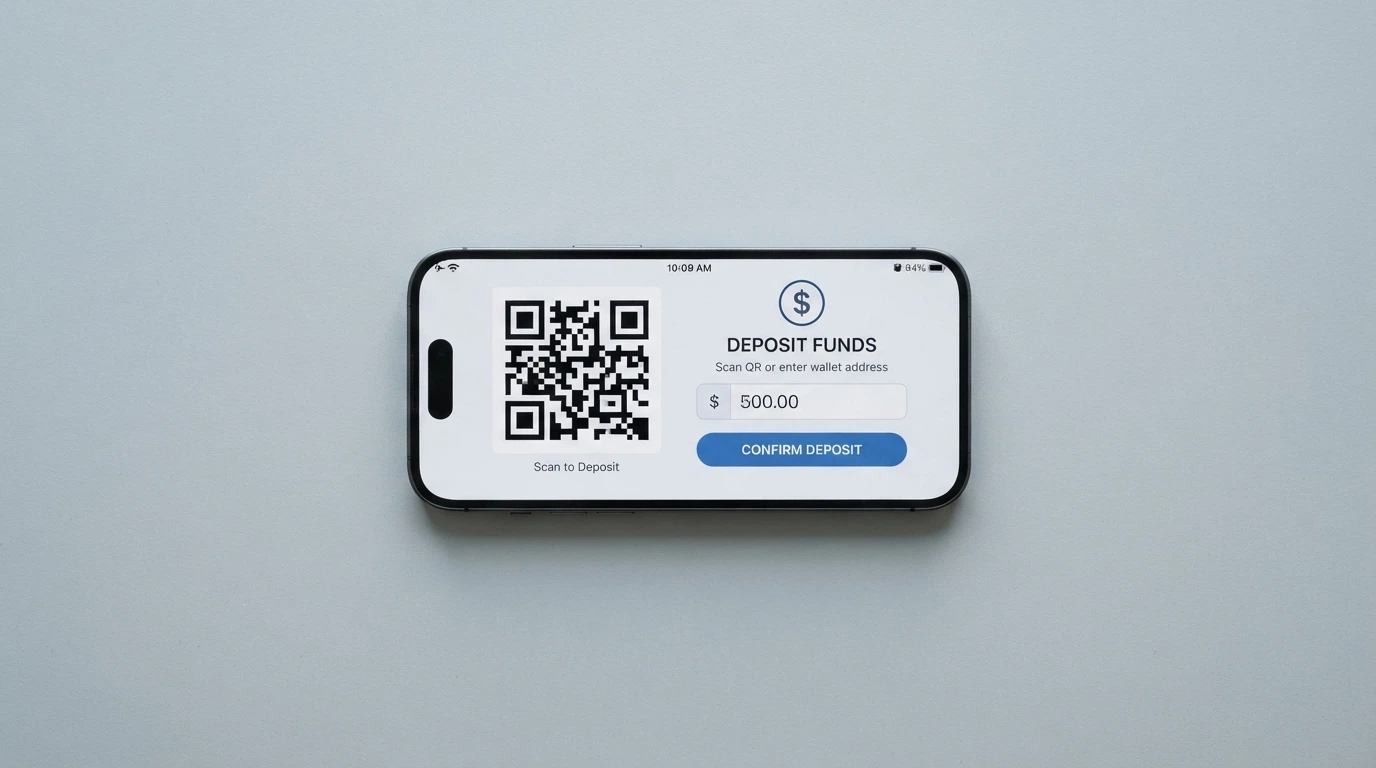
The flow is the same at every operator in this article: a wallet, a deposit address, a QR code on the cashier page, and a balance that appears after on-chain confirmation. What changes is the moment the system asks who you are.
Deposit is friction-free. The casino credits the account after a fixed number of network confirmations — one to three on Bitcoin, often instant on Lightning, seconds on USDT TRC20. The transaction leaves a wallet address on the casino’s ledger and a casino deposit address on the player’s. Neither carries a name.
Withdrawal is where anonymity breaks down. Below the operator’s threshold, the same wallet receives the funds in minutes to hours. Above the threshold, the casino freezes the pending payout and asks for source-of-funds documents — proof of deposit, a bank statement, sometimes a passport. A$2,000–A$5,000 is the band where this fires most often. Treating “anonymous” as a permanent feature is a mistake that usually resolves the moment a player attempts a substantial withdrawal.
Anonymous pokies — the same games, a different register
The catalogue at an anonymous crypto casino is the catalogue every other casino runs: the same NetEnt, Play’n GO and Pragmatic Play titles, the same RTPs, the same volatility ratings. The difference is who holds the record of what was spun. At a licensed Australian wagering provider the play history is subject to state and territory recordkeeping and to the operator’s responsible-gambling monitoring. At an offshore casino it is held by an entity that AUSTRAC does not supervise and that Australian privacy law does not reach.
| Slot | Provider | RTP | Volatility |
|---|---|---|---|
| Starburst | NetEnt | 96.09% | Low |
| Book of Dead | Play’n GO | 96.21% | High |
| Gates of Olympus | Pragmatic Play | 96.50% | High |
| Sweet Bonanza | Pragmatic Play | 96.51% | Medium-High |
| Big Bass Bonanza | Pragmatic Play / Reel Kingdom | 96.71% | Medium |
These are the titles that recur across anonymous-casino lobbies. Their return rates sit in a tight band — 96.09% to 96.71% — that maps to the wider market rather than to anything the offshore route changes. A player choosing among these on anonymity grounds is choosing on the wrong axis; the maths is the maths.
How Crypto Turns a Regular Casino Into a Hands-Off One
The mechanism is plain. A crypto deposit replaces the bank card, the card statement, the identity gate and the chargeback window with a wallet-to-wallet transfer on a public ledger. The casino’s relationship with the player is no longer mediated by a bank that knows the player’s name and can flag the merchant.
Bitcoin is still the flagship — here is why
Bitcoin built the anonymous casino category and remains the deposit method most operators list first. A BTC deposit settles after one to three block confirmations — roughly ten to thirty minutes — and the fee is a fraction of a cent per dollar at typical network load. Lightning Network support at the better-equipped operators eliminates the confirmation wait and drops the fee to cents regardless of the on-chain base fee. The coin’s first-mover position matters here: a casino that supports only one crypto will support Bitcoin.
Beyond Bitcoin — the altcoins that keep you further from the register
CoinCasino supports 21 coins: BTC, ETH, USDT, LTC, DOGE, SOL, XRP, BNB and the rest of the major-cap roster. The reason this matters for an Australian player is the rail, not the brand. USDT TRC20 is the preferred deposit path from Australian bank to offshore casino: AU bank to an Australian exchange such as CoinSpot or Independent Reserve, swap to USDT on the TRC20 network, send to the casino’s deposit address. The transaction is fast (seconds on TRC20), the fee is negligible, and the receiving casino treats it as just another credit. ETH and LTC fill the same role with different fee profiles; DOGE and SOL add a low-fee tier; XRP and BNB appear at selected operators.
The choice of coin does not change the anonymity the player gets from the casino. It changes the speed, the fee and the on-chain footprint of the transaction — three things a serious user picks on, and three things the marketing page picks on for them.
Truly anonymous vs lighter tiers — what the crypto itself can and cannot hide
The blockchain is a public ledger. Every transaction is permanently recorded, permanently visible and permanently linkable to the wallet that signed it. What sits between the wallet and a real name is the gap the player keeps open: a wallet that has never been through a KYC’d exchange, an address that has never been paired with a billing profile, a VPN that has kept the IP separate from the home network.
Privacy coins — Monero above all — push that gap wider by hiding the sender, the receiver and the amount on the ledger itself. Most anonymous casinos do not support Monero, because the operators that accept it trade a different customer profile for the smaller market, and the AML pressure on Monero-supporting exchanges has been heavier than on the majors. A player who genuinely wants on-chain privacy is choosing a coin the casino will not accept; a player who wants casino-level no-KYC is choosing a casino that accepts the most popular coins and that holds the deposit address against the account.
Anonymous crypto casinos and Australia — the specific local picture
An Australian player using crypto at an offshore casino is routing around a payment ban, not a loophole. Since 11 June 2024, credit cards, credit-related products and digital currency are banned as payment for licensed online wagering under section 15C of the Interactive Gambling Act. An operator that takes a USDT deposit from an Australian customer is, by that fact alone, an operator that is not running under the Australian regime. AUSTRAC does not regulate that operator. The Australian exchange the player used to buy the USDT is subject to AUSTRAC’s Travel Rule at A$10,000, but the casino on the other end is not.
The cleanest crypto deposit route an Australian player runs in 2026 is AU bank to an Australian exchange (CoinSpot or Independent Reserve), swap to USDT TRC20, send to the offshore casino, then reverse the chain to cash out. The route is fast (two to six hours for withdrawals, compared to thirty-six to seventy-two hours for PayID at licensed operators) and the on-chain record is the only record the casino keeps. The legal record is the operator’s problem, not the player’s, because the Interactive Gambling Act targets the provider, not the punter.
Instant withdrawals — when the blockchain delivers and when it does not
The promise is minutes; the lived figure depends on the coin, the network load and the operator’s internal queue. CoinCasino states five to ten minute withdrawals and a June 2026 test landed on-chain in seven minutes. Jackbit has been tested at under five minutes. Both numbers reflect what the chain can do when the operator does not hold the funds for manual review.
PayID at a licensed Australian wagering provider takes thirty-six to seventy-two hours. The gap is real, and it is the gap the crypto route exists to close. Lightning Network removes the ten-to-thirty-minute confirmation wait on Bitcoin and reduces fees to cents, which is why operators that support it advertise the figure rather than the on-chain time.
The limit on the speed is the operator’s internal process, not the network. A casino that batches withdrawals once an hour or runs manual fraud review above a threshold can take a fast coin and turn it into a slow payout. The fastest-tested operators are the ones that have automated the queue out of the loop.
10 Anonymous Crypto Casinos Australian Players Can Reach Right Now
Every operator below is offshore. None holds an Australian casino licence because no Australian casino licence exists. The ranking reflects what research found about Australian traffic, not about legal status; the order is the volume of Australian traffic reported in the source data, with each operator given its own assessment of what is known and what is not.

| Operator | Claimed licence | AU market share | Product type |
|---|---|---|---|
| Stake | Curaçao | 1.28% | Casino + sportsbook |
| Rocket Play | Offshore, unconfirmed | 9.40% | Casino |
| Skycrown | Offshore, unconfirmed | 8.55% | Casino |
| Royal Reels | Offshore, unconfirmed | 2.51% | Casino |
| CoinCasino | Anjouan ALSI-142311005-FI2 | — | Casino (Telegram-native) |
| Rainbet | Curaçao | 1.28% | Casino + sportsbook |
| FairGO | Offshore, unconfirmed | 0.80% | Casino |
| Scream Casino | Offshore, unconfirmed | 0.99% | Casino |
| WinSpirit | Offshore, unconfirmed | 1.55% | Casino |
| Bizzo Casino | Offshore, unconfirmed | 0.57% | Casino |
The blanks in this table are the gaps research could not fill this round. The blanks in the operator assessments below are the same gaps, written longer.
Stake — a global crypto casino name, but a modest 1.28% of Australian traffic
Stake is the most recognised brand in crypto gambling worldwide and runs on a Curaçao licence. Among Australian players its 1.28% market share tells a different story from the global one: the brand travels, but Australian traffic is concentrated elsewhere in this set. The casino carries a sportsbook alongside its games, which is unusual in the no-KYC niche and which gives a player who wants both products a single balance to spend across them.
The specifics the page cannot give you are the ones the operator sweep could not confirm this round: bonus terms, wagering multiples, game-provider list and the exact sign-up flow. What is known is the licence, the product mix and the market position. A reader who recognises the global brand will find it here; a reader who needs the bonus maths to make a decision will have to look elsewhere.
Rocket Play — the market-share leader among the casinos on this page
Rocket Play holds 9.4% of Australian traffic in the source data — more than three times the next-largest entry in this set and the highest AU share of any operator on the page. It is a casino-only product, with no sportsbook layered on top. That focus shows in the brand’s positioning among Australian-facing affiliate reviews.
The specifics the page cannot give you are again the ones research could not confirm: welcome bonus, wagering requirement, provider list and the precise withdrawal timeline. The position the data does support is straightforward: this is the operator Australian traffic finds most often among the offshore no-KYC set, and the reasons for that traffic sit in the brand’s Australian-facing marketing rather than in any verifiable bonus structure this article can quote.
Skycrown — 8.55% AU share with terms still unconfirmed
Skycrown takes the second-largest share of Australian traffic in this set at 8.55%. Like Rocket Play it is casino-only. The Australian-facing affiliate pages treat it as a comparable alternative to the larger player above, and the traffic figures suggest Australian players agree.
Bonus terms, wagering multiples, game-provider lists, and withdrawal profiles remain unconfirmed for Skycrown. None of these were confirmed in the research round that fed this article. A reader comparing Skycrown against Rocket Play will find the traffic figures and the product type; the comparison that depends on bonus maths will have to wait for a data refresh.
Royal Reels — a known Australian-facing brand with more gaps than certainties
Royal Reels is a familiar name to Australian pokies players and holds 2.51% of Australian traffic in this set. The brand recognition carries weight in a niche where most operators are interchangeable to a first-time visitor, and the Australian-facing positioning is consistent with that share.
For Royal Reels, we also lack verified bonus terms, wagering requirements, and cashout conditions. Royal Reels is a known brand among Australian players, but the anonymous-casino specifics — the terms that make the no-KYC route worth comparing against the alternatives — were not confirmed this round. A reader who already knows the brand can place it in this set; a reader who needs the terms to choose will need to look further.
CoinCasino — Anjouan-licensed and tested at 7-minute withdrawals
CoinCasino is the operator in the featured set with the most verifiable specifics. The Anjouan Gaming Authority licence number ALSI-142311005-FI2 is on file with Igloo Ventures SRL in Costa Rica; 21 cryptocurrencies are supported including BTC, ETH, USDT, LTC, DOGE, SOL, XRP and BNB; the welcome bonus is 200% up to $30,000 with 60x wagering and a 7-day validity window from a $10 minimum deposit. A June 2026 test cashout landed on-chain in 7 minutes, matching the operator’s stated five-to-ten-minute figure. The interface runs inside Telegram, which is unusual in this niche and which turns the chat app into the lobby.
What CoinCasino offers is the cleanest case study of what the offshore route delivers at its best: fast withdrawals, a real licence document, a wide crypto rail, a transparent bonus structure and a $10 entry point that does not require a large first deposit. The structural limits still apply — Anjouan is not Australia, the ACMA can still block the site, BetStop still does not reach it — but on the terms a player can verify, CoinCasino is the operator that publishes the most and tests the fastest.
Rainbet — Curaçao-licensed and the only operator with published bonus caps
Rainbet runs on a Curaçao licence and is the one operator in the featured set that publishes the limits the others leave in the small print. The welcome package totals 250% across three deposits — 100%, 50%, 100% — up to $2,100 in bonus plus 60 free spins on Sweet Bonanza, with 40x wagering and a 7-day validity per tier from a $30 minimum deposit per tier.
The cap that matters is the one other operators do not state: the maximum bet with an active bonus is 2% of the deposit amount, and games with an RTP above 97.4% are excluded from play while the promotion is active. The exclusion list matters because the highest-RTP slots in any lobby are precisely the games a player with a maths-based approach would otherwise choose. Rainbet’s terms tell a reader exactly what the bonus does and does not cover; the transparency is the point.
FairGO — a familiar name to Australian players with unconfirmed 2026 terms
FairGO holds 0.8% of Australian traffic in this set. The brand is familiar to Australian pokies players, and the share reflects the brand recognition rather than any verifiable bonus edge.
The specifics the page cannot give you are the welcome bonus, the wagering multiple, the game-provider roster and the current validity windows. None were confirmed this round. A reader who already plays at FairGO will find it on this list; a reader who needs the terms to choose will have to confirm them elsewhere.
Scream Casino — under 1% AU share and no confirmed bonus data
Scream Casino holds 0.99% of Australian traffic. The page can confirm the operator exists, that it is offshore and unlicensed in Australia, and that Australian players reach it. Beyond that, the specifics — bonus, wagering, providers, withdrawal timeline — were not confirmed this round.
The honest framing is the one this article gives: the operator is in the set because Australian traffic goes there, not because the data supports a stronger claim. A reader who recognises the name has the context they need; a reader who needs the bonus terms to compare has a gap to fill.
WinSpirit — the only featured operator with a confirmed no-deposit free-spins offer
WinSpirit holds 1.55% of Australian traffic and is the one operator in the featured set with a confirmed no-deposit offer: 30 free spins on Egypt Fire 2 at $0.20 per spin, with 60x wagering and a C$75 maximum cashout. The deposit bonus is up to C$2,000 plus 100 free spins at 40x wagering from a C$30 minimum deposit. 3 Oaks is confirmed as the game provider for the no-deposit slot.
The no-deposit offer is the cleanest in the set: a number on the wagering, a number on the cashout cap, a named game, a named provider. The deposit bonus is competitive with the rest of this set but does not carry the same transparency. A reader who wants the no-deposit route specifically has one option here; a reader who wants the full bonus terms across both offers has a confirmed figure on the smaller one and a confirmed structure on the larger.
Bizzo Casino — the smallest AU share in the set and no confirmed specifics
Bizzo Casino rounds out the featured set at 0.57% of Australian traffic — the smallest share in the list. The page can confirm the operator is offshore, is unlicensed in Australia, and is casino-only.
The specifics the page cannot give you are the bonus terms, the wagering multiple, the game-provider roster and the withdrawal profile. None were confirmed this round. A reader who reaches Bizzo Casino from an affiliate link will find it in this set; a reader who needs the terms to make a comparison has a gap to fill, and this article is the wrong place to fill it.
The Hidden Maths That Make Your 2026 Casino Bonus Harder to Clear Than It Looks
A 200% match and 50 free spins read like an opening offer. They read that way because the wagering multiple is the part the marketing page puts in small type. The expected cost of clearing a CoinCasino welcome bonus, run through the arithmetic a player should run before claiming, lands at a number the page should publish.

Using CoinCasino’s confirmed terms — a 200% welcome bonus up to $30,000 at 60x wagering within 7 days, and a representative slot RTP near 96.4% from the table above — a player who claims the full $30,000 in bonus funds must turn over $1,800,000 in bets before any winnings become withdrawable. The expected loss on that turnover, at the slot’s 96.4% return rate, is roughly $64,800 — meaning the player gives back, on average, that much of the bonus they thought they were receiving. The “free” money and the real cost are the same number viewed from opposite sides of the cashier.
The arithmetic is a statistical estimate over many spins under the stated assumptions, not a guaranteed outcome for any single session. A player can run above or below the figure; the house edge guarantees the average lands where the formula says.
A bonus of $200 at the same 60x wagering requires $12,000 in turnover. The expected loss at the same RTP is $432. The 7-day window — 168 hours — gives a player roughly 14 hours a day to clear the bonus if they play every waking hour. Most players do not, which is why most bonuses expire with a portion of the wagering unmet.
The 60x multiple is not the worst in the niche. Rainbet runs 40x, and the difference between 40x and 60x on a $200 bonus is $4,000 less in required turnover and roughly $146 less in expected loss. The same logic applies in reverse to offers below 40x: lower wagering is a real saving, not a marketing word.
No-deposit bonuses — free money that is never actually free
A no-deposit bonus costs nothing to claim and everything to clear. The structure is a free-spins bundle with a wagering multiple, a cashout cap and, at some operators, a deposit gate that requires a matching deposit before winnings can be withdrawn.
Across the offers the data covers, the wagering requirements run from 30x to 60x: BitStarz 100 no-deposit free spins at 40x with an A$100 maximum cashout; Wild.io 20 free spins at 40x with a $50 cap; 7Bit Casino 75 free spins at 45x with an A$100 cap; Coins.Game 150 free spins at 30x with a $100 cap; WinSpirit 30 free spins at 60x with a C$75 cap. FortuneJack runs 150 free spins at 0x wagering on winnings with no stated cap — the catch is the deposit-equal-to-winnings gate, where a player who wins 0.01 BTC must deposit 0.01 BTC to release the funds.
The shape across these offers is the same: the smaller the wagering, the heavier the gate. A 0x wagering offer with a deposit match requirement is not better than a 40x offer with a clean withdrawal — it is the same constraint written differently. A player who reads the headline number without reading the gate has not read the offer.
Free spins and sign-up packages — what the wagering multiple really costs
The sign-up package is the part of the bonus where the wagering multiple does the most damage to the marketing promise. A 200% match up to $30,000 at 60x means $1,800,000 in required turnover before any withdrawal. A 250% package across three deposits at 40x with a 7-day validity per tier from a $30 minimum deposit per deposit is the cleaner structure Rainbet runs, and the cleaner structure is also the one that publishes the cap on the bonus bet (2% of deposit) and the RTP exclusion (games above 97.4% excluded).
The validity window is the second multiplier. Seven days on a $700 deposit at Rainbet is 168 hours, and the wagering per day to clear the bonus on time is roughly 1,300 times the minimum deposit — heavy even for a player who runs long sessions. Fourteen days, as Vave runs, is twice the runway and halves the daily wagering load. The difference between a 7-day and a 14-day validity on the same bonus is the difference between a weekend and a fortnight.
The Legal Reality: No Anonymous Casino Holds an Australian Licence
Online casino is prohibited in Australia under the Interactive Gambling Act 2001. There is no licence for the product, no regulator that issues one, and every anonymous crypto casino an Australian player reaches is offshore by definition. The “best” framing in this niche is misleading because the comparison the word implies — between licensed and unlicensed — does not exist. The unlicensed operator is the only kind on the market.
What the Interactive Gambling Act actually says — and what it does not
The IGA makes it an offence for an operator to provide online casino, online pokies and in-play sports betting to a person in Australia. The individual player is not prosecuted, and no Australian has been prosecuted for playing at an offshore casino. The offence sits on the provider, not the punter.
“Not illegal for you” is not the same as “safe”. No Australian consumer protection applies; no Australian complaints body has jurisdiction; the ACMA cannot recover money a player loses at an offshore site; BetStop does not bind the operator; the site can be blocked by Australian ISPs at any time, with a balance still sitting on it. Since November 2019 the ACMA has had 1,564 illegal gambling and affiliate websites blocked, and more than 225 illegal services have withdrawn from the Australian market. A player with money on a blocked site has a withdrawal path that runs through the operator’s own terms, not through any Australian recourse.
What the IGA does license is wagering on races and sport placed before the event begins, plus lotteries and keno. The Northern Territory Racing and Wagering Commission, administered through Licensing NT, is the de facto national licensor for online bookmakers; major operators including Sportsbet, bet365 and Ladbrokes hold NT licences running up to 20 years. The product the page covers — online casino — sits outside that licence framework because the Act excludes it.
Offshore licences — Curaçao, Anjouan and what they actually give the player
A Curaçao or Anjouan licence is a real document from a real regulator. CoinCasino holds Anjouan Gaming Authority licence ALSI-142311005-FI2, issued to Igloo Ventures SRL in Costa Rica. Rainbet holds a Curaçao licence. Stake holds a Curaçao licence. The licences cover operator conduct at the jurisdiction that issued them: anti-money-laundering procedures, dispute resolution at that jurisdiction, segregated player funds to the standard that jurisdiction requires.
What the licences do not cover is an Australian player. AUSTRAC does not regulate these operators. Australian Consumer Law does not apply. The state and territory complaints bodies that licensed Australian wagering providers answer to have no jurisdiction over an Anjouan or Curaçao licensee. BetStop does not bind them. The “licensed” in the operator’s footer is a real status in a real jurisdiction; the status it confers in Australia is none.
The 2026 reform and what changes on 1 January 2027
The Interactive Gambling Amendment (Gambling Reform) Bill 2026 passed Parliament on 19 August 2026. Its measures commence on 1 January 2027. The reform tightens advertising — three ads per hour between 6am and 8.30pm, a live-sport blackout from 15 minutes before to 5 minutes after, a broadcast odds ban — and bars athletes, celebrities and influencers from promoting wagering products. It strengthens BetStop and extends inducement prohibitions for 14 days after sign-up and for 3 months after a BetStop deregistration.
The change that reaches the offshore route directly is the express authority the reform gives banks and payment providers to block transactions to illegal gambling operators. From 1 January 2027, an Australian bank can decline or delay a transfer the bank identifies as going to an offshore casino. The mechanism is not automatic — it requires the bank to act on the authority the reform grants — but the authority itself removes a barrier that has kept Australian banks from intervening in player-to-offshore transfers.
The reform does not make offshore casinos unreachable. It makes the route through Australian banks harder, and it makes the marketing that draws players to the route harder to run on Australian airwaves. The offshore operator still exists; the legal status still reads as it reads today. The reform changes what surrounds the route, not the route itself.
Responsible Gambling Tools That Disappear the Moment You Go Offshore
Australia has built a recognised responsible-gambling infrastructure. BetStop, the National Gambling Helpline, Gambling Help Online, state and territory deposit-limit frameworks — each of these works inside the licensed wagering market. None of it reaches an offshore casino.
BetStop and self-exclusion — why 67,000 Australians are protected and you are not
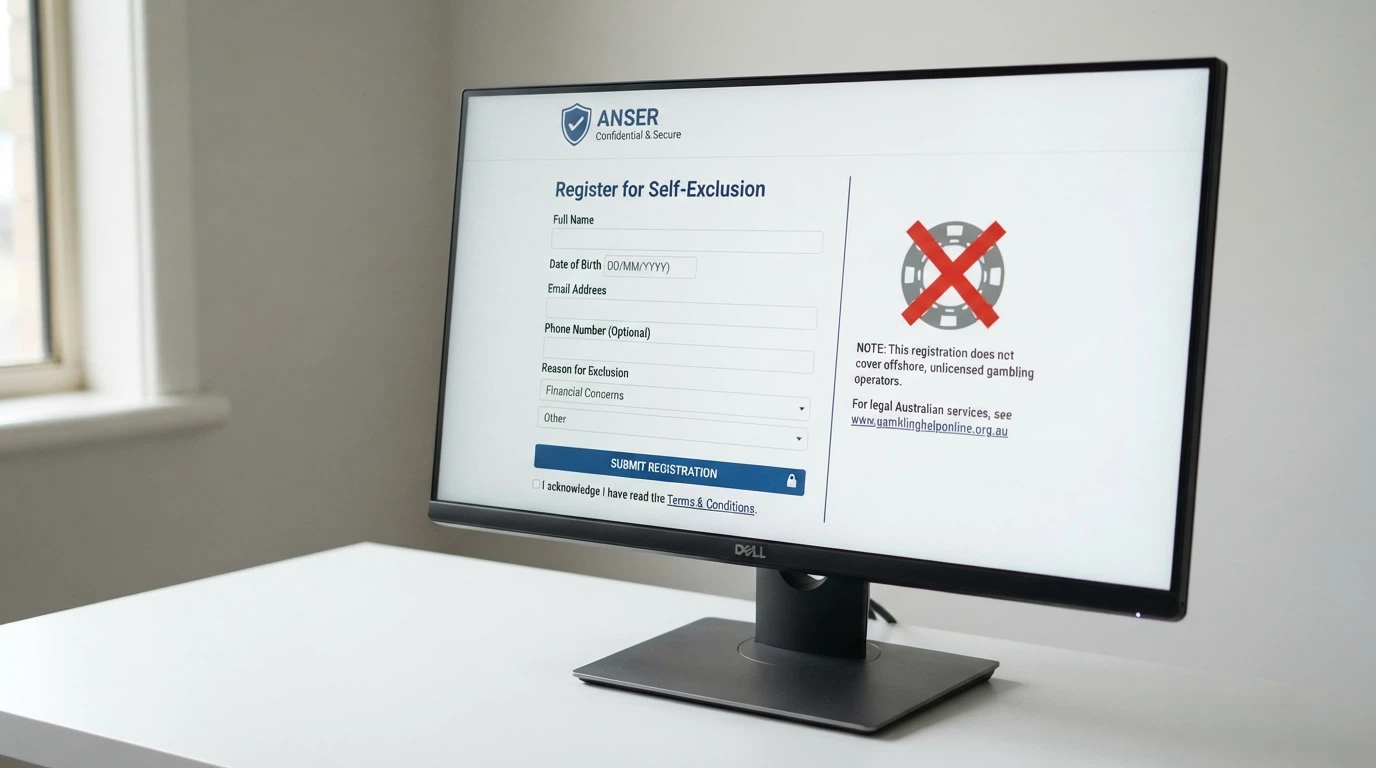
BetStop launched on 21 August 2023. A single registration excludes a person from every Australian-licensed wagering provider — approximately 150 of them — in one step. As of 31 July 2026 the register recorded 67,480 registrations, with 41,290 exclusions still active. Seventy-eight per cent of registrants were under 40; thirty-eight per cent chose lifetime exclusion. Earlier data from 31 March 2026 put the figure at 59,830 registrations and 37,247 active exclusions — the register is growing, and the proportion of active to total exclusions suggests most registrants remain in the programme.
The gap is structural. BetStop binds Australian-licensed wagering services. An offshore casino is not connected to the register and will keep accepting a self-excluded person’s deposits. The Australian who self-excludes through BetStop has closed the door on the licensed bookmakers and left it open on every casino on this page. That is the single most concrete harm of the offshore route, and it is the one most players do not learn until they have already registered.
Deposit limits, loss limits and the help that is still there
Licensed Australian wagering operators offer customer-set deposit limits and activity statements under state and territory conditions that differ between jurisdictions. The limits are operator-enforced; the statements go to the player. The offshore casino may offer neither, may offer a deposit limit that does not connect to any external monitoring, and may close the account rather than enforce a limit the player sets against themselves.
The help that works regardless of where a player plays is the National Gambling Helpline on 1800 858 858, free, confidential and staffed 24 hours a day, seven days a week. Gambling Help Online runs 24/7 chat and email counselling at gamblinghelponline.org.au. Both services are run outside the casino-industry funding structure and answer to the player, not to the operator.
About 2.1% of Australian adults — roughly 430,000 people — experience problem gambling. The Australian Institute of Health and Welfare put high-risk gambling at 1.8% in 2022. These are the figures that sit behind the responsible-gambling infrastructure; they are also the figures an offshore casino does not see, because the casino does not report to any Australian prevalence survey and the player data the casino holds does not feed any Australian dataset. The minimum gambling age is 18 for all commercial gambling in Australia, and that age applies whether the operator is licensed or not — though the enforcement of it is the operator’s, not the regulator’s, on the offshore side.
How We Evaluated These Anonymous Casinos
The ranking reflects what research found through analysis of competing websites, the ACMA’s blocking register, the public Curaçao eGaming and Anjouan Gaming Authority licence registers, and a June 2026 withdrawal test at CoinCasino. The set is drawn from the priority list of operators that Australian players reach, in the order that list places them.

The criteria the ranking rests on, in order of weight, are: licence transparency (a real document from a real regulator, verifiable against the public register); confirmed terms completeness (bonus, wagering, validity, max bet, RTP exclusion, where the operator publishes them); and withdrawal reliability (a tested on-chain time, not a stated one). Where research could not confirm a specification, the article does not invent one — the operator write-up carries the gap forward and the reader sees the gap rather than a fabricated number.
The structural framing the page runs on is two-fold. Anonymous crypto casinos are, by definition, offshore — there is no Australian licence for the product, no AUSTRAC supervision and no Australian Consumer Law protection. The structural advantage of the crypto route is end-to-end speed: deposit in minutes, withdraw in minutes, no PayID wait, no bank-statement trail. The structural disadvantage is regulatory thinness: no BetStop coverage, no state-licensed dispute pathway, no consumer-protection framework the casino is bound by.
What to Actually Do About Anonymous Crypto Casinos as an Australian Player
The page has laid out the landscape. Here is what an informed decision looks like, without telling a reader which button to press.
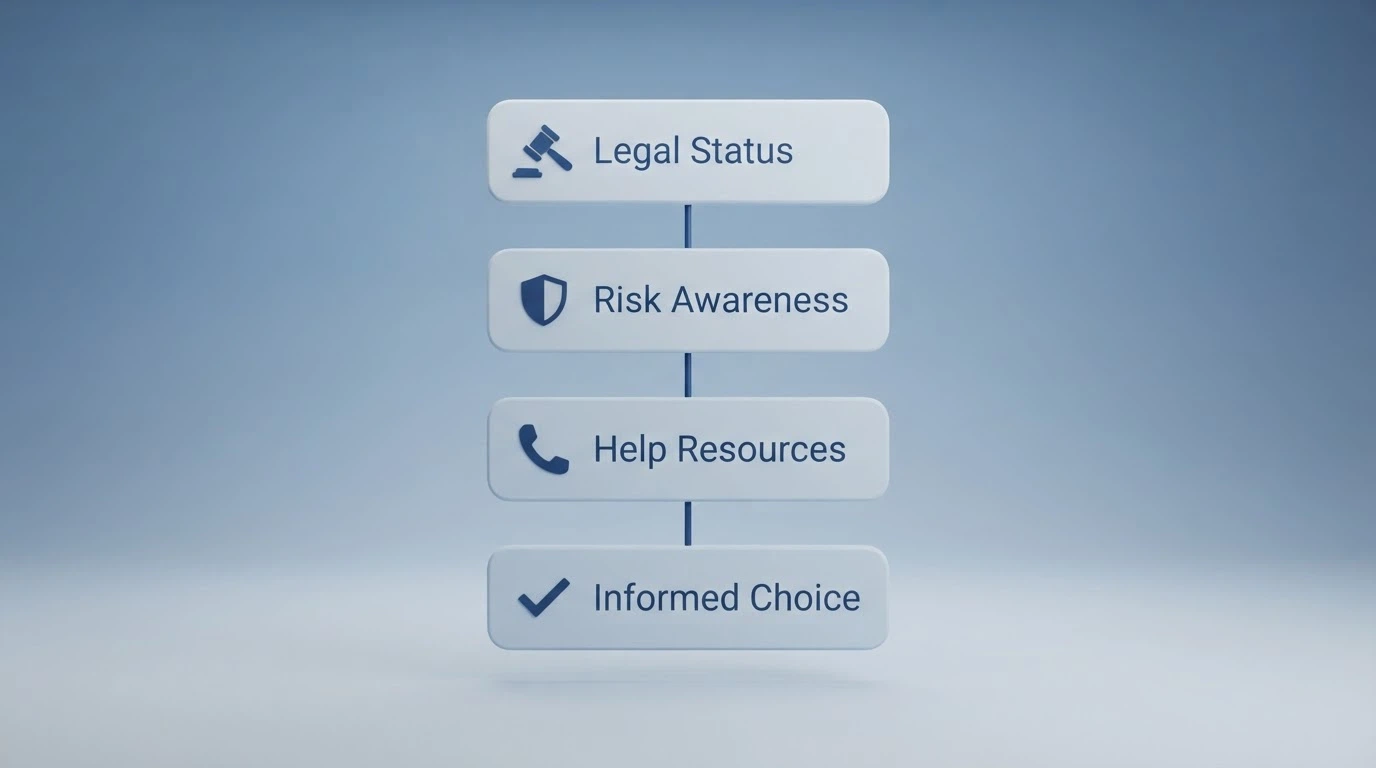
The legal status recaps in three lines: online casino is prohibited in Australia, the player is not prosecuted, but no Australian protections apply. BetStop is the most concrete harm of the offshore route — a self-excluded Australian can still deposit at every casino on this page. The help infrastructure that works regardless of where a player plays is the National Gambling Helpline on 1800 858 858 and Gambling Help Online at gamblinghelponline.org.au.
The change on 1 January 2027 is the bank blocking authority. From that date, Australian banks and payment providers gain express authority to block transactions to illegal gambling operators. A player using an Australian bank to fund an offshore casino deposit may find the transfer declined or delayed. The authority is not automatic; it is a power the reform grants, and the bank decides when to use it. Crypto rails that bypass Australian banks are the path the reform does not reach as cleanly — though the exchange the player uses to acquire the crypto is Australian and AUSTRAC-regulated.
The informed-choice framework is what this article equips a reader to run. Knowing exactly which protections apply (almost none, on the offshore side) and which do not (the licensed wagering market’s full responsible-gambling framework) before depositing is the difference between a decision made on the marketing and a decision made on the data. The decision sits with the player. The data behind it sits on this page.
Frequently Asked Questions
Can Australian players deposit with Bitcoin at anonymous casinos without being blocked?
Australian banks cannot block a Bitcoin transaction the way they can block a card payment, and licensed Australian wagering providers no longer accept crypto at all under the 11 June 2024 ban. An offshore casino will accept a BTC deposit from an Australian wallet without asking which bank funded the wallet. From 1 January 2027, Australian banks gain express authority to block transactions to illegal gambling operators, but a crypto transfer routed through an Australian exchange is the bank’s nearest intervention point — the offshore transfer itself sits outside the bank’s rails.
What happens if I win big at an anonymous casino — will they ask for ID before paying out?
Yes, in most cases. Across Curaçao- and Anjouan-licensed sites, AML policies set a review trigger between EUR 2,000 and EUR 10,000 in cumulative withdrawals or deposits; across Australian-facing Bitcoin casinos the same trigger fires around A$2,500 to A$5,000. The casino freezes the pending payout and asks for source-of-funds documentation — proof of deposit, a bank statement, sometimes a passport. The “no KYC” promise holds until the win is large enough to make paperwork cheaper than risk.
What is the safest cryptocurrency to use at an anonymous casino in Australia?
USDT TRC20 is the rail most Australian-facing pages recommend, because TRC20 settles in seconds, the fee is negligible and the on-chain record is clean for an Australian exchange’s compliance team to process. Bitcoin on Lightning is the fastest rail where the casino supports it. The “safest” coin is the one the casino accepts, the one the player’s exchange pairs cheaply, and the one the player can move without attracting exchange-side review — three properties that point at USDT TRC20 for most Australian routes.
How fast are withdrawals at anonymous crypto casinos compared to PayID casinos?
Crypto withdrawals at the better-equipped operators clear in minutes — CoinCasino tested at 7 minutes, Jackbit at under 5 minutes. PayID at licensed Australian wagering providers takes 36 to 72 hours. The gap is real and it is the structural advantage the crypto route runs on. The ceiling on crypto speed is the operator’s internal queue, not the network; a casino that batches withdrawals hourly can turn a fast coin into a slow payout.
Can the ACMA block my access to an anonymous casino while I have money in my account?
Yes. Since November 2019 the ACMA has had 1,564 illegal gambling and affiliate websites blocked by Australian ISPs, and the pace has not slowed. A balance on a blocked site is recoverable only through the operator’s own terms — the ACMA cannot recover the funds, Australian Consumer Law does not apply, and the offshore licence the operator holds does not give an Australian player any Australian recourse. A block can land at any time; the withdrawal path that exists after the block is the one the operator chose to build, not the one the regulator chose.
The three tiers of casino anonymity — which one are you actually getting?
Pseudonymous is the lowest tier and the one most “anonymous” casinos actually run. The casino takes an email address and a username, accepts crypto deposits against that handle, and never asks for a driver licence at sign-up. But it holds the email, the deposit addresses, the IP history and the playing record. An investigator with a subpoena — or a regulator with a request — can stitch that together. Pseudonymous feels like anonymity from the player’s side; from the operator’s side, it is just a thin file.
No-KYC is the next tier and the one most pages in this niche claim. The operator’s policy, written into its terms, is to never request identity documents regardless of withdrawal amount. The marketing copy treats it as a permanent commitment; in practice it is a policy the operator can revoke when a regulator, a payment partner or a large withdrawal makes the risk uncomfortable.
No-verification is the term that wobbles between definitions. Some operators use it to mean “no phone and no address check at sign-up”; others use it to mean “no passport until you withdraw above a threshold”. The wobble is the point: the word lets a marketing page claim anonymity the operator will not actually deliver above a number.
The threshold that flips the tier sits in the operator’s AML policy. Across Curaçao- and Anjouan-licensed sites the figure sits at EUR 2,000–10,000 in cumulative withdrawals or deposits, with the exact number usually buried in the terms. Across Australian-facing Bitcoin casinos the same trigger typically fires at A$2,500–A$5,000. The promise of no documents is, for most players, a promise that holds until the win gets large enough to make paperwork cheaper than risk.
Mobile apps and new-site formats — is the experience any different?
The interface changes; the anonymity promise does not. Most anonymous casinos still run in a mobile browser, with a wallet connection and a cashier page scaled to a phone screen. CoinCasino is the one operator in the featured set that runs natively inside Telegram, turning the chat app into the lobby and the cashier into a bot. That is a product decision, not a legal one: the Anjouan licence, the KYC threshold, the BetStop gap and the absence of Australian Consumer Law apply equally to the browser-based and the Telegram-native versions.
New-site formats appearing in 2026 lean on the same primitives — wallet-connect, no email, instant withdrawal — and the same structural limits. The shape of the front end is the easiest part to change. The shape of the legal position behind it is the part that does not.
Prepared by the POLi Casinos AU editorial staff.