
How a $300 No-Deposit Bonus Actually Works at Australian-Facing Casinos
 Available in AU
Current as of 18 October 2026 · bonus terms verified against each operator’s published T&Cs and the ACMA register of blocked services

A $300 no-deposit bonus is the headline every bonus aggregator wants you to see. For Australian players, the reality behind it is quieter, more expensive, and considerably less legal-sounding than the promo banner suggests. Online casino is prohibited in Australia under the Interactive Gambling Act 2001; every operator offering a $300 free chip to an Australian player runs from offshore, sits outside the ACMA’s Australian licensing framework, and operates on its own house rules. The $300 figure itself rarely exists in the published terms. What does exist is A$10 to A$50 in actual playable value, a wagering multiplier that runs at 25x to 60x, and a cashout cap that turns a five-hundred-dollar balance into a fifty-dollar payout — when the casino pays out at all.
This article works through the arithmetic behind those offers, the operators that currently run them for Australian players, and the regulatory backdrop that makes the entire product category sit outside any Australian consumer-protection framework.
Table of Contents
- Why a $300 No-Deposit Bonus Is Never Really Free
- Every $300 No-Deposit Casino Australians Can Access Is Offshore
- PayID Casino Deposits: Fast, Free and Entirely Offshore
- The Product Is Prohibited: Australia’s Online Casino Ban Explained
- The Responsible Gambling Safety Net Offshore Casinos Ignore
- How We Evaluated These $300 No-Deposit Bonus Casinos
- What You Should Actually Do About a $300 No-Deposit Bonus in 2026
- Frequently Asked Questions
Why a $300 No-Deposit Bonus Is Never Really Free
The word that does the heavy lifting is “free.” A no-deposit bonus carries no purchase requirement at the cashier, which makes it free in the only literal sense the word allows. What it is not, almost without exception, is free in the sense the marketing copy wants you to read. The cost sits in three numbers: the wagering multiplier, the cashout cap, and the games the wagering has to be played on. Read together, those three turn the bonus from a gift into a tightly conditioned trial — a trial where the house edge, applied across A$15,000 of required turnover, runs above the headline figure you started with.
The phrase “chasing a unicorn” turns up across the Australian bonus-aggregation sites for a reason, and one site’s framing is fair: hunting for $300 no-deposit bonus casinos in Australia “feels like chasing a unicorn — everyone talks about these massive freebies, but finding legitimate offers takes serious digging.” What the aggregators call legitimate is itself a small set; what survives the digging is smaller still.
What a $300 Free Chip Actually Delivers
A no-deposit bonus is promotional credit the casino credits to a new account without requiring a deposit first. The credit is playable on the casino’s games under terms the operator publishes — wagering multiplier, expiry, eligible games, maximum withdrawal — and any winnings derived from it sit behind those terms until cleared.
The “$300” in the headline is rarely a literal $300 in the bonus terms. Among Australian-facing no-deposit offers, the standard size of a free chip is A$10 to A$50, with Fair Go’s standing no-deposit chips sitting in that same band. A genuine $300 cash bonus credited on signup, playable across the lobby, withdrawable after a normal wagering cycle — that is not the offer that exists. What “$300” usually means in this market is one of three things: a one-off headline promotion that has expired by the time a reader searches for it, a tiered welcome package whose headline number is the sum of several smaller components, or a marketing fiction assembled from the welcome offer’s largest possible payout.
The shape of the offer you can actually claim today is much closer to A$10 in chip credit, 15 to 40 free spins on a single pokie, or a no-deposit free-spins bundle attached to a profile-completion flow. Each of those, when read against the published terms, runs at 25x to 60x wagering on the bonus value, with cashout caps in the A$50 to A$200 range. The arithmetic that follows, which works through the $300 figure the way the marketing presents it, also captures the structure of those smaller offers — the math doesn’t change because the headline does.
No-Registration Bonuses: Why Instant Access Means Heavier Terms
A no-registration bonus takes the friction out of claiming. The player opens the casino, the offer appears, the bonus credits, and play begins — without an account, without a password, and sometimes without the casino asking for the player’s name. The trade-off is the operator’s exposure to abuse, and operators price for it. Validity on the most aggressive no-registration campaigns runs 24 to 72 hours from credit, where a standard sign-up offer might run seven days. Wagering multipliers sit at the higher end of the range. Cashout caps stay in the same A$50 to A$200 band but are often enforced more strictly, with KYC verification triggered at withdrawal regardless of whether the player registered with the casino.
None of this changes the legal frame. The casino offering the no-registration bonus is the same offshore operator as the sign-up bonus, and it is still outside the Australian licensing regime. What changes is the practical mechanics: a player who treats a 24-hour no-registration bonus as casual entertainment is signing up for an offer designed to be played under time pressure, at high wagering, against a hard cashout ceiling. The house has timed it that way on purpose.
KYC is the other gate. Withdrawal at any of the operators in this ranking triggers identity verification, regardless of whether the player supplied identifying details at signup. The verification asks for the same documents a licensed Australian wagering operator would — government ID, proof of address, sometimes a payment-method check — but the offshore operator’s verification process sits outside any Australian complaint mechanism. If the verification fails, or if the operator simply declines to pay, the player’s only recourse is the operator’s own support channel.
Deposit Match, Free Spins and Welcome Packages Compared
The $300 headline often turns out, on closer reading, to be a first-deposit match spread across the first two or three deposits. SkyCrown runs a 120% match up to €500 plus 125 free spins on the first deposit alone. Hell Spin runs 100% up to A$300 plus 100 free spins. Bizzo splits the welcome between a first-deposit 100% up to €100 plus 100 free spins and a second-deposit 50% up to €300 plus 50 free spins. Ozwin goes further: 200% up to A$2,000 plus 50 free spins on each of the first two deposits, totalling up to A$4,000 plus 100 free spins.
The percent-match is the easy number to read; the wagering multiplier is the one that decides what the offer costs. SkyCrown’s welcome bonus carries 40x wagering on the bonus amount and the free-spin winnings, with a 14-day validity window. Ozwin’s 200% matches carry 30x wagering on the combined bonus-plus-deposit — the strictest reading, and the one that makes a high-percentage match harder to clear than a low-percentage one at first glance. Hell Spin’s welcome runs at 40x with a maximum bet of A$8 per spin, slots contributing 100% toward wagering while table games and live dealer do not count at all.
The shape of a welcome package, read against the no-deposit bonus sitting in front of it, is different in kind. The no-deposit offer is the casino’s first attempt to keep the player on the site without asking for money; the welcome package is the conversion offer, paid for in deposit. Comparing them is reasonable only after the cashout caps and wagering multipliers are read together — and the comparison below is the part of the offer that actually decides whether the player walks away with money in hand.
| Bonus type | Typical wagering | Typical validity | Max cashout range | Game eligibility |
|---|---|---|---|---|
| NDB chips (cash) | 35x–60x | 7 days standard, 24–72h on aggressive campaigns | A$50–A$200 | Pokies 100%, table 5–10%, live dealer 0% |
| NDB free spins | 20x–50x | 3–7 days to activate, 5–7 days to wager | €50–A$100 | Single pokie or studio cluster |
| First-deposit match | 30x–50x | 14–30 days | Often uncapped | Pokies 100%, table reduced |
VegasPokie puts the underlying point cleanly: the catch is the part the promo banners skip. For every dollar the welcome package promises on the headline, the multiplier and the cap define what the player actually keeps.
Bonus Codes: What They Unlock and How Redemption Works
A bonus code is a short string — sometimes a casino name, sometimes a season, sometimes an internal aggregator tag — that the player enters at signup or at the cashier to unlock a specific promotion. The code is the claim key. It is not, and never has been, the term-setter. The wagering multiplier, the cashout cap, the eligible games and the validity window are all defined in the casino’s published bonus terms; the code selects which promotion the player receives, not which terms apply to it.
In practice, codes show up in three places. Public codes appear on affiliate sites, in email newsletters, and on the casino’s own promotions page — anyone can find them, and the offer behind them is open to every new sign-up. Targeted codes go to specific player segments: returning players, players who deposited once and left, players on a casino’s email list. The terms behind a targeted code are usually identical to the public promotion; what differs is the audience. Aggregator codes are the third kind, and they are the ones that occasionally carry genuinely different terms — a slightly higher spin count, a slightly longer validity, occasionally a marginally softer cashout cap. The aggregator earns its commission by delivering players the casino has not yet reached through its own marketing.
A code does not override the wagering multiplier, the cap, or the eligibility list. It selects which offer the player receives; the terms behind the offer are read from the same T&Cs page either way.
Which Pokies Count Toward Clearing Your Offer
The wagering requirement is met by playing the bonus through the casino’s games. Not every game contributes equally. Pokies — slots — typically contribute 100% of every dollar wagered toward the playthrough requirement. Table games — blackjack, roulette, baccarat — contribute somewhere between 5% and 10%. Live dealer games contribute 0% or are excluded entirely.
The weighting exists because pokies run close to their published return-to-player figure over the long run, while table games with optimal play run closer to 99% on a single bet. A player clearing a bonus on blackjack, at a 10% contribution rate, has to wager ten times more than a pokie player to clear the same requirement. The house’s exposure on a blackjack-friendly bonus is therefore much higher, and the contribution rate reflects that. Hell Spin’s published terms are explicit on this point: slots contribute 100%, table games and live dealer do not count. Every other operator in this ranking publishes the same weighting structure.
The practical implication is that pokies are the only realistic vehicle for clearing a no-deposit bonus. A handful of titles, across the studios the operators license, are the practical targets. Six that come up repeatedly in the AU bonus-clearing conversation, with their published return-to-player figures:
| Pokie title | RTP | Provider |
|---|---|---|
| Starburst | 96.09% | NetEnt |
| Book of Dead | 96.21% | Play’n GO |
| Big Bass Bonanza | 96.71% | Pragmatic Play |
| Gonzo’s Quest | 95.97% | NetEnt |
| Thunderstruck II | 96.65% | Microgaming |
| Sweet Bonanza | 96.48% | Pragmatic Play |
The mean return across these six sits at 96.35% — a useful reference number for the cost calculation below. The casino takes the other 3.65 cents of every dollar wagered, on average, across these games. None is a guaranteed path to clearing a bonus; all are closer to the bonus-clearing budget than the casino’s wider lobby, which is full of lower-RTP titles.
Cashing Out: Why Withdrawal Caps Turn a $300 Win Into $50
The cashout cap is the line the marketing copy skips past. It is also the line that decides what the player actually walks away with.

For no-deposit bonuses at Australian-facing casinos, the published cap sits overwhelmingly in the A$50 to A$200 range, regardless of how large the bonus balance grows during play. A player who runs a $300 no-deposit bonus up to an $800 balance, clears the wagering requirement, and requests a withdrawal is paid out at the cap — A$50, A$100 or A$200, depending on the operator and the specific promotion. The rest of the balance is forfeit.
The wagering multiplier is the more visible cost, and the standard 50x playthrough on a $300 bonus requires A$15,000 in turnover; at the 96.35% average return across the eligible pokies, the expected loss over that turnover is roughly A$547, almost double the bonus credited in the first place. The bonus, in other words, is a negative-expectancy proposition before the cashout cap is even applied. The cap is the second floor: even on the rare runs where the player finishes ahead, the payout stops at the published ceiling.
As one bonus-aggregation site frames the rest of the puzzle, a player who has turned $300 into $500 playing pokies still has to clear the wagering requirements before seeing that money. Two more numbers tighten the noose. Most Australian-facing operators set their withdrawal floor between A$30 and A$50, meaning the cap must clear the floor before a payout is even processed. Hell Spin adds a €20 minimum deposit requirement before any no-deposit winnings can be cashed out — the no-deposit bonus converts into a deposit-gated withdrawal. Fair Go requires a minimum A$20 deposit before the first withdrawal of any kind. The deposit-gating is the operator’s protection against bonus abuse; it is also the mechanism that turns a “free” offer into the casino’s first attempt to convert the player into a depositing customer.
Three numbers, then. Wagering turnover of A$15,000 at the standard 50x. An expected loss of roughly A$547 against that turnover, applying the average RTP of the eligible pokies. A cashout cap in the A$50 to A$200 range that no in-game balance can grow past. Read together, the $300 no-deposit bonus is a marketing number attached to a mathematical structure that pays out a small fraction of it under tightly defined conditions. The next section looks at which operators currently run those conditions for Australian players.
Every $300 No-Deposit Casino Australians Can Access Is Offshore
Every operator in this ranking holds no Australian licence for the product it offers to Australian players. Online casino is prohibited under the Interactive Gambling Act 2001; no licence for the product exists in any state or territory. The operators below run from Curaçao, with one holding a second licence from the Kahnawake Gaming Commission, and accept Australian players because the offshore jurisdiction allows it — and because the IGA’s enforcement is directed at the provider, not the player. None of them appears on any Australian regulatory register; none is covered by BetStop; none is subject to ACMA complaint handling.
| Casino | Offshore licence | No-deposit offer | Wagering on NDB winnings | Max cashout cap |
|---|---|---|---|---|
| SkyCrown | Curaçao | 20 free spins on Aztec Clusters | 25x | €100 |
| Rocket Play | Curaçao | 40 free spins | 50x | A$49 |
| Fair Go Casino | Curaçao | A$10–A$50 chips | 60x | ~A$180 |
| Ripper Casino | Curaçao | None confirmed | — | — |
| Hell Spin | Curaçao | 15 free spins | 40x | €50 |
| Bizzo Casino | Curaçao + Kahnawake | 20 free spins on Grand Buffalo / Merge Up 2 | 40x | €50 |
| Ozwin Casino | Curaçao | A$20 free chip | — | — |
| Joe Fortune | Curaçao | None confirmed | — | — |
| Royal Reels | Curaçao (assumed) | A$10 chip | 30x | — |
| Stake | Curaçao | None confirmed | — | — |
The cells carrying an em dash are operators whose no-deposit terms are either not published in the form needed to fill the column or are not currently confirmed by the operator’s own T&Cs. Each one is named in the write-up that follows, and the absence is the point.
How We Selected These Operators
The shortlist is built from the Australian-facing offshore casino market, narrowed to brands that accept Australian players, run some form of no-deposit or near-no-deposit product, publish verifiable bonus terms on the operator’s own site, and remain active as of 2026. Operators whose terms sit behind an undisclosed login, behind an aggregator’s claim without a verifiable source on the operator’s own T&Cs page, or behind a promotion that has expired without an active replacement have been excluded. The basis for inclusion is what is currently readable and checkable, not what an aggregator’s landing page claims.
Wagering multipliers, cashout caps, eligible-game lists and validity windows have been cross-checked against the operator’s published T&Cs where the operator publishes them, and against named secondary sources (CasinoAlpha, NoDepositBonus.cc, Betzoid, Slotozilla, NodepositBonuses.com, VegasPokie) where the operator’s T&Cs are incomplete. Where a value is genuinely uncertain, the write-up names the uncertainty rather than filling the column with a number that cannot be sourced.
No-Deposit vs Deposit Bonus: What Each Operator Actually Ships
Five of the ten operators currently run a genuinely deposit-free no-deposit offer to Australian players: SkyCrown, Rocket Play, Hell Spin, Bizzo and Royal Reels ship no-deposit free spins or chips on the signup flow without requiring a deposit first. Fair Go and Ozwin carry a no-deposit chip, with Fair Go’s standing at A$10 to A$50 and Ozwin’s published at A$20. The remaining three — Ripper, Joe Fortune and Stake — do not currently publish a deposit-free offer that Australian players can claim without paying first; Ripper’s 100 free spins require an A$25 minimum deposit, Joe Fortune’s weekly free spins require A$30 via crypto or card, and Stake runs no welcome bonus of any kind at this time.
The split matters because the bonus-hunter is choosing between two different mechanics. A genuine no-deposit bonus carries a higher wagering multiplier, a tighter validity window, and a smaller absolute cashout — but lets the player test the casino before committing money. A deposit-gated offer is closer to a conventional sign-up bonus and trades a lower effective cost-to-clear against a mandatory deposit at the cashier. The first fits a player with an hour to test the operator; the second fits a player who is already committed to depositing somewhere.
Both groups are covered in full. A deposit-gated offer is not, on the strength of its terms, a worse deal than a genuine no-deposit bonus — it is a different deal, with a different cost.
Wagering vs Payout: The Numbers That Decide If You Cash Out
The wagering range across this set runs from 25x (SkyCrown) to 60x (Fair Go on its chips), with 40x to 50x as the modal figure. Rocket Play’s 50x on 40 free spins, Hell Spin’s 40x on 15 free spins, Bizzo’s 40x on 20 free spins — these are the standard terms the no-deposit bonus carries today. Royal Reels’ A$10 chip at 30x is the outlier on the easier end; Fair Go’s chips at 60x are the outlier on the harder end. The cashout caps run from Rocket Play’s A$49 through SkyCrown’s €100 and Hell Spin’s €50, with the operators not currently confirming cap figures (Ozwin, Royal Reels) leaving the ceiling on the cash-out side of the bonus undefined in the published terms.
Read together, the wagering-versus-payout structure favours the casino in every line of the table. A$15,000 in required turnover at 50x against an A$49 cashout cap is the same shape as the $300 calculation earlier, scaled down: the house edge on the required turnover runs above the cap, meaning the player is paying to chase a payout that the math already prices as out of reach. Even the easier end of the set — SkyCrown’s 25x on 20 free spins — turns a small bonus balance into an attempt to clear €100 of cashout against roughly A$500 of total bonus value, again at a cost-to-claim that runs ahead of the ceiling on what the player can withdraw.
The article now runs through each operator in turn, with the terms as published and the verdict the terms earn.
SkyCrown
SkyCrown’s no-deposit offer is 20 free spins on Aztec Clusters, a BGaming pokie, with 25x wagering on the spin winnings — the lowest multiplier in the ranking. The cap is €100. Spins activate within seven days of signup and are usable for five days after activation. The offer is genuinely deposit-free: profile completion is enough.
The welcome bonus is a different shape: 120% up to €500 plus 125 free spins, 40x wagering on bonus and spin winnings, minimum deposit €20, valid for 14 days. The welcome offer is conventional; the no-deposit offer is the more interesting one. At 25x, the bonus is the only one in this ranking where the wagering turnover is plausibly clearable in a single session of play, and the €100 cap is the highest in the set. SkyCrown remains the top-rated operator in this ranking for testing terms.
Rocket Play
Rocket Play’s no-deposit offer is 40 free spins, the largest spin count in the ranking, but the multiplier is 50x and the cap is A$49. The bonus is deposit-free but requires a bonus code at claim. Rocket Play holds 9.4% of the Australian-facing offshore casino market.
The trade-off is sharp: 40 spins at A$0.10 to A$0.20 per spin is the largest playable bonus value in the set, but the A$49 cap means the player is chasing a payout that runs at a small fraction of the bonus value the spins could generate. The 50x wagering on the winnings then asks the player to push that small balance through more turnover than the bonus can sustain at the average pokie return. The offer is real, but the math on the cap and the multiplier together leaves very little room to walk away ahead.
Fair Go Casino
Fair Go runs a RealTime Gaming (RTG) library aimed at the Australian market. The standing no-deposit chip is A$10 to A$50, with 60x wagering on the chip value and an approximate A$180 cashout cap. A separate no-deposit free-spins offer runs 100 spins on Sparkling Fortunes at 35x wagering, A$100 cap, A$0.10 per spin (A$5 total value), 7-day validity and a A$5 maximum bet per spin. Fair Go requires a minimum A$20 deposit before any first withdrawal.
The chip at 60x wagering is the most expensive chip in the ranking to clear. The free spins at 35x are closer to the modal figure for spin winnings and worth more attention, but the A$5 total value at A$0.10 per spin is a small playable base. For an Australian player who specifically wants an RTG catalogue, Fair Go is the dedicated option; for a player comparing on terms alone, the same money earns a softer wagering multiplier elsewhere in the set.
Ripper Casino
Ripper runs a welcome pack of up to A$7,500 plus 70 free spins across the first deposits, but no deposit-free offer has been confirmed for Australian players. The 100 free spins promotion requires a minimum A$25 deposit and credits automatically without a code. Wagering on Ripper’s offers runs in a 35x to 60x range across the welcome structure.
The mismatch between Ripper’s headline (A$7,500 + 70 free spins, which would dominate the welcome-pack comparison) and its no-deposit offering is the point. A player drawn to Ripper by the welcome figure is making a deposit-gated decision; the no-deposit ranking covers Ripper because the brand appears in Australian-facing NDB lists, but the offer that exists is the deposit-gated 100 free spins, not a no-deposit chip. Ripper lacks a standalone no-deposit incentive.
Hell Spin
Hell Spin’s no-deposit offer is 15 free spins at 40x wagering on the winnings, with a €50 cashout cap. The bonus activates within three days and the wagering must be cleared within seven days of activation. A €20 minimum deposit is required to cash out any no-deposit winnings. The welcome bonus is 100% up to A$300 plus 100 free spins, with a maximum bet of €5 / A$8 per spin, slots contributing 100% toward wagering and table games and live dealer not counting at all.
15 free spins is the smallest spin count in the ranking among operators that ship a no-deposit free-spins offer, and the €50 cap is among the tighter ceilings. The deposit gate before withdrawal is the binding constraint — a player who wins on the no-deposit spins has to deposit €20 before the casino pays out anything, which converts the offer from a free trial into a deposit-conversion mechanism. For a player who intends to deposit anyway and wants a small free-spin trial on top, Hell Spin delivers that. This offer effectively mandates a deposit if you win.
Bizzo Casino
Bizzo carries a Curaçao licence and a second licence from the Kahnawake Gaming Commission — the only dual-licensed operator in this ranking. The operator is TechSolutions Group N.V., with 80+ game studios and a 6,000+ game lobby. The no-deposit offer is 20 free spins split across two BGaming titles — Grand Buffalo Hold and Win and Merge Up 2 — at 40x wagering on winnings with a €50 cashout cap. Activation runs three days, wagering seven. The welcome bonus is 100% up to €100 plus 100 free spins on the first deposit and 50% up to €300 plus 50 free spins on the second.
The dual licence is a marker, not a protection — neither Curaçao nor Kahnawake offers an Australian player any recourse the ACMA would honour. What the dual licence does mean is a more rigorous operator onboarding process than a single Curaçao licence alone. For a player who values operator track record over headline bonus size, Bizzo’s terms are competitive. The €50 cap is the binding constraint, as it is across most of the set.
Ozwin Casino
Ozwin’s no-deposit offer is an A$20 free chip, the largest no-deposit cash figure currently confirmed in the ranking. The welcome bonus is a 200% match up to A$2,000 plus 50 free spins on both Cash Bandits 2 and Bubble Bubble 2 for the first two deposits, at 30x wagering on the combined bonus-plus-deposit.
The A$20 chip is genuine value in the no-deposit column, but the published wagering for the chip is not confirmed in the operator’s published terms; the welcome package’s 30x on combined bonus-plus-deposit is unusually strict and means a A$100 deposit clears A$9,000 of bonus plus turnover. The 200% match looks generous on first read and pulls harder on second. For an RTG player who wants a real no-deposit chip and is comfortable with the RTG catalogue, Ozwin is the cleanest offer in this section.
Joe Fortune
Joe Fortune is an Australian-focused offshore casino with no confirmed no-deposit bonus at the time of writing. The headline offer is a weekly free-spin bundle of up to 100 spins on Crystals on Fire for a crypto deposit of A$30+ (or 30 free spins for a card deposit of A$30+), valued at A$0.20 per spin, with 30x playthrough on the deposit-plus-bonus and a A$500 maximum cashout. The cycle runs Monday 00:00:01 to Sunday 23:59:59 AEST.
The honest framing: there is no no-deposit bonus at Joe Fortune that Australian players can currently claim without depositing first. The weekly free spins are competitive for an AU-facing operator that takes Australian dollars and accepts crypto and card, but the A$30 deposit gate means the offer is not a no-deposit offer at all. Joe Fortune is not a participant in the no-deposit segment.
Royal Reels
Royal Reels’ no-deposit offer is an A$10 chip at 30x wagering, no code required, with the cashout terms shown to the player on activation. The licence is Curaçao. The brand holds 2.51% of the Australian-facing offshore market by revenue (A$243.99M in the most recent published measure).
The A$10 chip at 30x is the smallest multiplier for a no-deposit chip in this ranking, and Royal Reels’ offering is the most quietly competitive on the chip side of the table for that reason. The activation-time terms display is also a useful feature: a player who claims the chip knows the cashout ceiling before wagering begins. For a player testing a smaller-stakes offshore brand with verifiable terms and a visible market footprint, Royal Reels is a reasonable entry point — and the disclosure on activation is more transparent than several of the larger brands in the ranking.
Stake
Stake is a Curaçao-licensed, crypto-primary platform with 1.28% of the Australian-facing offshore market (A$115.67M revenue). No welcome bonus, no-deposit bonus or free-spins offer has been confirmed for Australian players at this time.
Stake is included in this ranking because the brand surfaces repeatedly in Australian-facing casino lists and holds a measurable share of the AU-facing offshore market, not because it runs a bonus worth chasing. For a player evaluating offshore casinos in Australia, Stake is a relevant name to know; for a player comparing no-deposit bonuses, Stake is not currently a participant in that comparison. The brand’s value proposition is its crypto-native cashier and its sportsbook integration, not its promotional structure.
PayID Casino Deposits: Fast, Free and Entirely Offshore
PayID is the instant bank-transfer layer the New Payments Platform introduced to Australian banking in 2018, settled through the Osko real-time payment rail. For Australian-facing online casinos, PayID is the deposit method of choice for players who want bank-grade speed without the friction of card entry or the additional KYC overhead of crypto on-ramps. PayID deposits at Australian-facing casinos land in under 60 seconds, with zero fees and a standard minimum of A$20. The transfer carries no card surcharge and no foreign-exchange spread, because the rail settles in Australian dollars between two Australian financial institutions before the funds reach the casino.
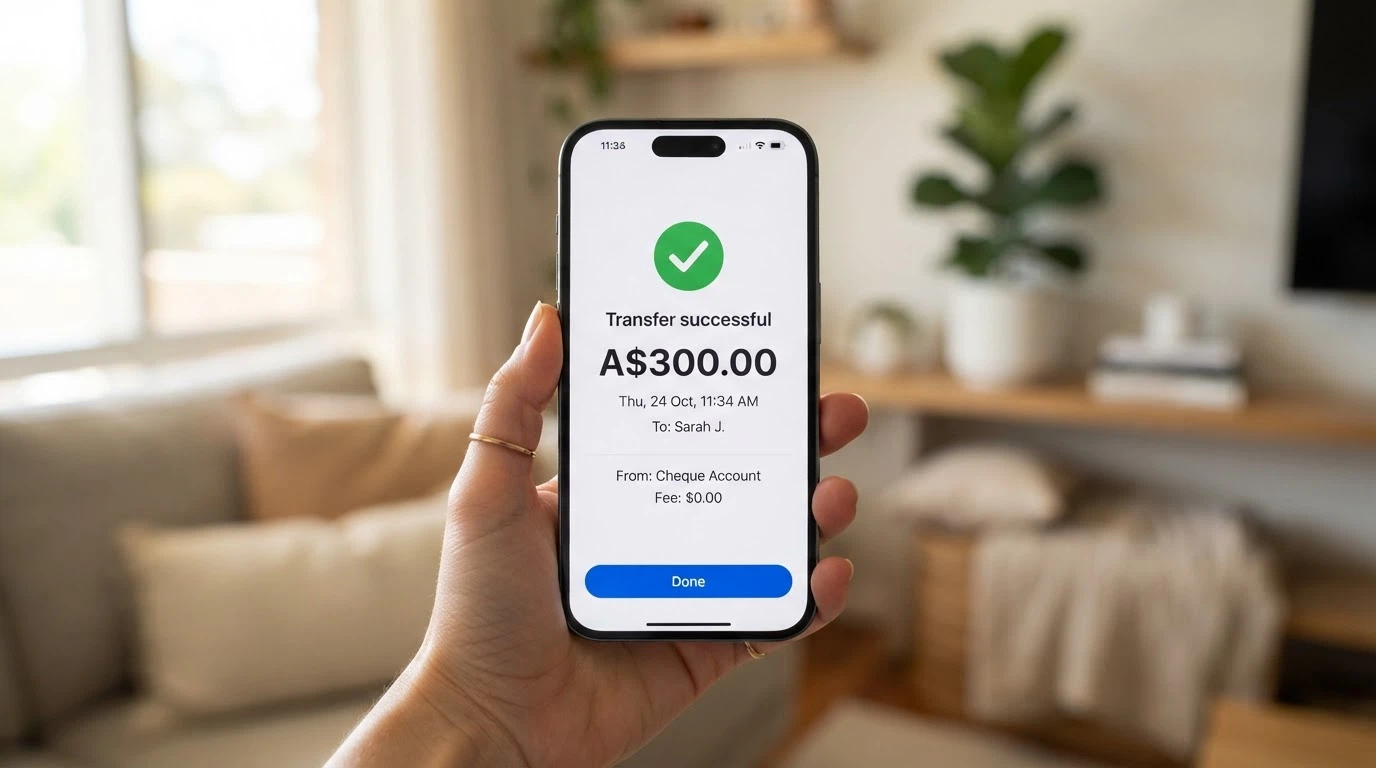
None of that changes the offshore question. PayID moves Australian dollars from one Australian account to another Australian account — usually into a trusted PayID-collecting service that then sweeps funds to the offshore operator’s bank — but the receiving casino is still the same unlicensed offshore operator it was before the deposit rail changed. The deposit speed is a payment-method feature; it is not a regulatory feature.
How PayID Works for Casino Deposits
A PayID is a memorable identifier — a phone number, an email address, an ABN or a PayID-specific string — that the account holder links to a bank account through their bank’s app or online banking. When someone initiates a transfer to that PayID, the receiving bank resolves it to the linked BSB and account number in real time, and the funds move through the Osko rail with no clearing delay. The casino’s cashier displays the casino’s PayID (or a payment-service PayID that forwards to the casino); the player initiates the transfer from their banking app using the displayed reference; the casino’s payment processor matches the incoming reference to the player account within seconds.
The mechanics are clean and the experience is fast. PayID deposits at Australian-facing casinos land in under 60 seconds in the majority of transactions, with no fee charged by either the player’s bank or the receiving bank, and with a standard minimum of A$20 across the operators that accept the rail. There is no card surcharge, no FX spread, and no chargeback mechanism — once the transfer settles, it settles, and the casino credits the player’s account against the matching reference.
For a player comparing payment rails, the practical comparison is PayID against card deposits and crypto on-ramps. Card deposits carry surcharge risk (typically 1.5% to 2.5% for international processing) and a longer settlement window; crypto on-ramps add KYC friction and FX exposure. PayID, for an Australian player funding an Australian bank account, is the lowest-friction rail that exists. It is also the rail the licensed Australian wagering market uses — Sportsbet, bet365, Ladbrokes and the state TABs all accept PayID for licensed sports and race wagering. The deposit rail is the same; the receiving operator is not.
Deposit Limits and Per-Transfer Caps With PayID
The PayID rail itself does not cap the per-transfer amount — individual banks set their own outbound transfer limits, typically A$1,000 to A$5,000 for instant Osko payments, with higher tiers available on request. The casinos, in turn, set their own minimum and maximum deposit limits independent of the rail. The standard minimum at Australian-facing operators is A$20, comfortably below the typical bank outbound cap; the per-transfer ceiling at the casino is usually well above what a PayID-enabled bank will release in a single instant transfer, meaning the PayID-side cap is the binding constraint for most players rather than the casino-side cap.
For a player considering a A$300 deposit to clear a welcome offer, the math sits easily within PayID’s per-transfer range. A$300 is below the typical bank outbound cap and above the standard A$20 casino minimum; one transfer settles in under 60 seconds, and the welcome bonus credits against the deposit. The deposit itself is the easy step. The wagering multiplier and the cashout cap that follow are the harder numbers, and they sit with the operator, not with the payment rail.
The relevant distinction for a player is between operator-imposed caps and PayID-imposed caps. The operator’s minimum and maximum are written into the cashier; the PayID limits are written into the player’s banking app. A player who hits a cap at deposit is hitting one of those two limits, and which one is straightforward to check. A player who hits a cap at withdrawal, by contrast, is hitting the bonus terms — and that cap is the one the marketing copy skips past.
Which AU-Facing Pokies Sites Accept PayID
The set of Australian-facing offshore casinos that accept PayID is wider than the set that publish the fact openly. Operators that take AUD and serve the Australian market broadly accept PayID at the cashier, but the deposit-method list is often tucked behind the registration step rather than advertised on the homepage. Among the operators in this ranking, PayID acceptance is a function of the operator’s payment-processor configuration and the local payment-service it routes through, not of any Australian regulatory approval. Each operator that lists PayID as a deposit method is using the rail the way the licensed Australian wagering market uses it; what differs is the licence status of the receiving end.
For a player choosing a payment method at an offshore casino, PayID is the rail that minimises fee and maximises speed, and it is the rail that connects directly to an Australian bank account without surfacing a card number to the casino. That last point is the practical privacy advantage. A player uncomfortable entering card details into an offshore operator’s cashier can fund via PayID instead, and the receiving bank account sees the payment as a standard instant transfer to a PayID rather than as a card transaction flagged for gambling. The payment speed and the privacy are real; the offshore status of the receiving casino is unchanged by the choice of rail.
The Product Is Prohibited: Australia’s Online Casino Ban Explained
Online casino games — online pokies, table games, live dealer and any other interactive casino product — are illegal to provide to a person in Australia. This is not a grey area and not a loophole. The Interactive Gambling Act 2001 (IGA), strengthened by the Interactive Gambling Amendment Act 2017, makes the provision of prohibited interactive gambling services a criminal offence. There is no Australian licence for online casino — not federally, not in any state or territory. The Australian Communications and Media Authority (ACMA) is the federal regulator that enforces the prohibition, and it does so through investigations, formal warnings, civil penalty proceedings and the direction of ISPs to block illegal gambling websites.

Since its first blocking request in November 2019, the ACMA has had 1,564 illegal gambling and affiliate websites blocked by Australian ISPs, and more than 225 illegal services have withdrawn from the Australian market since enforcement was strengthened in 2017. The individual player is not the target — the IGA’s enforcement runs at the provider, not the customer — but the player is also the one with no Australian consumer protection on the other side of an offshore deposit.
The Interactive Gambling Act and ACMA Enforcement
The IGA 2001 was the original legislation, drafted to manage the early wave of online wagering services. The 2017 amendments rewrote the prohibition in the form it runs under today, with explicit criminal offences for the provision of prohibited interactive gambling services and a regulator — the ACMA — empowered to investigate, prosecute, fine and direct blocking. The scope of the prohibition covers any interactive gambling service that is not on the short list of what is licensable in Australia: wagering on races and sport placed before the event begins, lotteries, and keno. Online casino games fall outside that list by design.
The ACMA’s enforcement record since November 2019 is the practical measure of how the prohibition runs. The blocking request mechanism allows the ACMA to direct Australian ISPs to block illegal gambling and affiliate websites at the DNS level; the civil penalty regime allows the regulator to pursue providers through the courts; the formal warnings mechanism allows the regulator to put providers on notice before escalation. The 1,564 blocked sites and 225+ withdrawn services are the cumulative result of that framework, and the volume is large enough that a player attempting to reach an offshore casino from Australia will sometimes hit a blocked-site notice before the casino’s homepage.
For a player comparing what is licensable, the licensed Australian wagering market is the sportsbook and race-book ecosystem — Sportsbet, bet365, Ladbrokes, the state TABs, plus a long tail of NT-licensed bookmakers. None of those operators holds a casino licence, because none exists. The licensed contrast to the offshore casinos in this ranking is not “a licensed Australian casino” but “a licensed Australian wagering operator that does not offer casino games.”
Licensed vs Offshore: What Protection You Actually Lose
A licensed Australian wagering operator is required to deliver a set of consumer protections that the offshore operators in this ranking are not required to deliver and typically do not. Identity verification is mandatory at signup. Customer-set deposit limits are offered at registration. Monthly activity statements are issued. Trained staff are available. Easy account closing is guaranteed. A line of credit cannot be extended. And BetStop — the National Self-Exclusion Register — covers the operator, so a player who has self-excluded cannot deposit.
None of this applies offshore. The offshore operator’s KYC is its own process, often slower and less thorough than a licensed Australian operator’s, and not subject to Australian complaint handling. There is no Australian-set deposit limit; the limits the operator offers are its own. There is no activity statement unless the operator chooses to send one. The account-closing process is the operator’s. There is no Australian line-of-credit prohibition to enforce; offshore credit-betting is the operator’s own policy. And BetStop does not cover offshore operators — a player who has self-excluded can still deposit at any offshore casino, because the register does not extend to operators the ACMA does not licence.
The credit card and cryptocurrency prohibition on online wagering is the most recent Australian payment restriction to take effect (11 June 2024), and it covers Australian-licensed wagering operators, not offshore ones. Licensed operators cannot accept credit cards or crypto for wagering. Offshore operators accept both. From 1 January 2027, banks and payment providers in Australia will gain express authority to block transactions to illegal gambling operators, which is the next tightening of the payment-side net.
The DNS-level blocking record is the operational consequence. The ACMA has directed ISPs to block 1,564 illegal gambling and affiliate websites since November 2019, and a balance sitting at a blocked site is a balance the player cannot reach. The blocking is the most visible edge of the prohibition, and it is the edge that turns a slow complaint at an offshore operator into a total loss if the site goes dark.
The 2026-2027 Reforms: What Changes for Australian Bonus Hunters
The Interactive Gambling Amendment (Gambling Reform) Bill 2026 passed Australian Parliament on 19 August 2026. The measures commence on 1 January 2027. The reform package tightens the regulatory net across advertising, inducements and payment blocks, and the provisions most relevant to a bonus-hunter are the inducement restrictions and the bank-side payment block.
On advertising, the reform introduces a wagering-advertising blackout during live sport broadcasts (15 minutes before to 5 minutes after, between 5 am and 8:30 pm); caps wagering ads to no more than three per hour on TV between 6 am and 8:30 pm; bans athletes, celebrities and influencers from promoting wagering; and bans the broadcasting of sporting odds during live coverage. The effect on the bonus-hunter is upstream of the casino itself — less advertising reaching the Australian audience, which means less promo code circulation through the standard channels.
On inducements, the reform prohibits direct marketing of inducements for 14 days after a customer signs up, for three months after a person deregisters from BetStop, and indefinitely for customers identified as at risk of gambling-related harm. The 14-day post-signup window is the one that bites hardest on the welcome-offer model; the three-month post-BetStop window is the one that closes the standard bonus route for anyone who has just left the self-exclusion register.
On payments, banks and payment providers gain express authority to block transactions to illegal gambling operators from 1 January 2027. The mechanism is the same one the credit card and crypto prohibition runs on for licensed operators: a prohibition on the payment flow rather than on the underlying product. For a player funding an offshore casino from an Australian bank account, the practical effect is that the bank can decline the PayID or card transaction, and the casino never sees the deposit.
The reform also establishes the National Wagering Advertising Opt-out Register (AdStop), giving individuals a single mechanism to opt out of wagering advertising across online platforms. Online keno “pocket pokies” and foreign-matched lotteries are banned. The new provisions sit in Parts 7C, 7D and 7E of the IGA. The bonus-hunter reading this section now has a regulatory horizon: the inducement model that supports the offshore welcome-offer industry is on a closing window, and the payment-side block is the next tightening.
The Responsible Gambling Safety Net Offshore Casinos Ignore
Australia’s harm-minimisation infrastructure is the strongest in the region. The National Consumer Protection Framework for Online Wagering — agreed through the Council of Australian Governments and now embedded in state and territory licensing conditions — runs to ten measures: no line of credit for gamblers, strong identity and age verification, restricted incentives and account sign-up offers, easy account closing, the offer of deposit limits, monthly activity statements, consistent risk messaging, trained staff, and a National Self-Exclusion Register. Licensed Australian wagering operators deliver all ten. Offshore operators are connected to none of it.
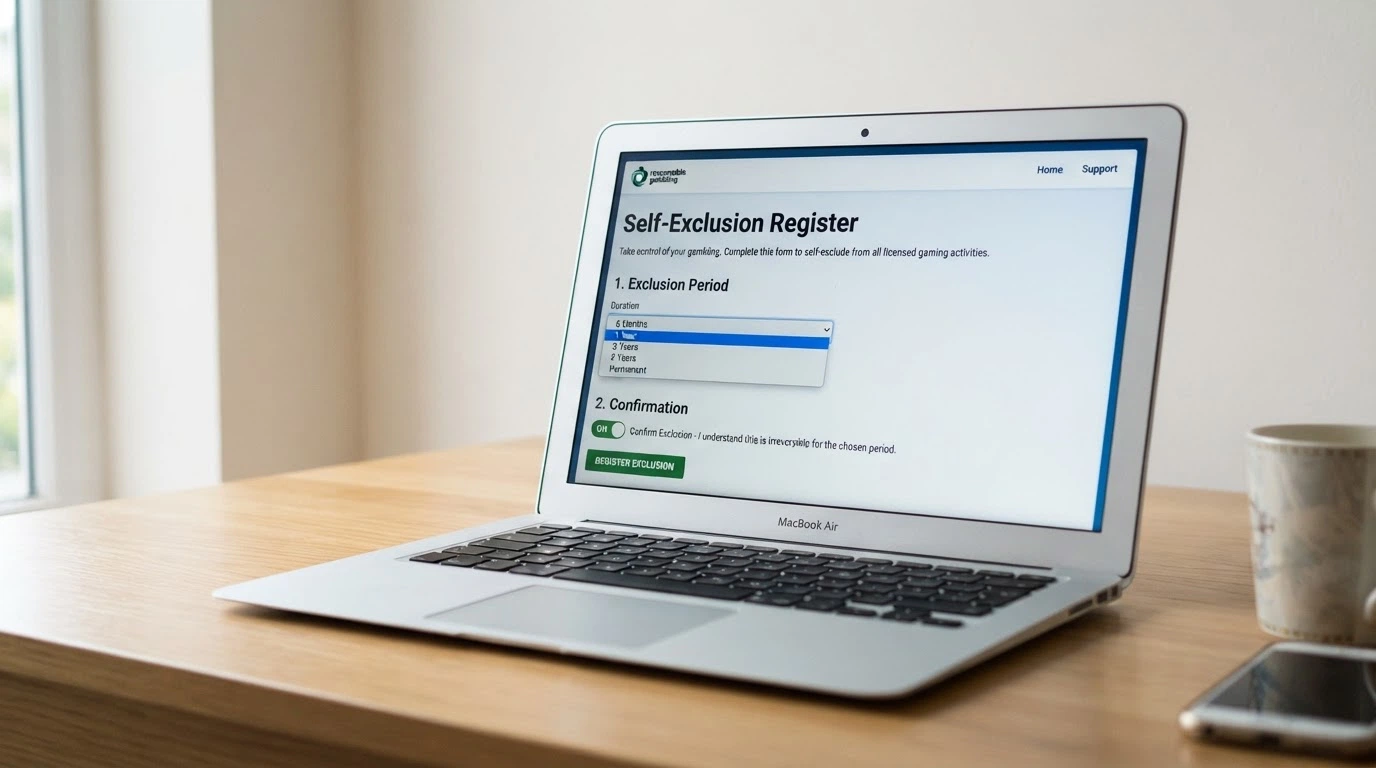
The most visible single piece of the framework is BetStop, the National Self-Exclusion Register, which went live in August 2023. As of 31 July 2026, BetStop has 67,480 registrations, of which 41,290 exclusions are still active. Seventy-eight per cent of registrants are under 40, and thirty-eight per cent chose lifetime exclusion. The register binds Australian-licensed wagering services and stops them from accepting deposits from registered individuals. It does not bind offshore operators. A self-excluded person can still deposit at any of the casinos in this ranking, because none of them checks the BetStop database. That is the protection gap, in one line.
BetStop, Deposit Limits and the Tools Offshore Operators Skip
BetStop allows an Australian consumer to self-exclude from all Australian-licensed wagering services for a chosen period — three months, six months, one year, or lifetime. The exclusion takes effect within days of registration, and the licensed operators are required to honour it. The 41,290 active exclusions on the register as of 31 July 2026 are the measure of how many Australians have used the mechanism; the framework of ten National Consumer Protection measures is the broader scaffolding around it.
Customer-set deposit limits are the second-most-consequential tool. At signup, a licensed Australian wagering operator offers the customer a deposit limit — daily, weekly or monthly — and the customer can revise the limit downward at any time and upward only after a cooling-off period. The mechanism is designed to put the player in control of the spend cap. Offshore operators are not required to offer deposit limits at signup, and most do not.
Activity statements are the third. A licensed operator issues a monthly activity statement showing deposits, withdrawals, net spend and time-on-site. The statement is the player’s own data, delivered on a regular cadence, and is intended to make the spend visible. Offshore operators do not issue activity statements on a regular schedule. Take-a-break, the customer-set time-out, is a fourth. Easy account closing, the customer’s right to close the account and walk the balance out, is a fifth. None of these is enforceable at an offshore casino; each exists at the operator’s discretion.
The offshore casino, in short, is the operator that has elected to be outside the ten-measure framework. The election is voluntary on the operator’s part and structural on the player’s: the offshore operator can hold the player’s balance, decline the withdrawal, and not honour a self-exclusion, and the ACMA cannot help the player recover the funds.
Where to Get Help: 1800 858 858 and Gambling Help Online
The National Gambling Helpline — 1800 858 858 — is free, confidential and staffed 24 hours a day, 7 days a week. Online chat and email counselling run through Gambling Help Online at gamblinghelponline.org.au. Both services are funded by the Australian Government and delivered by state and territory gambling-counselling providers.
The context for the help line is the prevalence data. About 2.1% of Australian adults — roughly 430,000 people — experience problem gambling according to the Australian Institute of Health and Welfare, and high-risk gambling runs at 1.8% of adults. The 2026 reform package also expands specialised financial counselling for gambling-harm victims and increases public awareness of online gambling risks, which broadens the support infrastructure around the helpline itself.
For a player weighing whether to claim a $300 no-deposit bonus at an offshore casino, the help-line number is worth having regardless of the decision. Self-test tools and confidential counselling are available without registering with any service; the call is free; the chat is private. The offshore casino, by contrast, offers none of these — the only “self-exclusion” available is the one the player imposes on themselves, voluntarily, and the operator is not required to enforce it.
How We Evaluated These $300 No-Deposit Bonus Casinos
The methodology behind this ranking is built from public data and operator-side verification, not from the affiliate marketing that dominates the top of search results. Operators were checked against the ACMA register of blocked services; offshore licence claims were verified against the licensing authority’s own register where one exists; wagering terms, cashout caps, eligible games and validity windows were read from each operator’s published T&Cs; and secondary aggregator sources (CasinoAlpha, Betzoid, Slotozilla, NoDepositBonus.cc, VegasPokie, NodepositBonuses.com) were used only where the operator’s own T&Cs were incomplete and the secondary source could be named.

The criteria that produced the shortlist were: acceptance of Australian players; availability of a no-deposit or near-no-deposit bonus product; public verifiability of the bonus terms; and continued activity as of 2026. Operators whose terms are not publicly readable, whose no-deposit product has expired without replacement, or whose Australian-player acceptance is uncertain were excluded. The basis for inclusion is what is verifiable from the operator’s own materials and from the named secondary sources — not what an aggregator’s landing page claims.
The Australian operators skill (a structured dataset of AU-facing operators, with licence, market share and product information) was the starting point for the shortlist, and the published T&Cs and named sources were the verification layer on top of it. The ranking is ordered by fit to the no-deposit-bonus subject, not by market share or revenue.
What You Should Actually Do About a $300 No-Deposit Bonus in 2026
The arithmetic on a $300 no-deposit bonus at the standard 50x wagering runs to A$15,000 of required turnover and, at the average return of the eligible pokies, an expected loss of roughly A$547 — almost double the bonus credited in the first place. The cashout cap, in the A$50 to A$200 range across the set, then bounds the payout below the bonus value on every run where the player finishes ahead. The expected value of the offer, before the offshore risk is even counted, is negative. The offshore risk is the second layer: no Australian consumer protection, no BetStop coverage, no ACMA recourse, and a DNS-level blocking record that has already taken 1,564 illegal sites offline.

The judgment that follows from those three numbers is the same judgment the page has been working toward. A $300 no-deposit bonus is marketing language attached to a mathematical structure that pays out a small fraction of the headline figure under conditions the player has to clear before seeing anything. The conditions are the wagering, the cap, the eligible games, the validity window, and the deposit-gate that some operators add at withdrawal. Read together, they are a cost the player pays in time and turnover for a payout the bonus can never quite reach.
For a player who has decided to test an offshore casino anyway, the best-terms option in this ranking is SkyCrown’s 20 free spins at 25x with a €100 cap; the largest playable no-deposit chip is Ozwin’s A$20; the most transparently disclosed terms are Royal Reels’ activation-time display. The rest of the ranking is the cost-to-claim laid out in full. None of it changes the offshore status, and none of it changes the absence of Australian consumer protection on the other side of the deposit.
The protection gap closes in 2027. The inducement marketing ban, the post-BetStop inducement window, and the bank-side payment block all commence on 1 January 2027, and the bonus-hunter who is reading this in 2026 is reading it on the wrong side of that commencement. For a player weighing the offer, the relevant question is not “which $300 no-deposit casino is best” but “is the structure of this offer worth the time, the offshore risk, and the loss of every Australian safeguard that the ACMA, BetStop and the licensed wagering market would otherwise provide?” The numbers on the page are the reader’s evidence for that question, and the answer the numbers support is the one this article has been pointing at from the first line.
Frequently Asked Questions
Is it legal for Australians to claim a $300 no-deposit casino bonus?
Online casino is prohibited to provide in Australia under the Interactive Gambling Act 2001, and no Australian licence for the product exists. The individual player has not been prosecuted for using an offshore casino, but no Australian consumer protection, no BetStop coverage and no ACMA complaint recourse apply. The protection gap closes further on 1 January 2027, when banks gain authority to block transactions to illegal operators.
What are the wagering requirements on a $300 no-deposit bonus in Australia?
Standard wagering on no-deposit bonuses at Australian-facing offshore casinos runs at 40x to 60x on the bonus value, with 35x to 50x typical for no-deposit free spins and 20x to 40x on spin winnings in some offers. A 50x multiplier on a $300 bonus requires A$15,000 in turnover before withdrawal, and a 7-day expiry is the frequent default — with 24 to 72 hours on the more aggressive campaigns.
Are $300 no-deposit bonus codes real or a scam?
Genuine $300 no-deposit bonus codes are extremely rare; most “free chip” offers in the Australian-facing offshore market sit at A$10 to A$50 in actual playable value, with the $300 headline either an expired promotion, a summed welcome package or marketing fiction. The codes themselves unlock promotions but do not change the wagering, cap or eligibility — those sit in the operator’s T&Cs and apply whether or not a code is used.
What is the maximum bet allowed while playing with a no-deposit bonus?
The standard maximum bet at Australian-facing offshore casinos while a no-deposit bonus is active is A$5 to A$10 per spin, with Fair Go’s no-deposit free spins specifically capped at A$5 per spin and Hell Spin’s welcome package at A$8 per spin. Exceeding the cap can result in the bonus and all associated winnings being forfeited, so the bet ceiling is one of the higher-cost rules to break on the page.
Why are most no-deposit bonuses in Australia capped at A$50–A$100?
The cap is the operator’s protection against bonus abuse: a player who could convert a no-deposit bonus into an uncapped cashout would have a direct arbitrage route against the casino, and the cap closes that route. The A$50 to A$100 figure is the modal ceiling across Australian-facing offshore casinos, with some offers reaching A$200 and the few uncapped welcome bonuses being deposit-gated rather than no-deposit. The cap is the line the marketing copy skips past, and it is the line that decides what the player actually walks away with.
Created by the ”POLi Casinos AU” editorial team.